
Review · PORTO
Porto Guided Tour to the Historical Center on a Tuk Tuk
Porto’s steep lanes and broad river views make a tuk tuk a smart way to get oriented fast. In about 1 hour 50 minutes, you move from the cathedral and São Bento Station to the Douro, Vila Nova de Gaia, and the Serra do Pilar viewpoint without wearing out your legs.
I like the access to narrow cobbled streets and the chance to cover far more ground than you could on foot. I also like the personal touch: guides such as Ana, Victor, Natalia, Bernardo, and Gonçalo have been praised for their humor, local tips, and clear sense of pride in Porto.
The main concern is sound. Wind, traffic, and the open-sided vehicle can make commentary hard to hear, especially while moving. Traffic can also eat into sightseeing time, so treat this as a lively orientation tour, not a full visit to Porto’s monuments.
Key points to know before you book
- A fast city overview: See central Porto, the riverfront, Vila Nova de Gaia, and major bridges in one compact outing.
- Private for your group: Only your party takes part, with a minimum booking of two people.
- Short stops, not long visits: You may get around 5 to 15 minutes at key points, while monument entry fees are not included.
- The Serra do Pilar view is a highlight: The terrace looks across Porto, Gaia, the Douro, and the Dom Luís I Bridge.
- Port wine is included: You receive a glass during the tour, a pleasant local accent rather than a full winery visit.
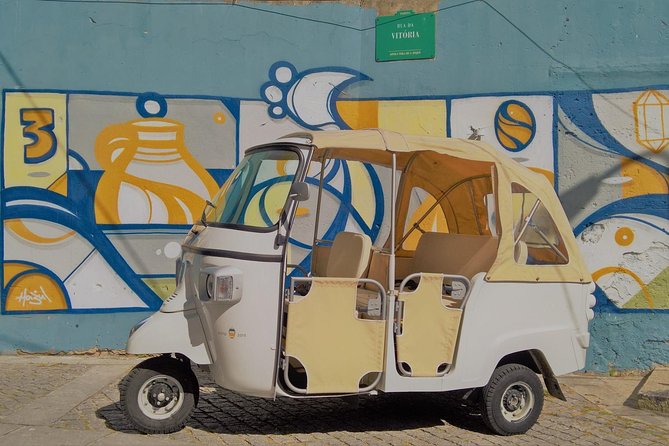
- Vehicle size matters: Each tuk tuk holds two, three, or four adults of average height, up to 75 kilograms each.
Why a tuk tuk works well in Porto
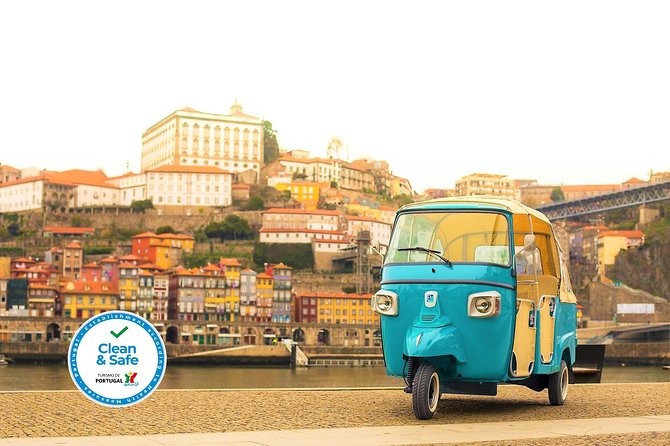
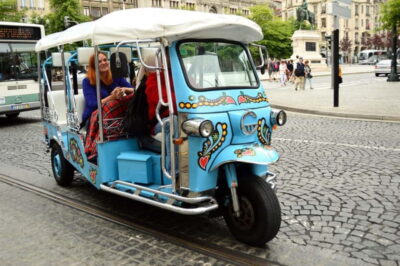
Porto is compact, but it is not easy. The old center climbs and drops sharply, with stone paving, tight lanes, and sudden viewpoints. A tuk tuk lets you see the shape of the city before deciding where to return on foot.
I especially like this format for your first day. You get a working map in your head: the cathedral above the center, São Bento below it, the Clérigos tower near the shopping streets, the Douro at the bottom, and Gaia across the water.
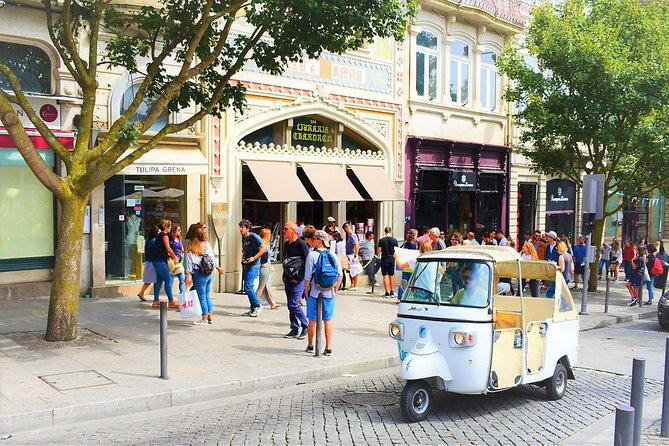
The vehicle can reach places that are awkward for a larger sightseeing bus. You may pass through lanes you would otherwise skip, then pull over at a viewpoint or landmark for a short look. That mix of riding and brief walks keeps the pace lively.
Do not expect a quiet, slow-moving museum tour. The tuk tuk is exposed to traffic and weather, and some of the best commentary comes when the vehicle is stopped. On wet or windy days, bring a raincoat. A guide may still keep the tour enjoyable, but you will be sitting outside for much of the ride.
More history rides around Porto:
- Historic Porto by Private Electric Tuk Tuk to Top Landmarks
★ 4.5 · 735 reviews - Porto: Historic Center Tuk-Tuk Tour
★ 4.5 · 244 reviews - Porto: Jewish Heritage Private Tour by Tuk Tuk
★ 3.7 · 10 reviews
Starting at Porto’s cathedral
The meeting point is at R. de Augusto Rosa 180, close to the cathedral area. From here, the route begins among some of Porto’s oldest streets and steepest slopes.
The Porto Cathedral, or Sé, gives you a strong first lesson in the city’s past. Its core dates from the 12th and 13th centuries and began in Romanesque style, though later rebuilding and additions changed its appearance. The present building is partly an idealized medieval restoration, so it is best read as a long record of change rather than a single-period monument.
The stop lasts about 10 minutes, and admission is not included. That is enough time to admire the exterior, take in the high position above the city, and decide if you want to return later for a longer visit.
Nearby, the stone pelourinho is a reminder that the square around the cathedral was reshaped in the 20th century. The surrounding medieval buildings, including the Casa do Cabido and Episcopal Palace area, were demolished in 1940 under the Estado Novo regime. The current monument was placed there in 1945 as a reproduction of an earlier drawing.
The Episcopal Palace adds a grand Baroque note. Its origins may reach back to the 13th century, while the 18th-century remodeling is linked to Nicolau Nasoni. You will likely see the arched entrance, pilasters, carved stone details, and the bishop’s coat of arms from outside. Admission is not included, and the stop is about five minutes.
São Bento Station and Porto’s tiled story
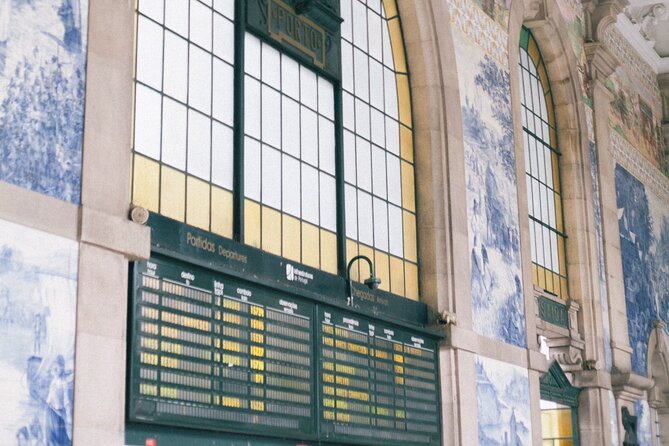
São Bento Railway Station is one of the tour’s most rewarding quick stops. The building opened in the early 20th century, with a glass and iron roof designed by Marques da Silva.
The real prize is inside the entrance hall: about 20,000 narrative tiles by Jorge Colaço. They show scenes from Portuguese history and daily life in blue and white. You get roughly 10 minutes here, with free admission, so move directly into the hall and look up and around before taking photographs.
This is one place where a short stop can feel too short. If you care about tile art, make a note to return later when you can study the panels without watching the clock.
The route then passes through several central squares, including areas shaped during Porto’s 18th-century expansion. Some former medieval walls and urban palaces have disappeared, but the street pattern still helps explain how the old city opened outward.
At Praça de Carlos Alberto, you may see the garden monument honoring Portuguese soldiers who died in the First World War. The square was once linked to blacksmith workshops and later took its present name after Charles Albert of Sardinia, who lived in exile in Porto.
Lions, churches, and the Clérigos skyline
The Fonte dos Leões, or Fountain of the Lions, is a quick photo stop. Built in the 19th century by a French company, its cast pieces came from the Val d’Osne foundry in France. The design is largely copied from a fountain in Leicester, England, which gives this Porto landmark an unexpected international connection.
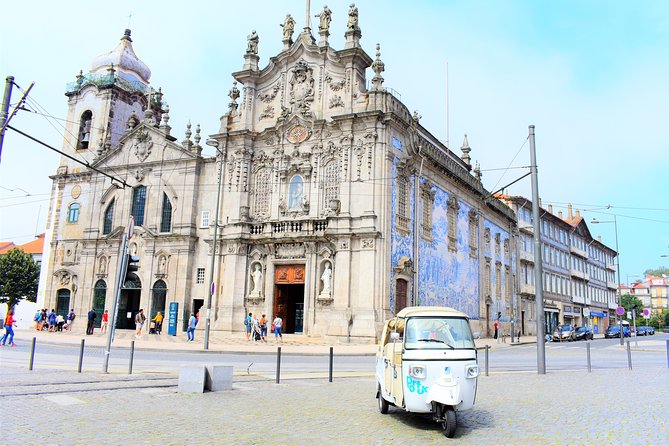
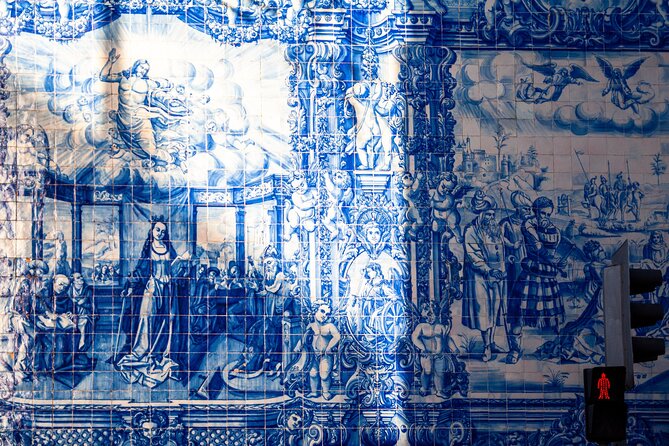
The tour continues past churches that show why Porto is famous for combining stone carving, painted tile, and gilded wood. One church has a classical façade from the 1850s and a Porto Rococo altarpiece associated with Nicolau Nasoni. Another, built in the second half of the 18th century, is noted for its carved interior and side façade covered in tiles in 1912.
You may only have a few minutes at these stops, but they help you see the city’s religious architecture as part of an ongoing sequence rather than isolated sights.
The Cordoaria Garden offers a change of pace. Its official name is João Chagas Garden, but the older name comes from rope makers who worked here for about 200 years. The public garden was created in the 1860s, with a design by German landscaper Emile David.
Look for the statues of Ramalho Ortigão and António Nobre, as well as later sculpture by Juan Muñoz. The garden was remodeled during Porto’s year as European Capital of Culture in 2001.
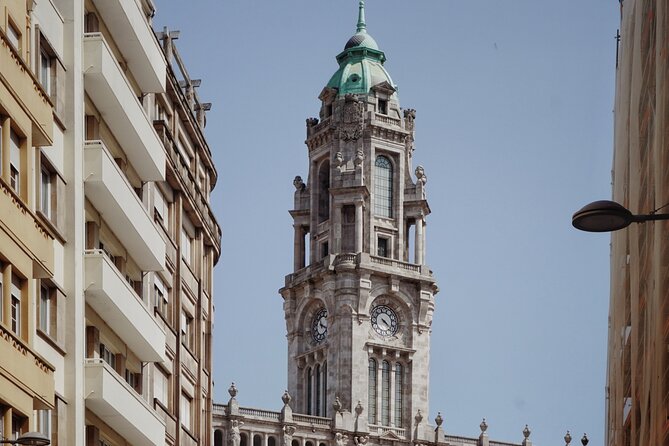
The Clérigos Tower is one of Porto’s best orientation points. Its Baroque church and tall bell tower can be seen from many parts of the city. The stop is about five minutes, and tower entry is not included. If you want to climb it, plan a separate visit, since this tour is built around views from outside rather than monument interiors.
More Guided Tours around Porto:
- Porto: Guided Tour by Tuk-Tuk & Optional Douro River Cruise
★ 4.5 · 5,980 reviews - Porto: Guided Tuk Tuk Tour
★ 4.6 · 1,390 reviews - Lisbon: Private Guided Tuk-Tuk Tour with Hotel Pickup
★ 4.9 · 4,552 reviews - Madrid Welcome Tour with Local Guide in Eco Tuk Tuk Private
★ 5.0 · 2,936 reviews
From old theaters to the Stock Exchange Palace
The route also touches the São João National Theatre area and the Carlos Alberto Theatre. The Carlos Alberto building was constructed in 1910 after the former Real Theatre burned in 1908. Its Luís XVI-inspired façade, designed by Marques da Silva, reflects the taste of early 20th-century France.
The former São Bento da Vitória Monastery adds another layer. Dating to the late 16th century, it has served religious, cultural, archival, and performance roles. Part of the building is now linked to the National Theatre São João, and the noble cloister hosts performances and events.
Near the river, the Palácio da Bolsa, or Stock Exchange Palace, shows Porto’s commercial side. Built in a neoclassical style from 1842, it is still connected with the Commercial Association of Porto. Its famous Arabian Room is the main interior attraction, but entry is not included, so the tuk tuk stop is mainly a chance to see the building and mark it for a later visit.
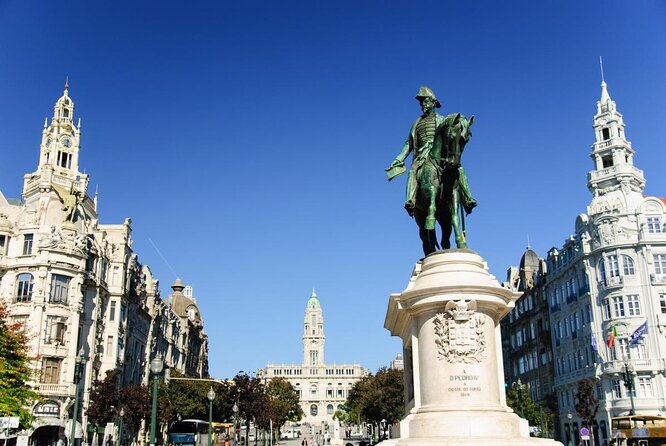
The route may also pass the monument to D. Pedro IV. Created by Célestin Anatole Calmels and Joaquim da Costa Lima, it commemorates D. Pedro’s constitutional role and his connection with Porto.
A quick look at Livraria Lello and Mercado Ferreira Borges
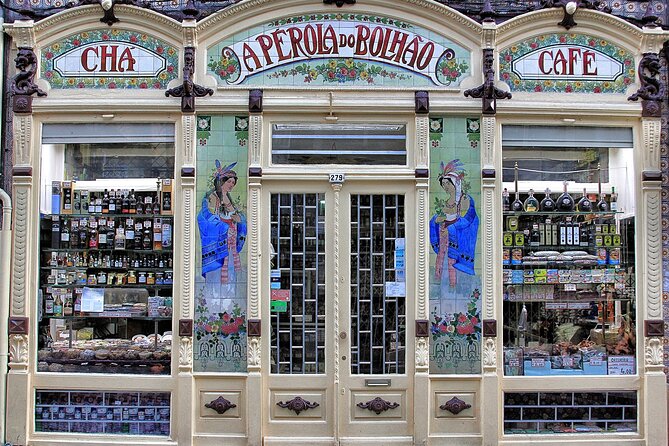
The city library is another architectural stop worth noting. The building opened in 1906 and has an Art Nouveau exterior with neo-Gothic touches. Inside, painted plaster imitates wood, a large staircase leads upstairs, and a stained-glass skylight carries the library’s motto, Decus in Labore.
The tour does not include a library visit, and the timing may only allow you to see the exterior or pass nearby. If this is high on your list, return separately and check the current entry arrangements.
Mercado Ferreira Borges gives you a look at Porto’s iron architecture. Built in 1885 to replace an older market, it had a short life as a food market and later served other uses. It is now associated with the Hard Club entertainment venue.
The nearby square includes a garden and a monument to Infante D. Henrique, linked to Portugal’s maritime past. The setting also places you close to the Palácio da Bolsa and the riverfront, so this part of the route is useful for planning a later walk.
Ribeira, São Francisco, and the Douro edge
Porto’s most dramatic old-city views open toward the Douro. The Gothic Church of São Francisco is among the city’s major religious sights, famous for its heavily gilded 17th and 18th-century interior. The Tree of Jesse and catacombs are important details, but admission is not included in the tuk tuk tour.
This is a classic example of the tour’s tradeoff. You get the location, the story, and the chance to decide what deserves more of your time. You do not get enough time to inspect every interior.
The Alfândega Nova building, once a customs house, adds a more practical side to the riverfront. Its 19th-century structure combines iron with stone, brick, and wood. It now houses the Museum of Transport and Communications, along with a congress center.
A short stop here helps explain how Porto functioned as a trading port. It also gives you a different view of the riverfront, away from the most photographed lanes.
Crossing to Gaia and the Serra do Pilar viewpoint
The tour’s strongest visual payoff comes across the Douro in Vila Nova de Gaia. The Serra do Pilar Monastery is a UNESCO World Heritage site, begun in 1538 and completed around 1670.
Its circular church and circular cloister are unusual in Portugal. The cloister has 36 Ionic columns, and the terrace looks back toward Porto’s cathedral, the Dom Luís I Bridge, the riverside districts, and the Arrábida Bridge.
You get about 15 minutes here, with free admission. That is enough for photographs and a useful pause, though the site deserves more time if you want to explore the monastery itself.
The guide may point out the Dom Luís I Bridge, built under the direction of engineer Teófilo Seyrig, a disciple of Eiffel. Opened in 1886, it has two iron decks, and its upper level now carries Porto’s metro between the cathedral area and Gaia.
You may also see the Infante Bridge, opened in 2003 to replace road use of the upper Dom Luís deck. Its high arch and clean profile give you a good lesson in how Porto has added modern transport links without losing the drama of its older bridges.
This section is especially helpful if you are still confused about Porto and Gaia. The river is not just scenery. It is the dividing line between two municipalities, with the main city on one side and Port wine lodges on the other.
What the $42.33 price really buys
At $42.33 per person, the tour is good value if you want transport, orientation, a local guide, and a Port wine glass in one compact package. It is less attractive if you plan to walk all day anyway and prefer to spend your money on monument admissions.
The price includes the driver-guide, local guide service, and a glass of Port wine. It does not include entry to the cathedral, Clérigos Tower, Palácio da Bolsa, São Francisco Church, or other monuments.
Because the tour is private, you avoid being placed with a large bus group. That matters in Porto’s tight streets, where a small vehicle feels more natural and can make brief stops in places a coach cannot reach.
The vehicle seats two, three, or four adults of average height, with a stated limit of 75 kilograms per person. Larger parties use several tuk tuks but travel together and stop at the same places. One important caution: a group of six reported that the vehicle felt intended for four and that seat belts were not available for everyone. Ask about the exact vehicle arrangement before booking a larger party.
Practical tips for a smoother ride
Book this near the start of your stay if you want help choosing later stops. Guides such as Anna, Ana, Victor, Fabian, and Gonçalo have been praised for city tips, photo spots, humor, and clear explanations, but guide quality can vary.
Keep your expectations focused. The best guide can turn the ride into a short local history lesson, while a weaker guide may point out sights without saying much. If you cannot hear, ask the guide to repeat information at the next stop rather than trying to catch every word over traffic.
Wear shoes suited to Porto’s paving and bring a raincoat. The experience requires good weather, and poor conditions can lead to a new date or a full refund. You can cancel without charge up to 24 hours before the start time, but changes or cancellations inside that window are not refunded.
Children must be accompanied by an adult. Service animals are allowed, and most people can participate. The experience ends back at the starting point.
Who should book this Porto tuk tuk tour?
I would choose it for a first visit, a short stay, families, older visitors, and anyone who wants to understand Porto’s layout before walking the hills. It also suits people who want a private ride rather than a large group excursion.
It is less suited to anyone seeking long interior visits, detailed art commentary at every church, or a slow food and wine experience. The Port tasting is one glass, not a cellar tour.
The biggest value comes from combining many parts of Porto in one outing: cathedral hill, São Bento, Clérigos, Cordoaria, Ribeira, Gaia, the bridges, and Serra do Pilar. You will not fully visit all of them, but you will know which ones deserve a return.
Should you book it?
Book this Porto tuk tuk tour if you want a friendly, fast introduction with strong city views and short photo stops. The Serra do Pilar viewpoint, the narrow lanes, São Bento’s tiles, and the chance to cross between Porto and Gaia make the route worthwhile.
Skip it if traffic noise bothers you, if you need extensive commentary while moving, or if your main goal is to enter several monuments. For most visitors, the smartest plan is to take this early in the trip, then return on foot to the cathedral, São Bento Station, Clérigos, São Francisco, or Palácio da Bolsa that you want to explore properly.
FAQ
How long does the Porto tuk tuk tour last?
The experience lasts approximately 1 hour and 50 minutes.
Where does the tour start?
It starts at R. de Augusto Rosa 180, 4000-528 Porto, Portugal.
Where does the tour end?
The tour ends back at the meeting point.
Is this a private tour?
Yes. Only your group participates in the activity.
How many people can ride in one tuk tuk?
Each tuk tuk holds two, three, or four adults of average height, with a stated limit of up to 75 kilograms per person.
What happens if I have a larger group?
Larger groups use multiple tuk tuks, but the vehicles travel together and make the same stops at the same time.
Is Port wine included?
Yes. A Port wine glass is included in the experience.
Are monument entrance fees included?
No. Admission to monuments is not included in the price.
Is the tour offered in English?
Yes. The activity is offered in English and includes a mobile ticket.
Can I cancel for a full refund?
Yes. You can cancel at least 24 hours before the start time for a full refund. If poor weather causes the operator to cancel, you will be offered another date or a full refund.
Newly added rides around Porto
- Tour Porto: Classic Adventure in Electric Tuk Tuk★ 4.7 · 33 reviews
- Porto Tuk Tuk Tour: Clérigos, Scenic & Viewpoints – 1H to 4H★ 4.6 · 55 reviews
- Porto: Tuk Tuk Tour with Olive Oil Tasting★ 4.4 · 5 reviews
- Porto: Private Tuk-Tuk Tour with Short Walks and Wine★ 4.6 · 98 reviews
- Porto Tour: One tour, a thousand stories by tuk tuk – 3 hours★ 4.4 · 9 reviews
- Porto Legends Full Day: Walk & TukTuk Fun Tour★ 5.0 · 2 reviews
- Porto: 2-Hour Shared Tuk-Tuk Tour★ 4.8 · 108 reviews
- Porto: Jewish Heritage Private Tour by Tuk Tuk★ 3.7 · 10 reviews
Porto Tuk Tuk Tours: the nearest alternatives
Porto: Guided Tour by Tuk-Tuk & Optional Douro River Cruise
Read our review →
Discover Porto’s Highlights on a 2-Hour Private Electric Tuk Tuk
Read our review →
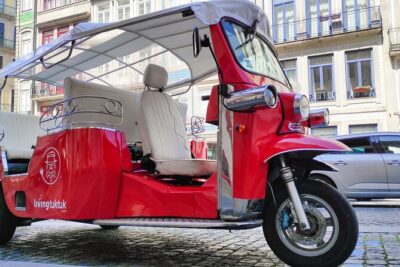
Historic Porto by Private Electric Tuk Tuk to Top Landmarks
Read our review →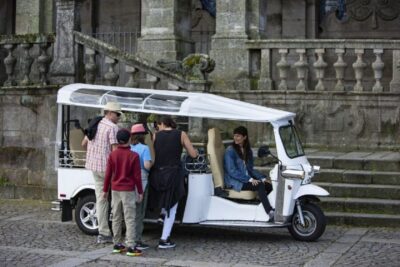
Porto: Private Sightseeing Tour by Electric Tuk Tuk
Read our review →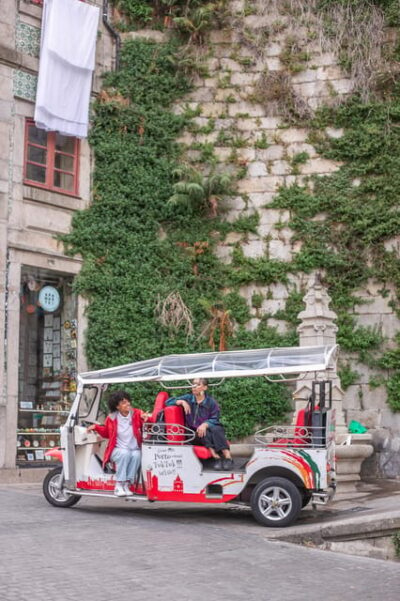
Oporto Tuk-Tuk Tour: Fast, Fun & Flexible – 1H to Full Day!
Read our review →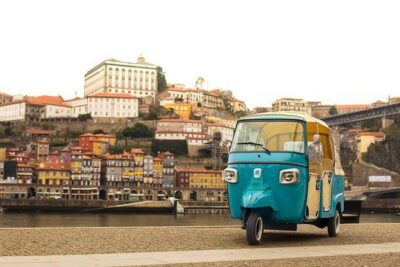
Tuk tuk lists that include it