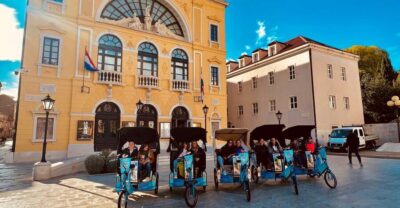
Review · SPLIT
Split Tour by Electric Tuk-Tuk: Top City Highlights
Split’s electric tuk-tuk is a smart way to see the parts of the city that sit beyond Diocletian’s Palace. In about 90 minutes to two hours, you can roll from the palm-lined Riva to Marjan Peninsula beaches, hilltop viewpoints, quiet parks, the football stadium, and the western waterfront without waiting for a large bus to squeeze through narrow streets.
I like the small groups of up to eight and the chance to hear local stories from guides such as Luka, Marino, Tony, Emir, and Ivan. I also like the range of departure times, including evening rides when Split looks especially pleasant. The main caution is that the tour can feel rushed or basic if your guide gives short explanations, the route changes, or the ride ends closer to 90 minutes than two hours.
Key things to know before booking

- You see far more than the Old Town: The route reaches Sustipan, Marjan, Kasjuni Beach, Poljud Stadium, and other spots that are awkward to cover on foot.
- The tuk-tuk fits small streets: Its compact size lets you reach places a coach cannot, while its electric motor keeps the ride fairly quiet.
- Teraca Vidilica is the main scenic pause: Allow about 20 minutes for city, harbor, and island views from Marjan Hill.
- The guide makes or breaks the tour: Luka, Marino, Tony, Emir, Ivan, Marko, and others have been praised for warmth, humor, local tips, and good photo stops.
- The advertised duration is flexible: Plan for 90 minutes to two hours, and confirm the route if certain beaches or neighborhoods matter to you.
- It works well from a cruise ship: Pickup can be arranged, and a return to the ship may be possible if requested ahead of time.
Why a tuk-tuk works well in Split
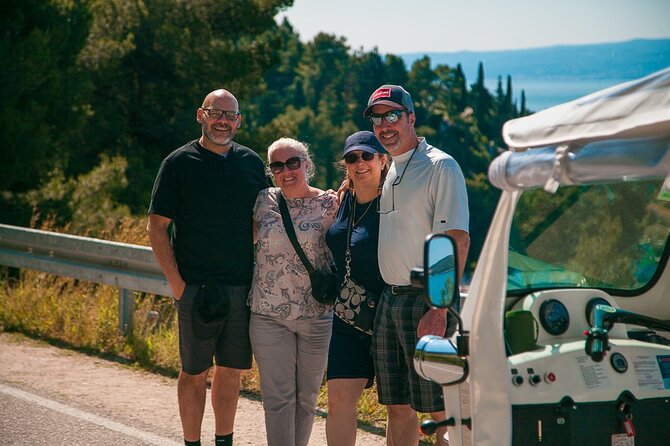
Split’s best-known sights are packed into and around the Old Town, but the city’s character does not stop at the palace walls. The waterfront, Marjan parks, swimming coves, football stadium, marina, and western shore all help explain how Split works as a living Adriatic city.
A walking tour is still the right choice for Diocletian’s Palace. You need time on foot to notice Roman stonework, narrow lanes, courtyards, and the everyday life inside the old walls. The tuk-tuk fills the gap afterward. It gives you a quick look at the wider city and lets you decide which places deserve a longer return visit.
The electric vehicle is especially useful on a hot day. You cover more ground than you would on foot, without sitting inside a full-size tour bus. The open-sided ride also gives you a better sense of the streets and coast, though it offers less shelter from strong sun or poor weather.
The experience earns a strong overall rating of 4.8 from 232 ratings, with 94 percent recommending it. That points to a reliable general experience, but the less positive accounts matter too. A few rides were shorter than expected, skipped advertised areas, or included too little explanation. Treat this as a city overview, not a guaranteed deep visit to every stop.
More Electric Tuk Tuk Tours in Croatia
- E-Tuk Tuk Tour in Dubrovnik
★ 5.0 · 1,459 reviews - Split: City Highlights Electric Tuk-Tuk Tour
★ 4.9 · 1,317 reviews - Split by Private Electric Rickshaw – Palace & Hidden Gems
★ 5.0 · 412 reviews
Riva and the western waterfront
The tour commonly begins near Riva, Split’s main harbor promenade. Palm trees, café terraces, boats, and views across the water make this a useful place to get your bearings. You may pause for about five minutes, enough for a quick look and a few photographs rather than a long waterfront walk.
From here, the route can pass the Church and Convent of St. Francis at the western end of Riva. The church dates to the 13th century and combines Gothic and Baroque details. It is a quieter counterpoint to the busy promenade, with historic altars, art, sculptures, and a peaceful courtyard.
You should not expect a full interior visit or a guided church tour. The value is in seeing how close Split’s religious landmarks sit to its cafés, harbor, and modern city life.
The ride then reaches Zapadna Obala, the western coast road. This is one of the prettiest stretches for views of the marina, yachts, Old Town, Marjan Hill, and the islands. The route may also pass ACI Marina Split, which has more than 300 berths and serves as a major starting point for sailing along the Croatian coast.
Zvončac Park offers another change of pace. It has shaded paths, Mediterranean plants, open areas, a small playground, and rocky access to the sea. This is a local recreation area rather than a major monument, so your enjoyment depends on how much you value ordinary city scenery and coastal views.
Sustipan and Split’s quieter side
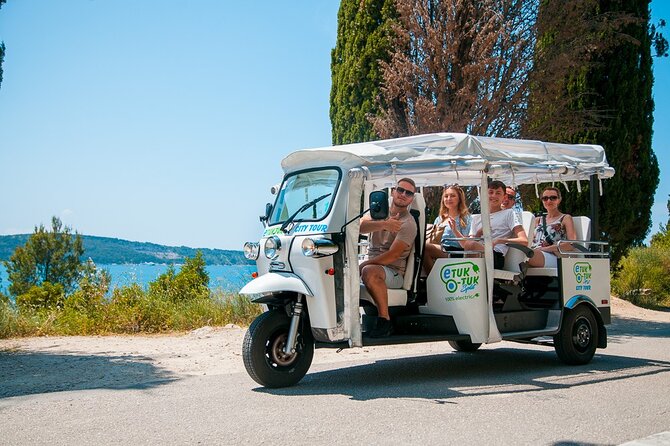
Sustipan is one of the tour’s most worthwhile stops. This peaceful park sits above the marina and looks toward the Adriatic and nearby islands. Its present-day paths and greenery occupy the site of an old monastery and cemetery, giving the place a quiet historical layer without the crowds of the palace.
The stop is listed at about five minutes, though the exact pause can depend on traffic and the day’s schedule. Bring your camera, since the elevated position gives you a broad view with little effort. Sustipan is also a good example of why this tour can be useful early in your stay: you can return later for a slower walk if the setting appeals to you.
The Archaeological Museum is another possible point of interest along the route. Founded in 1820, it is Croatia’s oldest museum and holds objects from prehistoric, Roman, early Christian, and medieval periods. Its collection includes stone inscriptions, sculptures, mosaics, pottery, jewelry, tools, and Roman sarcophagi from Salona.
Do not assume the museum admission is included. Tickets, food, and drinks are not part of the tour, and the stops generally function as outside visits or short orientation points. If the museum matters to you, ask the guide how much time is available and plan a separate visit.
Marjan Hill, Meštrović, and the beaches
The route moves into the Marjan area, where Split becomes greener and more open. The Meštrović Gallery is one of the strongest cultural stops. It occupies the sculptor Ivan Meštrović’s former villa and displays his sculptures, drawings, and architectural work inside the house and in the surrounding gardens.
The setting matters as much as the art. You get Mediterranean gardens, monumental sculpture, and views toward the sea. Still, the tuk-tuk stop is not the same as a gallery visit. Admission and extended time inside are not included, so art lovers should return separately.
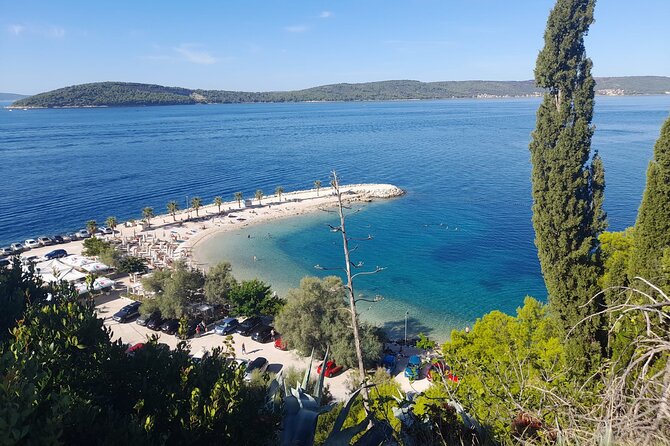
Obojena Svjetlost is a small cove with clear water and a pebbled shore. It offers a quick taste of Split’s swimming culture and a break from streets and buildings. Kasjuni Beach, another Marjan stop, is larger and more established, with pine shade, sun loungers, umbrellas, a beach bar, and calm water.
Kasjuni is listed as a five-minute stop, which is enough to see the setting but not enough for a proper beach afternoon. This is important if you are booking because you want to swim. The tour can show you where to go, but you will need to return on your own for a relaxed beach day.
Villa Dalmacija adds a more private, historic feel to this part of the route. The property sits along the coast among gardens and sea views, with terraces and access to a private beach. It is used for private events and is not presented as a standard public interior visit, so think of it as a scenic point rather than a place you will tour at length.
More Tuk Tuk City Tours in Croatia
- Split: Top City Highlights Electric Tuk-Tuk Tour
★ 4.4 · 194 reviews - Classic Tuk Tuk City Tour Split
★ 5.0 · 80 reviews - Tuk Tuk Sightseeing Tour of Hvar
★ 5.0 · 68 reviews - Eco tuk tuk Highlights of Zadar
★ 4.5 · 36 reviews
Kasjuni Beach and Poljud Stadium
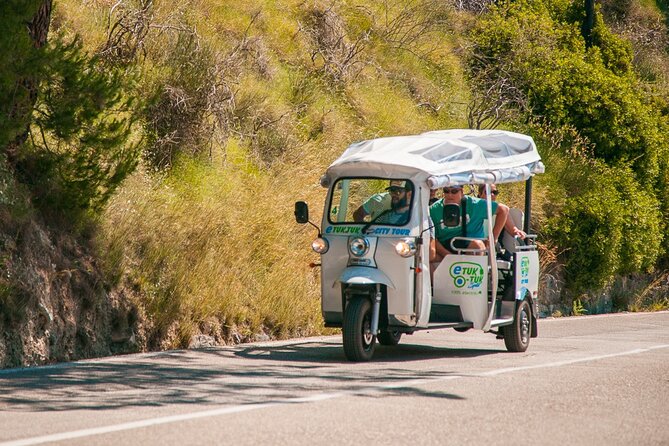
Kasjuni is one of the most recognizable coastal stops on Marjan. Pine trees provide shade, the pebble shore faces clear water, and the beach bar adds a little convenience. You can expect a view and orientation, not a full beach stay.
The tour then reaches Poljud Stadium, home of Hajduk Split. Built in 1979 for the Mediterranean Games, the stadium is known for its curved shell-like roof and unusual design. Even if football is not your main interest, the architecture makes it a worthwhile photo stop.
Families with sports-minded children may especially enjoy Poljud. The ride gives you a look at a major part of local identity without requiring a match ticket or stadium tour. The stop is about five minutes, so you will see the exterior rather than explore the inside.
The route can also include other city areas such as Gripe, Firule Beach, and Bacvice Beach, but the exact sequence is not fixed in the information provided. Some rides do not reach every advertised point. If a particular beach or neighborhood is essential, ask about the day’s route before setting out.
Twenty minutes at Teraca Vidilica

Teraca Vidilica is the longest listed stop, at about 20 minutes, and that extra time makes a difference. The café and restaurant sit on Marjan Hill with wide views across Split, the Adriatic, and the islands.
You may stop for a drink or a light meal, but food and drinks are not included in the price. The menu features Mediterranean dishes, seafood, and local wine, though you should treat this as an optional purchase rather than a required part of the tour.
This is the place where the ride feels least like transport and most like a proper viewpoint visit. You have enough time to take photographs, look over the city, and ask the guide questions. Evening departures can be particularly appealing here, since the changing light gives Split a softer look.
The practical drawback is that an extended stop can feel too long if you are hoping to see more neighborhoods. One less positive account described being left at a park for too long, while others appreciated the chance to pause. Your preference depends on whether you want more commentary or more time to look around.
Republic Square and the end near the Old Town
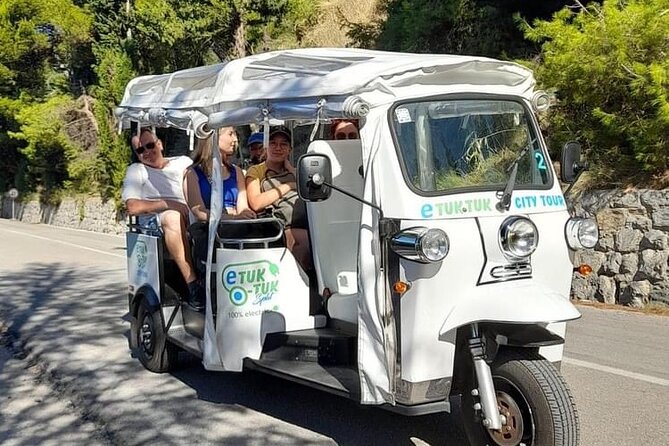
The final listed stop is Republic Square, also called Prokurative. Its neo-Renaissance colonnades and open view toward the sea make it one of Split’s most attractive urban spaces. The square hosts concerts, festivals, and other events, and its cafés are a good place to continue your evening.
At about five minutes, this is another orientation stop rather than a full visit. The ride may finish near the town center, making it convenient to continue toward Diocletian’s Palace, the statue of Grgur of Nin, or the narrow Old Town streets.
One useful approach is to schedule this tuk-tuk ride before a walking tour of the palace. The tuk-tuk shows you the wider city, while a walking guide can explain the Roman core in detail. Doing both gives you a much better sense of Split than using either experience alone.
Guides, group size, and the quality of the ride
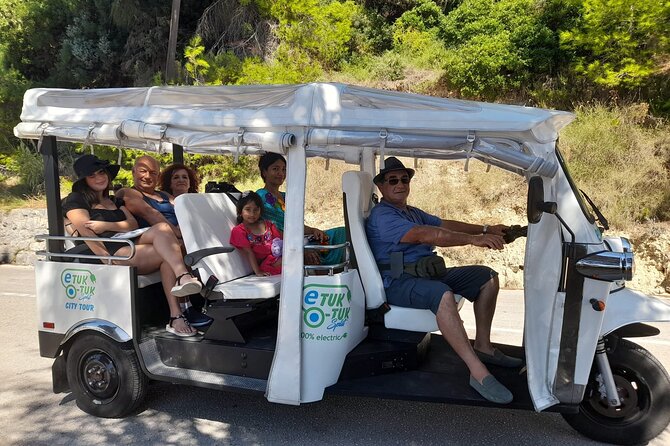
The guide is the biggest variable. Luka has been praised for history, humor, birthday touches, and restaurant suggestions. Marino has been described as an engaging driver with strong local knowledge, while Tony has been noted for adapting to hot weather and discussing subjects ranging from parks and schools to art and local leadership.
Emir is known for a friendly, upbeat manner and cruise-port pickup. Ivan has taken visitors to the main sights and beaches, and Marko has been praised for family-friendly stops, including Poljud. Other guides named in the feedback include Lovre, Jakov, Amar, Igor, and others.
That range of names tells you the company has several drivers, so you cannot book around one specific guide unless the operator confirms it. The best rides seem to combine local stories, flexible photo stops, and practical food advice. The weaker ones offer little history and leave passengers sitting or walking through ordinary areas without much context.
The maximum group size is eight. That is small enough for questions and personal attention, but the exact vehicle may vary. One account describes a four-seat tuk-tuk, so larger parties may be split between vehicles.
Price, timing, and practical value
At $50.81 per person, this is not the cheapest way to move around Split. The value depends on how you use it. If you have only a day in port, dislike long walks, or want to see beaches and viewpoints before choosing where to return, the cost can make sense.
The price is harder to justify if you expect admission to museums, a long beach stop, a detailed palace tour, or a guaranteed two-hour route. The guide, vehicle, and sightseeing are included, but tickets, food, and drinks are extra.
Tours run from morning into the evening. Morning rides can be cooler and quieter at the stops. Late rides offer sunset light and the chance to see Split after the heat of the day, though traffic or mechanical issues can affect pickup times.
Pickup is offered, and a return drop-off at the cruise ship can be arranged in advance. Be precise about your meeting location. One complaint involved confusion between the ferry area and the cruise terminal, plus a late pickup. If you are on a ship schedule, leave a buffer and confirm the exact point before departure.
Free cancellation is available up to 24 hours before the start time. Poor weather or failure to meet the minimum number of participants can lead to a rescheduled tour or full refund.
Who should book this Split tuk-tuk tour?
I would book this for a first day in Split, especially if I wanted a quick orientation beyond the palace. It suits cruise passengers, families, older visitors, anyone avoiding a long uphill walk, and people who want beach and viewpoint ideas before spending a second day exploring.
It is also a good match for visitors who enjoy moving through a city more than entering every museum. You will see a useful spread of Split’s waterfront, parks, coast, stadium, and hill roads in a short time.
I would skip it if your priority is detailed Roman history, long visits inside monuments, or a guaranteed beach swim. In that case, spend your money on a focused walking tour and arrange a separate visit to Marjan or Kasjuni Beach.
For the best value, take it near the start of your stay, ask what stops are planned that day, and use Teraca Vidilica and the beach viewpoints to choose where you want to return. Book it if you want a friendly, efficient overview with local conversation. Skip it if you need a tightly fixed itinerary and a full two-hour sightseeing program.
FAQ
How long does the Split electric tuk-tuk tour last?
The stated duration is approximately 1 hour 30 minutes to 2 hours. Some rides may finish closer to the shorter end of that range.
How much does the tour cost?
The listed price is $50.81 per person.
What is included in the price?
A guide and the electric tuk-tuk ride are included.
Are tickets, food, and drinks included?
No. Admission tickets, food, and drinks are not included.
How many people can join the tour?
The maximum group size is eight travelers.
Is the tour offered in English?
Yes. The experience is offered in English and includes an English-speaking guide.
Can I be picked up from a cruise ship?
Pickup is offered. A return drop-off at the cruise ship can also be arranged if you request it in advance.
What places does the tour visit?
The route can include Riva, Sustipan, Marjan Peninsula beaches, Kasjuni Beach, Poljud Stadium, Teraca Vidilica, Republic Square, and other waterfront and park areas. The exact stops can vary.
Can I cancel for a full refund?
Yes. You can cancel at least 24 hours before the start time for a full refund. Poor weather or failure to meet the minimum number of participants may also result in a new date or a full refund.
Newly added rides around Croatia
- Tuk Tuk Sightseeing Tour of Hvar★ 5.0 · 68 reviews
- Hvar Adventure Tour: Explore with a 4-6 Seater eTuk Tuk Rickshaw!★ 5.0 · 44 reviews
- Zadar: Sunset Eco Tuk Tuk Tour★ 4.7 · 3 reviews
- Stari Grad: Private Tuk-Tuk tour with Wine tasting★ 5.0 · 6 reviews
- Split Tour in Private Electric Rickshaw★ 4.9 · 17 reviews
- Hvar: Tuk Tuk island tour★ 5.0 · 23 reviews
- Hvar Island: eTuk Tuk Adventure Tour with a Guide★ 4.9 · 21 reviews
- Eco tuk tuk Highlights of Zadar★ 4.5 · 36 reviews
Split Tuk Tuk Tours: the nearest alternatives

Split by Private Electric Rickshaw – Palace & Hidden Gems
Read our review →