
Review · PHNOM PENH
Phnom Penh to Silk Island By Tuk-Tuk with local Expert
The most interesting part of this half-day outing is not the silk itself. It is the chain of ordinary places along the way: a Buddhist temple, a local market, a tofu-skin workshop, village roads, and family looms. You see how people live and work outside Phnom Penh, not just a polished cultural display.
I like the open-air tuk-tuk ride and ferry crossing, which make the trip feel connected to the countryside. I also like the human scale of the stops. Guides such as Kim, Lee, TinTin, and Sok have helped visitors understand Khmer words, religion, food, and family businesses in clear English.
The main consideration is the pace. Four to four and a half hours gives you a useful introduction, but not a slow, thorough visit to every village. Weekend timing can also affect the market and school stops, and the tour runs rain or shine.
Key points to know before booking

- Silk Island is only one part of the morning: The tour also covers a temple, market, school area, tofu-skin production, ferry crossings, and village life.
- The tuk-tuk is part of the attraction: You travel overland in an open vehicle, with changing views and some bumpy stretches.
- The tofu-skin workshop is a real highlight: You see a family-run food business and learn how dried tofu skin is made.
- The silk visit is family-based: Local artisans explain a Cambodian craft passed down through generations, with spinning and weaving on view.
- Guides make a big difference: Kim, Lee, TinTin, Sok, and other English-speaking guides have been praised for humor, cultural explanations, and personal care.
- Book a weekday morning if possible: The market is more active then, while schools and village businesses may be quieter or closed on weekends.
Why this tuk-tuk trip works so well
At $29 per person, this is a good-value half-day outing if you want more than Phnom Penh’s central sights. The fee covers hotel pickup and drop-off, tuk-tuk transport, the ferry, entrance costs, an English-speaking guide when selected, water, and snacks.
You are paying for access and interpretation as much as transport. You could hire a tuk-tuk and reach the ferry yourself, but you would likely miss the explanations that connect the temple paintings, food production, silk work, and village routines.
The trip starts with pickup from your Phnom Penh hotel. You should wait in the lobby about 10 minutes before the scheduled time. From there, you head out of the city by tuk-tuk, with the driver handling the route and the guide explaining what you see.
The open vehicle gives you a better view than a closed car, though it also exposes you to sun, dust, wind, and rain. A hat, sunscreen, and light clothing make sense. Since the trip takes place rain or shine, a small rain layer is useful during wet weather.
More tuk tuk tours around Phnom Penh:
- Ultimate Phnom Penh Food Tour by Tuk Tuk: 20 Tastings and Drinks
★ 5.0 · 409 reviews - Visiting 9 Places in 3 hours Share Tour by Tuk-Tuk
★ 4.9 · 293 reviews - Phnom Penh’s Culinary Underground: Local Food Tour by Tuk-tuk
★ 5.0 · 234 reviews
Phnom Penh to the ferry by tuk-tuk
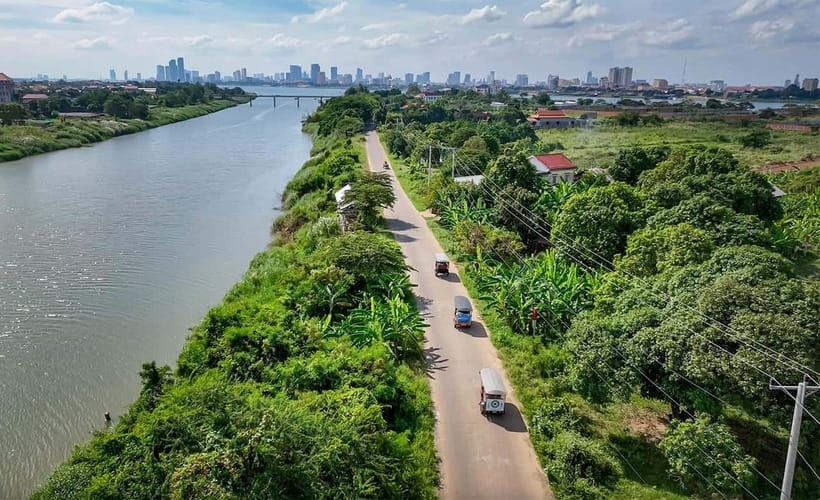
The ride out of Phnom Penh is part of the story. The city gradually gives way to quieter roads, local homes, farms, animals, and river scenery. You get a practical sense of how close rural life is to the capital.
The tuk-tuk can be bumpy, especially on less even roads. That is not a flaw so much as the nature of the ride. If you want air-conditioning and a smooth trip, this is the wrong format. If you like watching daily life pass at street level, the tuk-tuk is a strong choice.
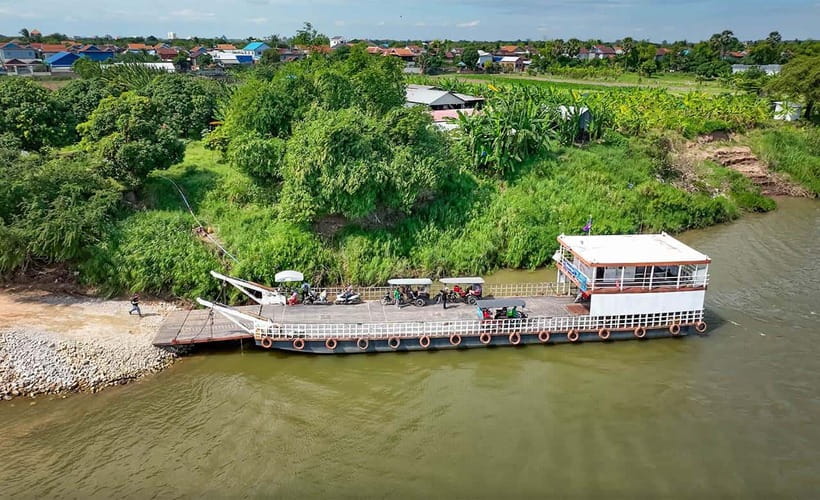
The ferry crossing adds another layer. You board with the tuk-tuk and cross toward Silk Island, also known as Koh Dach. The ride offers broad views back toward Phnom Penh and makes the island feel like a genuine change of setting, even though it is close to the capital.
There can be waiting and crowding around ferry times. One afternoon visit had a busy final ferry boarding, so keep your belongings close and follow your guide’s directions. The ferry is simple local transport, not a sightseeing cruise.
A Buddhist temple and Cambodian religious life
A temple stop usually comes early in the route. You have time to look around, take photographs, and hear about Buddhist customs, religious images, and the meaning of the painted scenes.
This stop gives the rest of the morning a useful frame. The tour is not only about making silk or tasting fruit. It also shows the place religion holds in Cambodian community life. A good guide can explain what you are seeing without turning the visit into a lecture.
Wear clothing suitable for entering a Buddhist temple. The supplied details do not set out a formal dress code, but modest clothing is the sensible choice at any religious site. Listen to your guide about where to walk and when photography is appropriate.
Several guides have been singled out for explaining religion and history in easy English. Kim is known for answering questions and keeping the mood light, while Sum has explained Cambodian culture, religion, and local customs throughout the route.
Koh Oknha Tei Market and the school area
The market stop is short, about 30 minutes. That is enough to look at local food, fruit, household goods, and the rhythm of buying and selling, but it is not enough for a long shopping session.
This is one of the best places to understand daily life through small details. Your guide may help you identify unfamiliar fruit or explain how people use local ingredients. One guide even encouraged a visitor to buy fruit at the market, turning a quick look into a more active part of the morning.
The timing matters. A weekday morning gives you the best chance of seeing the market at work. On a weekend afternoon, stalls may be quiet, and the school may be closed. When that happens, the route can change, with more attention given to the tofu-skin workshop or another local stop.
The school area is scheduled for about an hour and may include a walk, photographs, and a look at the setting. On some visits, the guide has been able to enter the grounds and chat with students. Do not count on that every time, since school activity depends on the day and the school’s schedule.
Same streets, seen from a different seat:
- Phnom Penh: Private City Tour by Tuk-Tuk/Full or Half Day
★ 4.9 · 227 reviews - Phnom Penh: Evening Food Tour with Drinks & Tuk Tuk Included
★ 4.9 · 226 reviews - Phnom Penh’s Ultimate Street Food Tour by Tuk Tuk
★ 4.9 · 225 reviews - Phnom Penh: 9 Exciting Spots Evening Tuk-Tuk Tour
★ 4.9 · 123 reviews
The tofu-skin workshop is the surprise highlight
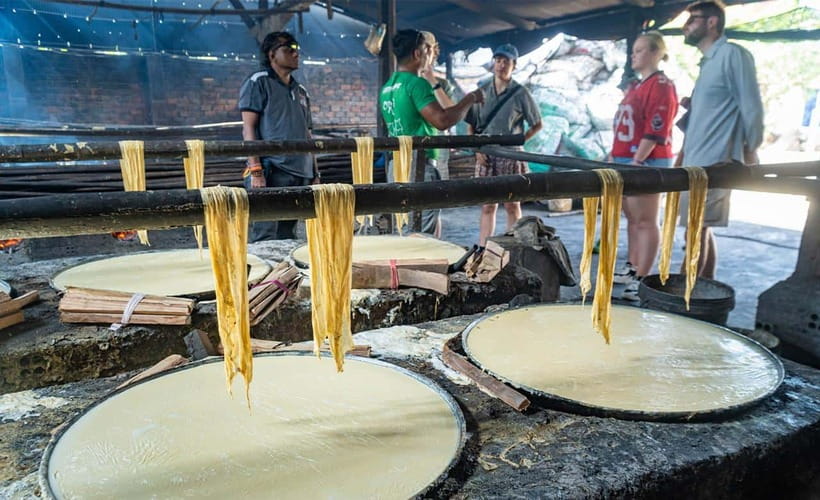
The family-run dried tofu-skin business is one of the most useful stops because it shows food production at a human scale. You see the work behind a product that might otherwise appear on a market table without explanation.
The process is hands-on and labor-intensive. Your guide explains what the family is doing and how the business fits into village life. The stop is not presented as a large factory tour. It is a close look at a household enterprise and the skill needed to keep it running.
This visit has become a favorite part of the route for many people because it feels unexpected. The silk stop is in the name of the trip, but the tofu workshop often gives you the clearest picture of local work.
You may also see animals, agriculture, palm trees, or people preparing food during this part of the route. One morning included a newly born cow and a demonstration of collecting palm sugar. Those details depend on what is happening that day, so treat them as possible sights rather than fixed promises.
Silk Island and the family weaving business
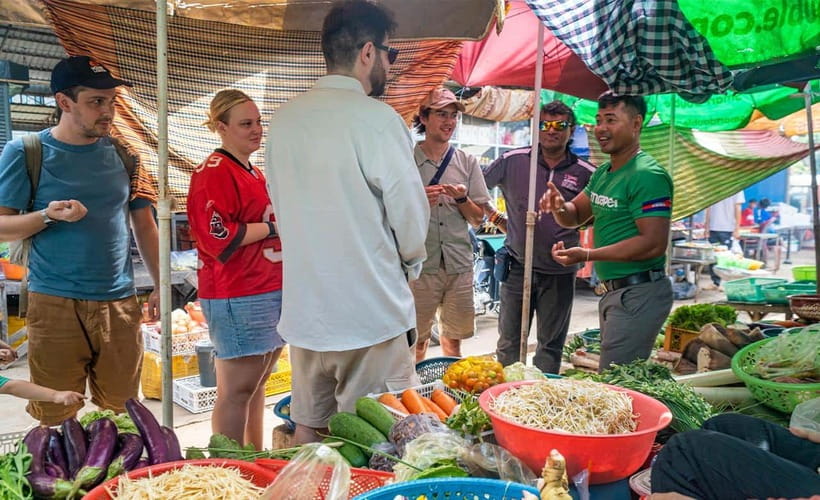
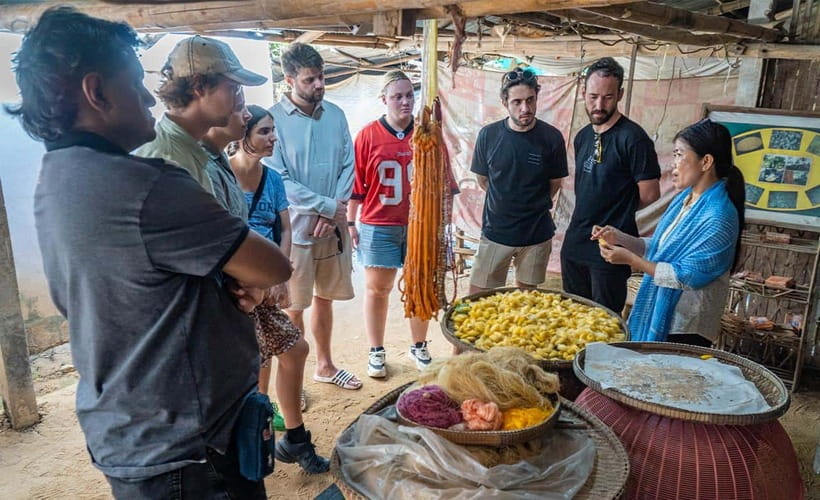
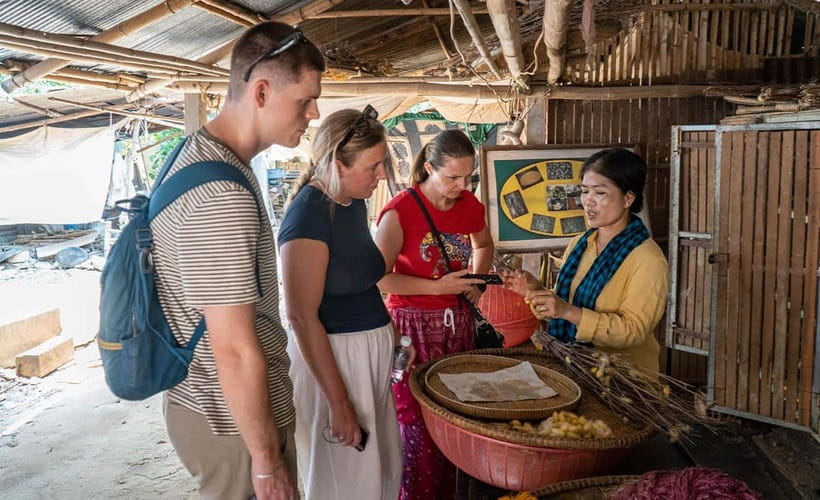
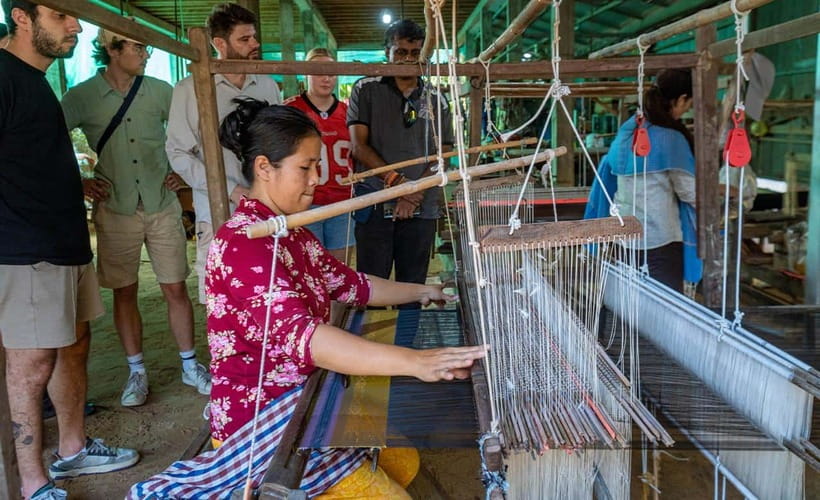
The silk visit is the central cultural stop. A local family explains silk production, from the work connected with silkworms to spinning and weaving. You see the tools and effort behind the finished fabric, rather than only seeing silk displayed in a shop.
The craft has been passed through generations, with one family business described as being in its eighth generation. That continuity matters. It shows how a rural skill can remain part of family work and local identity.
You can expect an explanation of different grades of silk and the steps involved in turning the material into cloth. Depending on the visit, you may see family members working at spinning wheels and looms. One host has worked with the tour company for about 30 years and is known for answering questions clearly.
The setting is informal. At times, only a few family members may be present because the village is busy with another event, such as a wedding. A softly spoken host can also be hard to hear in an open workshop, especially if the group is spread out. Stay close to the guide and ask questions when needed.
There is no stated pressure to buy. You may find silk items available, and purchasing something directly from the family can be a meaningful way to support the work, but shopping is not the purpose of the stop.
Refreshments often add to the visit. Water, fresh coconut, jasmine tea, fresh fruit, dried fruit, and sticky rice snacks have been provided on different outings. The exact selection can vary, but the pause gives you time to sit, talk, and absorb what you have seen.
Akreiy Ksatr Village and the ride around the island
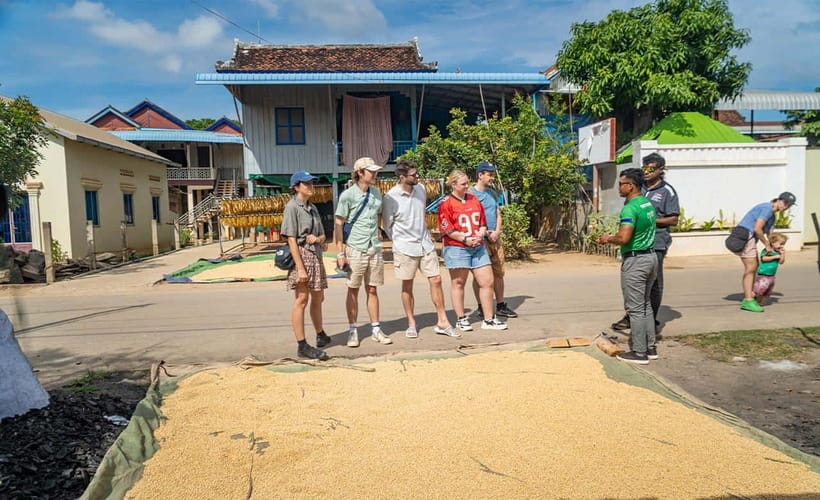
The route continues through Akreiy Ksatr Village, with a guided drive and passing views of rural Cambodia. This is where the trip feels least like a standard sightseeing circuit. You are looking at roads, homes, farms, animals, and people going about ordinary tasks.
The guide is important here because much of the interest is easy to miss. A house, palm tree, field, or roadside activity may seem simple until you learn how it fits into local work or family life.
Do not expect grand monuments on this part of the trip. The appeal is the change of pace and the chance to see a quieter side of the Phnom Penh area. You may wish the route lasted longer, since the ride reveals more than the schedule allows.
The tour returns to Phnom Penh at about 12:30 p.m. That timing makes it easy to plan lunch or an afternoon activity in the city, though ferry and road conditions can affect the exact arrival time.
The guides are a major part of the value
The strongest feature of this tour is the guide, not a single landmark. Names assigned on different departures have included Kim, Lee, TinTin, Sok, Sum, Sath, Seang, and Samnang, also called Lucky. The guide you receive will vary, but the role is consistent: explain, translate, keep the group moving, and make local contact feel respectful.
Kim has been praised for clear English, humor, and careful answers. Lee has taught basic Khmer words, kept a relaxed mood, and explained the silk and tofu businesses. TinTin has been described as energetic, friendly, and easy to understand.
Sok and Mr Friday have also been praised for warmth and local insight. Sath has helped explain the countryside throughout the route, while Samnang has checked that everyone was comfortable and kept the morning organized.
English ability can vary from guide to guide. Most comments about communication are very positive, but one experience found the guide’s English more limited. The tour still worked because the guide was accommodating, but you should allow for some variation.
The driver matters, too. You remain in the tuk-tuk for much of the morning, so a careful driver makes the ride more comfortable. Guides and drivers have helped older people and those with limited mobility, but the format still includes walking, ferry boarding, and uneven ground.
Practical advice for getting the most from the morning
Choose a weekday morning if your schedule allows. You have a better chance of finding the market active and the school open, while family workshops may have more people at work.
Wear comfortable shoes and clothes that can handle dust or a splash of rain. Bring sun protection, and keep your phone or camera secure during the tuk-tuk and ferry rides.
The tour is not suitable for pregnant women according to the activity information. The bumpy vehicle, walking, and ferry boarding also mean you should think honestly about your comfort level.
The pace is generally relaxed, but the morning contains many parts. If you want long photography sessions or detailed shopping time, you may feel hurried. If you want a broad introduction to rural life, the variety is a benefit.
Ask questions. The best moments often come from simple subjects: why a temple image looks a certain way, how a family organizes its work, what fruit is in season, or how a Khmer word is pronounced. Guides such as Lee and Kim have made this kind of conversation a central part of the outing.
Is $29 a fair price?
Yes, for most people. The $29 price includes several costs that would add up if arranged separately: hotel transport, a private-feeling local vehicle, ferry travel, entrance fees, a guide, water, and snacks.
The value is strongest if you are staying in Phnom Penh for a short time and want a structured way to see rural Cambodia. You get a temple, market, village roads, food production, silk work, and river transport in one morning.
The value is weaker if you dislike open vehicles, have little patience for bumpy roads, or want a long visit at one major site. This is a sampler, not a slow craft workshop or a full-day island tour.
You can cancel up to 24 hours ahead for a full refund, and the reserve-now-pay-later option helps if your plans are still moving. Those policies are useful, but the bigger booking decision is simple: do you want variety and local contact, or a longer, quieter visit to one place?
Who should book this experience?
I would choose this for first-time visitors who want to see beyond central Phnom Penh without committing to a full day. It also suits families and older visitors when the guide can adjust the pace, though the tuk-tuk and ferry require basic mobility.
It is a good match for people interested in craft, food, religion, and ordinary village life. You do not need a specialist interest in silk to enjoy it, since the tofu workshop, temple, market, and ferry add plenty of variety.
I would be cautious if you need guaranteed access to every scheduled stop. Weekend timing, school hours, village events, weather, and ferry conditions can change the order or replace a visit. That flexibility is normal for a community-based outing, but it is worth knowing before you book.
Should you book the Phnom Penh to Silk Island tuk-tuk tour?
Book it if you want an easy, fairly priced morning that shows how close Phnom Penh is to rural Cambodia. The best reasons are the family tofu business, the traditional silk work, the ferry crossing, and the chance to spend several hours with an English-speaking local guide.
Try to go on a weekday morning, stay open to small changes, and expect a real tuk-tuk ride rather than polished transport. If that sounds appealing, this is one of the stronger ways to use half a day in Phnom Penh.
FAQ
How long does the Silk Island tuk-tuk tour take?
The activity lasts about 4 to 4.5 hours. Return to Phnom Penh is expected around 12:30 p.m., though ferry and road conditions can affect timing.
What does the $29 price include?
The price includes hotel pickup and drop-off, tuk-tuk transport, the ferry trip, entrance fees, water, snacks, and an English-speaking guide if you select the guided option.
Is the tour conducted in English?
Yes. The live guide language is English. Guide names vary by departure and have included Kim, Lee, TinTin, Sok, Sum, Sath, Seang, and Samnang.
What places does the tour visit?
The route includes a Buddhist temple, Koh Oknha Tei Market, the Koh Oknha Tei Secondary School area, Silk Island, a family tofu-skin business, silk production, and Akreiy Ksatr Village.
Does the tour run in bad weather?
Yes. The tour takes place rain or shine. Bring suitable clothing and sun or rain protection.
Is this tour suitable for pregnant women?
No. Pregnant women are listed among those for whom the activity is not suitable.
Newly added rides around Phnom Penh
- Phnom Penh: Walking Tour, Food Tour & Sunset Cruise★ 4.9 · 10 reviews
- Phnom Penh: Silk Island Sunset by Tuk Tuk with food & drinks★ 5.0 · 12 reviews
- Phnom Penh: Street Art & Food Tour by Tuk-Tuk★ 4.9 · 69 reviews
- Phnom Penh: Private Tuk-Tuk Tour with English-Speaking★ 5.0 · 8 reviews
- Phnom Penh: Street Art and Noodle Tour by Tuk Tuk★ 5.0 · 3 reviews
- Phnom Penh Historical Sites Tour by Tuk Tuk★ 4.3 · 30 reviews
- Phnom Penh: Morning Market & Guided Breakfast Tour by Tuktuk★ 5.0 · 7 reviews
- Phnom Penh: Mekong River Sunset Cruise and Tuk Tuk Ride★ 5.0 · 2 reviews
Phnom Penh Tuk Tuk Tours: the nearest alternatives
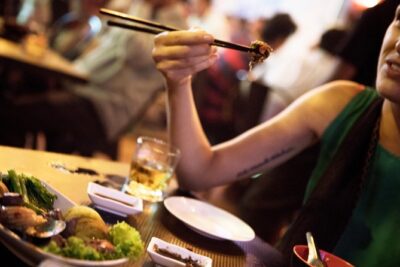
Ultimate Phnom Penh Food Tour by Tuk Tuk: 20 Tastings and Drinks
Read our review →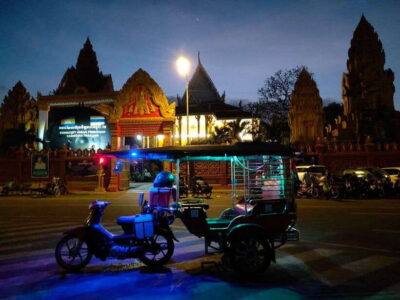
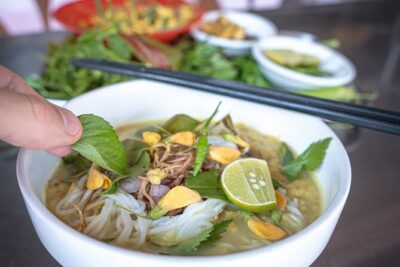
Phnom Penh’s Culinary Underground: Local Food Tour by Tuk-tuk
Read our review →
Phnom Penh: Private City Tour by Tuk-Tuk/Full or Half Day
Read our review →
Phnom Penh: Evening Food Tour with Drinks & Tuk Tuk Included
Read our review →
Phnom Penh’s Ultimate Street Food Tour by Tuk Tuk
Read our review →
Phnom Penh: 9 Exciting Spots Evening Tuk-Tuk Tour
Read our review →
Phnom Penh: City Sights Evening or Half day Tour by Tuk Tuk
Read our review →Tuk tuk lists that include it