
Review · BERLIN
Individual City Tour – Rickshaw Sightseeing in Berlin
Berlin is spread out, and this private rickshaw tour gives you a smart way to cover the major sights without wearing out your feet. You roll from Alexanderplatz to Brandenburg Gate, using cycle lanes and small streets that larger vehicles cannot reach.
I like the private format, since Leo can slow down for your questions, change the route, or linger at a favorite stop. I also like the close-up access: you can get near courtyards, memorials, and historic streets, then step out for photographs.
The main trade-off is pace. Stops are often brief, and you will see many places from outside rather than enter them. If you want a detailed museum visit, this is a sampler, not a replacement.
Key points at a glance
- Private ride for your own group: The tour is not shared with strangers, so the guide can adjust the route to your interests.
- A fast first look at Berlin: In one to three hours, you can connect Alexanderplatz, Museum Island, Checkpoint Charlie, Tiergarten, and Brandenburg Gate.
- Strong guides: Leo is frequently named for his clear English, personal service, and grasp of Berlin’s past. Jakob also leads tours.
- Useful in cold weather: Blankets are included, and hot water bottles have been supplied on especially cold outings.
- Hotel pickup can save time: Pickup is free within 2 km of Museum Island. Farther locations cost €5 per extra kilometer.
- Best for an overview: You can mark places for a later, longer visit, but entrance tickets and drinks are not included.
Why a rickshaw works well in spread-out Berlin
Berlin is not a city you understand from one central square. Its key sights are scattered across former East and West Berlin, along the Spree, through Tiergarten, and around the old Wall route.
A rickshaw bridges the gap between walking and a standard vehicle tour. You cover more ground than on foot, but you still travel slowly enough to notice building details and hear the guide without the distance and traffic of a bus.
The small vehicle also helps with access. It can use cycle lanes and reach areas that are awkward for a car. You may get closer to a courtyard or monument, then step out for a picture without dealing with a large coach.
The tour is private, which matters here. Berlin’s story can lead in many directions: Prussian kings, Nazi terror, Cold War division, reunification, and modern government. With Leo or Jakob, you can ask a question and follow it instead of listening to a fixed speech meant for a large group.
The advertised duration ranges from one to three hours. A one-hour ride is useful for a quick orientation, while three hours gives the route time to include Tiergarten and the full sweep from Alexanderplatz to Brandenburg Gate. The exact balance depends on your chosen time and requests.
More Tuk Tuk City Tours in Germany
- Rickshaw Sightseeing City Tours Berlin – Rikscha Tours
★ 4.0 · 55 reviews - Berlin: Private Sightseeing Tour in an E-Rickshaw
★ 4.9 · 44 reviews - Berlin Rickshaw Tours Historical & Photo City Tour 120min – Sightseeing
★ 4.5 · 11 reviews
Alexanderplatz and Berlin’s oldest beginnings
The meeting point is the Weltzeituhr, or World Time Clock, at Alexanderplatz. It is easy to recognize and has long been a meeting place for both Berliners and visitors.
Alexanderplatz also gives you a useful starting point for understanding the city. The area developed from the medieval edge of Berlin and later became a major center of East Berlin, or the former GDR capital. The clock itself is a reminder of the city’s postwar, socialist-era identity.
From here, the route heads toward Nikolaiviertel. This was the oldest settlement area of the twin towns of Berlin and Cölln. Much of it was destroyed in the Second World War and rebuilt for Berlin’s 750th anniversary.
Do not expect an untouched medieval quarter. Nikolaiviertel is a reconstruction, and that fact is part of its story. It shows how Berlin has repeatedly rebuilt its physical appearance while preserving selected pieces of its past.
The planned stop at each of these places is about five minutes. That is enough to orient yourself and take a few pictures, but not enough for a long walk through every lane.
Museum Island and the Hackesche Höfe
Museum Island is one of Berlin’s major cultural centers. The island was developed under Prussian kings and has been a UNESCO World Heritage site since 1999.
You will also be near Berlin Cathedral and the new Berlin Palace. The rickshaw gives you a useful outside view, but admission to the museums is not included. If you want to visit the Pergamon Museum, Bode Museum, Alte Nationalgalerie, or another collection, plan that as a separate stop on another part of your trip.
The five-minute pause here works well for deciding what deserves a return visit. I would not try to combine this overview with a museum visit, since even one collection can take hours.
Next comes the Hackesche Höfe, a group of enclosed courtyards in the old Spandauer Vorstadt district. The courtyards are known for their decorative facades, smaller passageways, shops, and changing urban feel.
This is one of the places where a rickshaw has a real advantage. You can approach the district without walking all the way from a distant parking area, and your guide may point out details that are easy to miss from a broad avenue. The stop is short, so ask about a longer visit if courtyards and city design interest you.
From the Palace of Tears to Bebelplatz
The Palace of Tears is the former exit hall at Friedrichstraße station. It was a border crossing during Berlin’s division, and the name comes from the emotional farewells that took place there.
The building still has control counters, which help make the Cold War story concrete. This is not just a location on a map. It was a place where people crossed between separate political systems, often under painful circumstances.
Bebelplatz presents a different chapter. The square is framed by grand buildings connected with culture and power, and an underground empty library memorializes the Nazi book burning of May 10, 1933.
The memorial is easy to overlook because it is set into the pavement. Look down through the glass panel. The empty shelves give the site its force without a large monument.
The guide’s explanations are particularly useful at stops like this. A quick photograph cannot explain why the square matters, but a clear account can connect the architecture with the events that took place there.
More Rickshaw Tours in Berlin:
- Berlin: Private Guided E-Rickshaw Tour
★ 4.9 · 157 reviews - Berlin Express: Private 1-Hour E-Rickshaw Ride
★ 5.0 · 116 reviews - Rickshaw Tours Berlin – Groups of up to 16 people with several rickshaws
★ 4.0 · 97 reviews - One Up to 3 Rickshaws(6 GUESTS)-Taylor Made Rickshaw Berlin Tour
★ 5.0 · 20 reviews
Gendarmenmarkt and Checkpoint Charlie
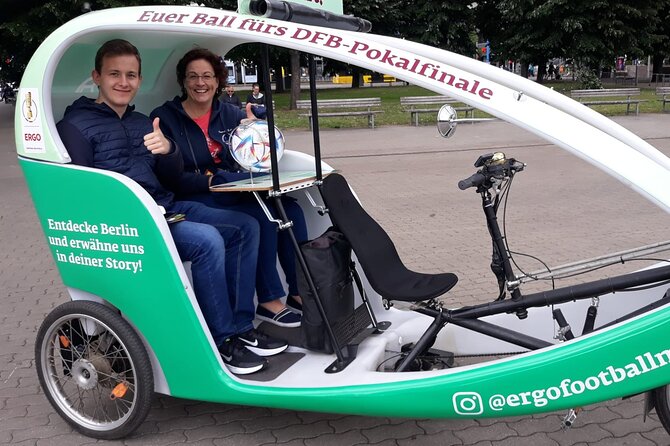
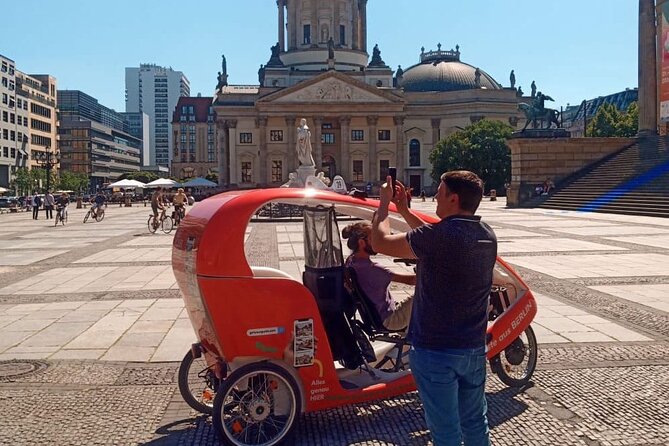
Gendarmenmarkt is one of Berlin’s most formal squares. The concert hall sits between the French Cathedral and the German Cathedral, creating the grand architectural ensemble that makes this one of the city’s most memorable open spaces.
The tour pauses for about five minutes, enough to take in the proportions and hear the basic story. If the square is a priority for you, ask the guide to allow time for photographs from more than one angle.
Checkpoint Charlie is more complicated. The former crossing has become a major symbol of the divided city and the Cold War. It also relates to dangerous escape attempts and the human cost of the border.
The area can feel more commercial than the history suggests. That is worth knowing before you arrive. The rickshaw gives you a quick introduction, but I would return later if you want to visit a museum or study the details of the Wall and escape stories.
This is also a good point to ask the guide questions about Berlin’s division. Leo has been praised for answering specific questions, including difficult ones about the Nazi period and the people connected with it. That personal exchange is one of the private tour’s strongest features.
The Wall, Potsdamer Platz, and Berlin rebuilt
At the Topography of Terror, you see one of the longest remaining sections of the Berlin Wall in its original position. The site also deals with the institutions of Nazi persecution, so it carries two layers of difficult history.
The Wall section is a physical reminder that history here is not always hidden behind a museum door. You can see the remaining structure and then hear how the city around it changed.
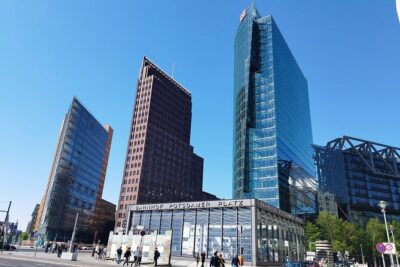
Potsdamer Platz shows the opposite side of Berlin’s transformation. Once one of Europe’s important traffic junctions, it was badly affected by the city’s division and later rebuilt with striking modern buildings.
Old traces remain, but they are easy to miss among the newer construction. This is where old photographs or a guide’s comparisons help. Leo has used historic images to show how much Berlin has changed, giving you a clearer sense of what the empty border zone once looked like.
These stops are best understood as a sequence: Nazi rule, wartime destruction, Cold War division, and post-reunification construction. You are not simply checking off monuments. You are watching a city revise itself.
A longer ride through Tiergarten
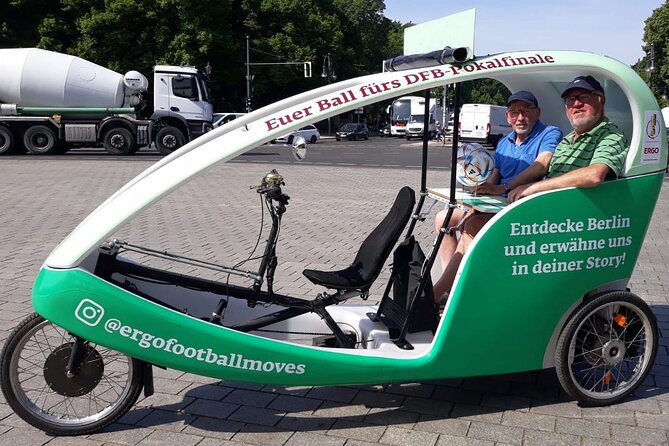
Tiergarten is the tour’s longest listed stop, at about 30 minutes. That extra time matters because the park is more than a single monument. It is Berlin’s green center, with paths, bridges, memorials, and government buildings around it.
The route passes the Victory Column, Bellevue Palace, the House of World Cultures, the Carillon, and the Soviet Memorial. You also ride through the park itself, which gives the tour a welcome change from stone squares and traffic corridors.
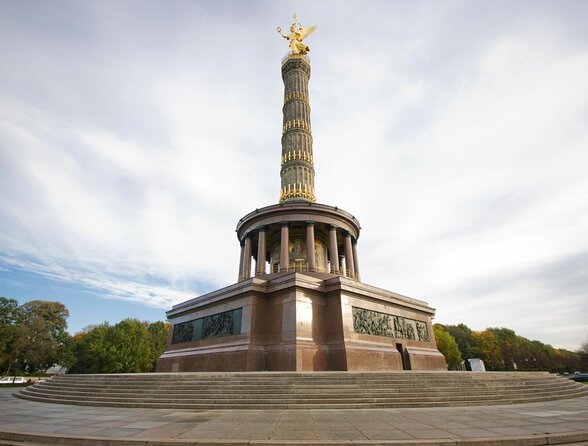
The Victory Column commemorates three Prussian victories and is topped by the gilded figure of Victoria. From the ground, look for details such as the gilded cannons. Admission to the column is not included, so this visit is an exterior stop unless you make separate arrangements.
Bellevue Palace began as a prince’s residence and has served as the official residence of the German Federal President since 1994. Again, you see it from outside. The value here is the setting and the explanation, not an interior tour.
Tiergarten also makes the ride more relaxing. On a cold day, the provided blanket can be useful, and hot water bottles have been supplied on particularly freezing outings. The rickshaw is covered, but you should still dress for the weather. A blanket helps, but it does not turn winter into summer.
Government District and Brandenburg Gate

The Government District grew largely around the year 2000 along the Spreebogen. It includes the historic Reichstag and the newer buildings of the federal government.
This section helps explain modern Berlin. The city is not only a memorial to division. It is also the seat of a reunified Germany, with contemporary government buildings placed beside older landmarks.
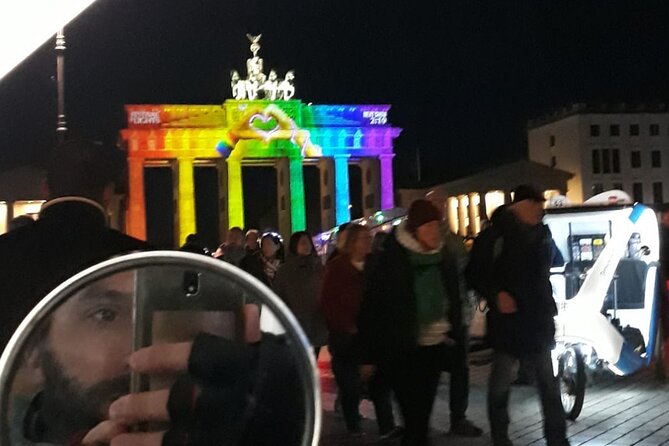
The final major stop is Brandenburg Gate, at the end of Unter den Linden. It is Berlin’s only surviving city gate and the city’s best-known symbol.
Its meaning has changed with the city. It once represented the edge of Berlin, later became linked with division, and eventually came to represent reunification. The five-minute stop is enough for photographs and a final explanation, though you may want to return at a quieter time for a closer look.
The tour ends back at the meeting point. If you arrange hotel pickup, confirm the return plan clearly, since the stated endpoint is the original meeting point rather than automatically your hotel.
Price, pickup, and what you actually receive
At $53.21 per person, the value depends on your group size and the length of the ride. For a private party, that price can be fair because you are paying for a dedicated guide and vehicle rather than a fixed group experience.
The value is strongest for two kinds of visitors. First, you may be arriving in Berlin with only a short time and want a broad orientation. Second, you may have limited walking ability or simply prefer not to spend the day crossing the city on foot.
Hotel or location pickup within 2 km of Museum Island is free. Beyond that radius, the charge is €5 per additional kilometer. One past pickup involved an extra €15, so confirm the distance and fee before booking if your hotel is farther out.
Drinks are not included and can be ordered separately. Entrance fees are also not included at Museum Island, the Victory Column, or Bellevue Palace. In practice, this means the tour price covers the ride, guide, and sightseeing commentary, not museum visits or refreshments.
The tour is offered in English. Confirmation arrives at booking, and free cancellation is available up to 24 hours before the start time. Changes or cancellations inside that 24-hour window are not refunded.
Comfort, access, and family fit
The rickshaw is a good choice if walking is a concern. One solo rider with bad legs was helped on and off and was able to bring a walker. Another rider with bad knees found the format much easier than a walking tour.
That does not mean every mobility need is covered. The provided information says most people can participate and that service animals are allowed, but it does not promise wheelchair accommodation. If you use a wheelchair, contact the provider before booking and explain what you need.
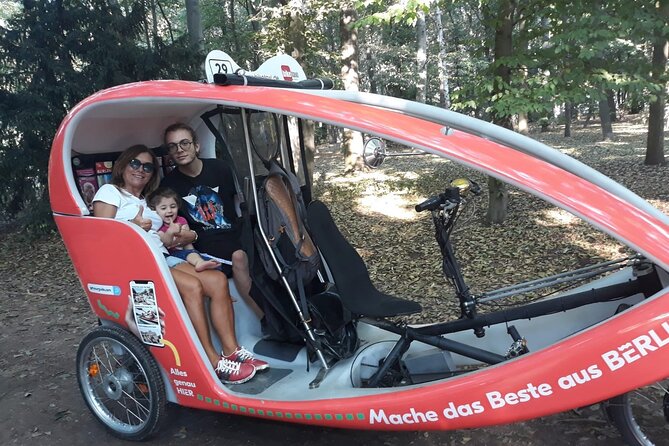
Families can also use the format well. Children have enjoyed the unusual vehicle, and the private setting lets a guide adjust explanations to a young child, teenager, or history-focused adult. A two-year-old has been included in a successful outing, though you should still confirm your own child’s seating needs.
Cold weather is manageable with the blanket, and hot water bottles may be available. Rain protection is also mentioned in connection with the covered vehicle. Still, Berlin weather can change quickly, so warm layers are sensible.
How to get the most from your ride
Book this near the start of your stay if you want help choosing what to revisit. The ride gives you a city map in your head, and you can mark Museum Island, the Wall sites, or a courtyard for a longer visit later.
Tell the guide what you already plan to see. On a three-hour outing, Leo adjusted the route to avoid repeating places scheduled for the next day. That kind of flexibility is one of the clearest reasons to choose a private tour.
A three-hour version makes more sense if you want the full route, time for questions, and the long Tiergarten section. A one-hour version is better for a quick introduction, but you should expect less time at each stop.
Daylight helps with architecture and photographs. Evening can give you attractive city images, but the darkness may make details harder to see. If visual detail matters most, afternoon is the safer choice.
Ask for photo pauses. The rickshaw can bring you close to many sights, but a five-minute stop passes quickly. If a particular site matters to you, say so at the beginning.
Who should book this Berlin tour?
Book it if you want a private overview, need to limit walking, are traveling with family, or enjoy asking questions as you go. It is also a good first-day choice because it connects Berlin’s main districts quickly and shows you where to return.
I would be cautious if your main goal is museum interiors, long visits at memorials, or a slow architectural walk. The tour covers a lot, but most stops last about five minutes, and the included service is sightseeing from the rickshaw rather than admission to attractions.
For many visitors, the best plan is to use this as your Berlin orientation, then spend later days inside the places that caught your attention. With Leo or Jakob guiding a private route, you get a practical look at the city, a warm blanket when needed, and enough flexibility to make the ride feel personal rather than mechanical.
FAQ
How long does the private rickshaw tour last?
The tour lasts approximately one to three hours. The longer version allows more time for the full route and the 30-minute ride through Tiergarten.
Where does the tour start and end?
It starts at the World Time Clock at Alexanderplatz, Alexanderplatz 1, 10178 Berlin. The activity ends back at the meeting point.
Is hotel pickup available?
Yes. Pickup from hotels or other locations within 2 km of Museum Island is free. Locations farther away are charged at €5 per additional kilometer.
Is the rickshaw tour private?
Yes. Only your own group participates, so the route can be adjusted to your interests and questions.
Are museum and attraction admission fees included?
No. Admission is not included for Museum Island, the Victory Column, or Bellevue Palace. Drinks can also be ordered separately.
What happens if the weather is cold?
A warm blanket is provided in cold weather. Hot water bottles have also been supplied on especially cold tours. The vehicle is covered, but warm clothing remains advisable.
More Tuk Tuk City Tours in Berlin
- Rickshaw Sightseeing Tours Berlin – Highlights Berlin – Rickshaw city tour
★ 3.5 · 3 reviews - Private Lisbon Sightseeing Tuk-Tuk Tour: Alfama, Belém & More
★ 5.0 · 4,277 reviews - Madrid: Private City Tour by Eco Tuk Tuk
★ 4.9 · 3,465 reviews - Lisbon Highlights: Private Tuk Tuk Tour Adventure Sightseeing
★ 5.0 · 3,284 reviews
Newly added rides around Berlin
- Romantic Berlin Rickshaw City and Photo Tour – incl. pick-up★ 4.0 · 9 reviews
- Rickshaw Sightseeing Tours Berlin – Highlights Berlin – Rickshaw city tour★ 3.5 · 3 reviews
- One Up to 3 Rickshaws(6 GUESTS)-Taylor Made Rickshaw Berlin Tour★ 5.0 · 20 reviews
- Rickshaw Tour-Cruise Ship guests arrive 9.30 upto 11.30 am Berlin★ 5.0 · 7 reviews
- Daily First Rickshaw promotion in Combi Vehicle public Group 90€★ 5.0 · 11 reviews
- Private Guide Up to Group 6 – ONE Rickshaw, (E)Bikes, E-Scooters★ 5.0 · 3 reviews
- Rickshaw Sightseeing City Tours Berlin – Rikscha Tours★ 4.0 · 55 reviews
- Private Up to 12 Guests-ONE RICKSHAW, E-Bikes, E-Scooters★ 5.0 · 2 reviews
Berlin Tuk Tuk Tours: the nearest alternatives

Rickshaw Tours Berlin – Groups of up to 16 people with several rickshaws
Read our review →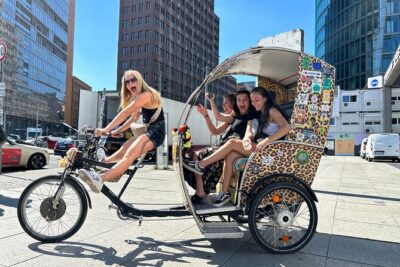
One Up to 3 Rickshaws(6 GUESTS)-Taylor Made Rickshaw Berlin Tour
Read our review →
Berlin Rickshaw Tours Historical & Photo City Tour 120min – Sightseeing
Read our review →
Daily First Rickshaw promotion in Combi Vehicle public Group 90€
Read our review →Tuk tuk lists that include it