
Review · KATHMANDU
Kathmandu Sunset Tour by Rickshaw Including Durbar Square Visit
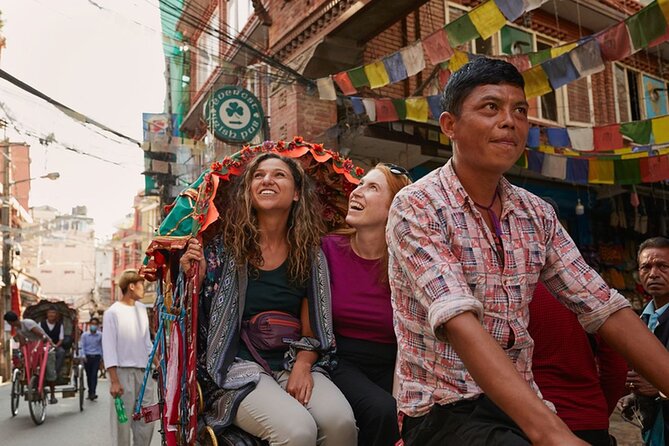
Kathmandu’s best evening introduction may come from the back seat of a rickshaw. You roll out of Thamel, pass spice stalls and shrines in Asan, then reach Kathmandu Durbar Square as daylight fades and shopkeepers prepare for the night.
I like two things here: you see the city at street level without having to negotiate its tight lanes yourself, and the tour mixes a moving ride with time on foot among temples and courtyards. Guides such as Nikita and Sanjeeb have been praised for their warm, clear explanations.
The main consideration is timing. At 6 p.m., some details in the square may be harder to see, and the route overlaps with parts of a standard Kathmandu city tour. The ride itself is also subject to traffic, crowds, uneven streets, and plenty of noise.
Key points to know before you book
- Asan brings the real street action: The route passes Kathmandu’s oldest food market, with spices, vegetables, clothing, electronics, shrines, and constant local activity.
- Durbar Square is the main stop: You get about 85 minutes to walk among more than 50 temples and shrines, with the entrance fee included.
- The rickshaw offers a useful local view: You sit above the lane-level crowds while your driver handles narrow streets and busy crossings.
- The group stays small: A maximum of 12 people gives the guide room to explain sites and answer questions.
- The evening mood is part of the appeal: Fading light, food stalls, chai, horns, chanting, and festival activity can make the route feel very different from a daytime tour.
- The price includes more than transport: At $50.30 per person, you pay for the rickshaw, guide, driver, Durbar Square admission, and practical local tips.
Why a Kathmandu rickshaw ride works so well at sunset
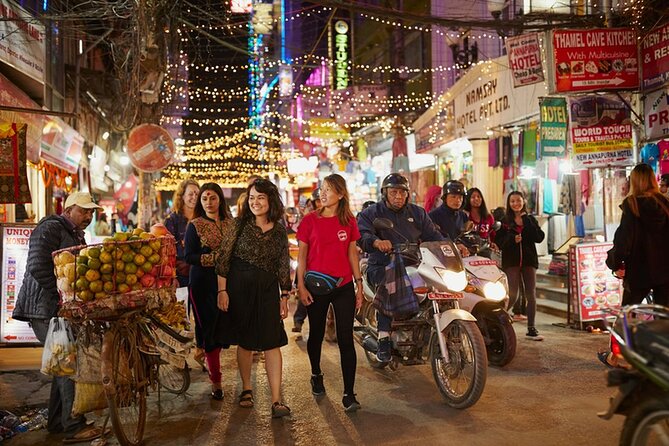
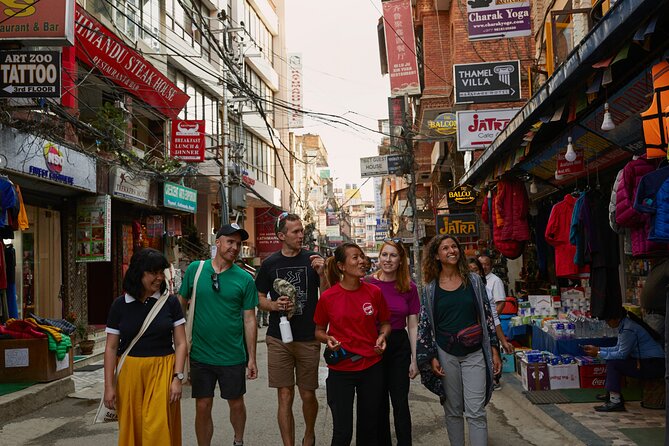
Kathmandu can be a difficult city to read during your first hours. Thamel is easy enough to find, but beyond its restaurants, hotels, shops, spas, and clubs, the streets quickly turn into a maze of lanes, market corridors, temples, and motorbikes.
This tour gives you a gentle way to get your bearings. You do not simply sit in a vehicle and watch the city slide past. The rickshaw moves slowly enough for you to notice storefronts, baked goods, scarves, temple corners, and people buying food. Then you get out and walk through the historic center.
That combination matters. A sightseeing bus would miss the close-up street scenes. Walking the entire route could be tiring and frustrating in crowded lanes. The rickshaw handles the distance while still keeping you close to the sounds and smells of central Kathmandu.
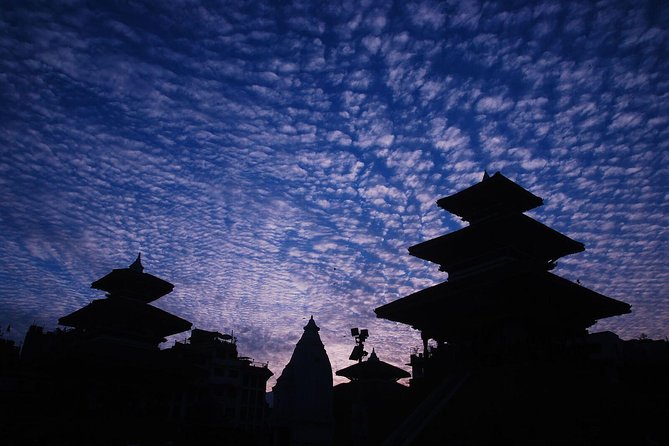
The 6 p.m. start also changes the character of the city. You may catch the last useful daylight around the temples, followed by the first glow from shops and nightlife. Festival evenings can add drums, chanting, dancing, and larger crowds. Those moments are not guaranteed, but the timing gives you a chance to see Kathmandu during its daily shift from market town to night city.
More Rickshaw Tours in the world:
- Tokyo Asakusa Rickshaw Tour
★ 5.0 · 1,375 reviews - Bruges: Guided Rickshaw Tour
★ 4.9 · 1,199 reviews - Old Delhi Food, Heritage&Cultural Walk with Rickshaw ride to Masterji Kee Haveli
★ 5.0 · 742 reviews
Meeting in Thamel and settling into the rickshaw
The tour begins outside Hotel Marshyangdi on Chaksibari Marg in Thamel. You meet your guide and driver there at 6 p.m., then board the rickshaw for the first section toward Asan.
Thamel is a practical starting point because it is Kathmandu’s main tourist center. You can reach it from hotels, restaurants, shops, and nightlife venues in the area, and the meeting point is specific rather than a broad neighborhood instruction.
The first ride lasts about 15 minutes. Do not expect a long scenic cruise through open roads. The charm comes from the narrow lanes and close views. Your driver threads through pedestrians, motorbikes, vendors, and other rickshaws while you watch from your seat.
That higher seat gives you a handy view over some of the immediate street clutter. You can look down into shopfronts and market activity without constantly stopping to check your path. At the same time, you remain exposed to the normal sounds and smells of the city, so this is not a quiet or polished form of transport.
If you prefer smooth roads and predictable traffic, you may find the ride hectic. If you want a first look at how central Kathmandu works, the disorder is part of the lesson.
Asan market, Annapurna Temple, and old city shrines
The longest riding section takes you through Asan, a historic market in the heart of Kathmandu. Allow about 50 minutes for this part, including stops and the slow ride through the lanes.
Asan is known for spices and vegetables, but its shops sell far more than food. You might pass clothing, electronics, baked goods, herbs, and household items. It is a working market, not a staged attraction, so the experience depends on what is happening that evening.
The route includes a stop in front of Annapurna Temple. The name refers to the Goddess of abundance, with Anna meaning food and Purna meaning fulfilment. This is a useful detail because it connects the shrine to the market around it. Food trading here is not just commerce. It sits beside religious practice and local belief.
You also pass Seto Machindranath, or Janabaha Dyo, a deity respected by both Hindus and Buddhists in Kathmandu. Another important site is Aakash Bhairab, associated with King Yalambar, described as the first king in Nepal Bhasa tradition.
These stops make the ride more than a general city loop. Your guide can point out why a small shrine matters, where a temple sits in relation to the market, and how the same lane can serve shoppers, worshippers, vendors, and passing traffic.
Do not expect a long private visit inside every religious site. Much of this section is about seeing the shrines in their street setting. That is also its strength. You see how sacred structures fit into ordinary city life rather than finding them separated behind a quiet entrance.
The route continues through Asan’s narrow streets toward Durbar Square. This is where the rickshaw earns its keep. You can take in the commotion without having to plan every turn, and the guide can keep the group moving through a place where it is easy to lose your bearings.
Kathmandu Durbar Square after dark
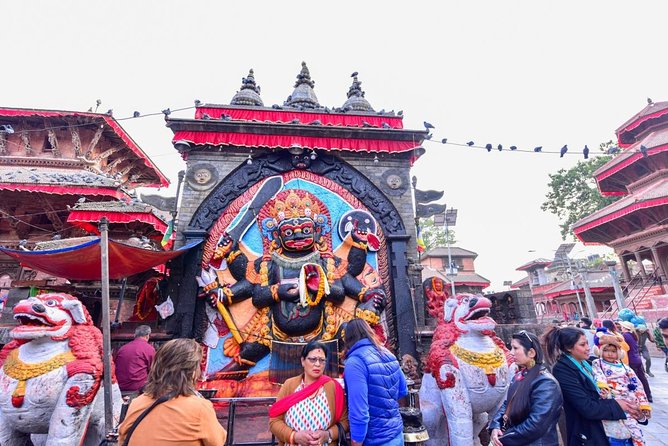
You spend about 85 minutes at Kathmandu Durbar Square, the central walking portion of the tour. The admission fee is included, which removes one small task from the evening and helps support the preservation of the site.
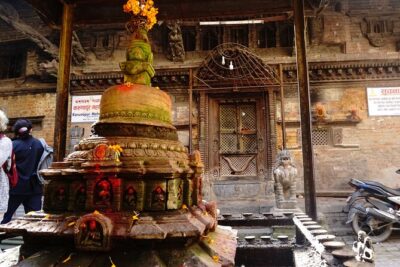
The square contains more than 50 temples and shrines within a compact area. Its palaces, courtyards, and religious buildings were developed between the 12th and 18th centuries, when the Malla kings ruled Kathmandu. That concentration makes the square a strong choice for a short introduction to the city’s past.
Your guide walks with you and explains the monuments before you have time to explore on your own. You can then pause on a bench, watch the evening crowd, browse nearby stalls, or take in the layered collection of wood, brick, carved details, and open courtyards.
One detail worth looking for is Gaddhi Baithak. Among the older wooden temples and palace buildings, this white structure has a European influence and dates from the Rana period. Ceremonial programs still take place from its balcony. Its appearance helps show that Kathmandu’s historic center is not limited to one architectural style or one period.
Freak Street is another stop within the area. Its shops recall Kathmandu’s 1960s hippie era, and you can browse there during your free time. Food vendors and pubs offer places to stop for chai or a drink, though food and beverages are not part of the tour price.
The light is a mixed blessing. Early evening can give the temples a fine outline and make the first lights of the square attractive. But as darkness grows, carved details and smaller shrines become harder to see. If you want the clearest architectural study, visit Durbar Square again during daylight. If you want atmosphere, street life, and a different mood, the evening visit earns its place.
More Night Tuk Tuk Tours in the world:
- Bangkok by Night: Temples, Markets and Food Tuk-Tuk Tour
★ 5.0 · 3,752 reviews - Bangkok: Markets, Temples and Food Night Tour by Tuk Tuk
★ 4.9 · 2,371 reviews - Battambang: Tuk-Tuk, Bamboo Train, Killing/Bat Caves, Sunset
★ 4.9 · 1,436 reviews - Battambang Tuk Tuk tour: Bambootrain, Killing & Bat Caves,Sunset
★ 5.0 · 799 reviews
The ride back through Kathmandu’s night traffic
After the walking visit, you return to the rickshaw and ride back to Hotel Marshyangdi. The final section takes you through the same general mix of vendors, motorbikes, horns, pedestrians, and narrow lanes.
This return journey is useful because you see the area again under different light. Shop signs and nightlife begin to replace the daytime market feel. The rickshaw horn and the surrounding traffic can make the final leg noisy, but they also keep you close to the city rather than sealing you away from it.
The activity ends at the original meeting point. One practical point matters here: if you plan to continue elsewhere after the tour, arrange your onward transport carefully. One person had a guide organize a rickshaw back to a hotel because the streets were poorly lit, but you should agree on the fare before setting off. That simple step can prevent an unpleasant surprise.
What the $50.30 price includes
At $50.30 per person, this is not the cheapest way to see central Kathmandu. It is also more than a simple rickshaw hire. The cost includes:
- Rickshaw transport for the route
- A local guide and driver
- Entrance to Kathmandu Durbar Square
- A guided walk through the historic center
- Local suggestions for other places to see, eat, and visit
The value depends on how you would otherwise organize the evening. If you already know Kathmandu, can manage the lanes confidently, and only want a short ride, the price may feel high. You could spend less using ordinary local transport and visiting the square independently, but you would lose the planned route and on-the-spot explanations.
For a first evening in the city, the price is easier to justify. You get an introduction to Thamel, Asan, several religious sites, and Durbar Square without having to arrange separate transport or admission. The small group, limited to 12 people, also gives you a better chance to hear the guide than a large coach tour would.
The tour is carbon neutral, and the company is B Corp certified. It also hires rickshaw drivers directly, sending business to local drivers rather than treating the ride as a minor add-on. Entrance fees contribute to the upkeep of Kathmandu Durbar Square. Those details will not change the route, but they add practical value if you want your spending to support local people and cultural sites.
Guides, group size, and the feel of the experience
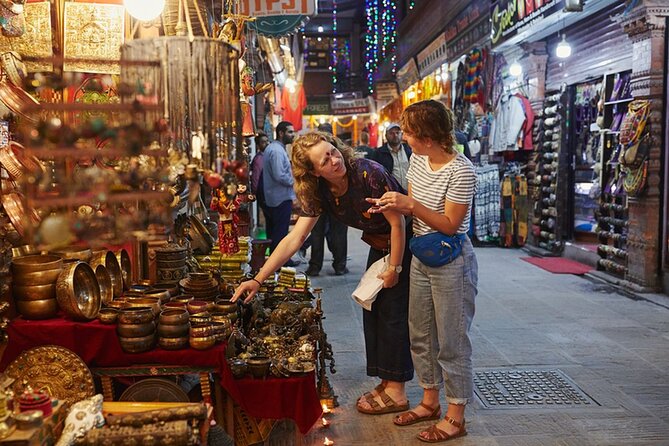
The quality of the evening depends in part on the guide. Nikita has been praised for clear teaching and for working well with a driver who handled uneven, crowded streets. Sanjeeb has been described as welcoming, warm, and eager to share his affection for Nepal.
Those names do not guarantee who will lead your departure. Still, they show what to look for in the experience: clear explanations, an easy manner, and the ability to connect a shrine or market stall to the wider city.
A maximum of 12 people is a sensible limit for this route. The lanes are tight, and a very large group would spend too much time waiting at crossings or blocking the market path. A smaller group also makes it more realistic to ask about food, festivals, temples, or places to visit later in your stay.
The tour is listed as suitable for most people and is child-friendly. Children under six can join free of charge. You should still be comfortable with a short period of walking, crowded streets, uneven surfaces, and getting on and off the rickshaw.
When this tour fits your Kathmandu plans
I would place this tour early in a Kathmandu stay, especially if you arrive before the rest of your group or want a structured first look at the center. One person used it while waiting for companions and found it a useful way to get oriented.
It suits you if you want:
- A short introduction rather than a full-day city tour
- Market life and religious sites in the same outing
- A guide to explain what you are seeing
- A slower alternative to walking the entire route
- Evening atmosphere, festival sounds, and people-watching
- A small group instead of a large organized excursion
It may be less useful if you are already taking a central Kathmandu city tour. The route includes major market and temple areas, so some overlap is likely. In that case, the rickshaw changes the way you see the places, but it does not replace a different set of sights.
The tour also requires the right attitude toward city traffic. You will hear horns, move around pedestrians, and pass through lanes that are not tidy or calm. This is an urban experience, not a quiet heritage walk.
Booking, cancellation, and useful planning details
The tour lasts about two and a half hours and starts at 6 p.m. It is often booked around 23 days ahead, so reserve early if your Kathmandu dates are fixed.
You receive confirmation when you book, and the ticket is mobile. Food and drinks are not included, so carry some money if you want chai, a snack, or a drink at a vendor or pub near Freak Street.
Free cancellation is available if you cancel at least 24 hours before the local start time. Changes or cancellations made inside that 24-hour window are not accepted for a refund.
Should you book the Kathmandu sunset rickshaw tour?
Book it if you want a friendly, efficient introduction to central Kathmandu that combines movement, market scenes, temple visits, and a guided walk. The strongest part is the blend of Asan’s everyday trade with the old courtyards of Durbar Square. You see both the working city and the ceremonial center in one evening.
Skip it if you already know these neighborhoods well, plan a separate city tour, or want detailed architectural viewing in full daylight. At $50.30, the price makes the most sense for a first visit, a short stay, or anyone who values a local guide and simple transport through difficult lanes.
For many visitors, this is a good first-night choice. It gives you a feel for Kathmandu without demanding a full day, and it leaves you with practical ideas for what to see, eat, and explore next.
FAQ
Where does the Kathmandu sunset rickshaw tour start?
The tour starts at Hotel Marshyangdi on Chaksibari Marg in Kathmandu. The start time is 6 p.m.
Where does the tour end?
The activity ends back at the original meeting point, Hotel Marshyangdi.
How long does the tour last?
The tour lasts approximately 2 hours and 30 minutes.
Is the entrance fee for Kathmandu Durbar Square included?
Yes. The Durbar Square entrance fee is included in the tour price.
How many people can join the tour?
The tour has a maximum group size of 12 people.
Are food and drinks included?
No. Food and drinks are not included, though you can buy chai or other items from local vendors, shops, or pubs during the Durbar Square portion.
Can children join the tour?
Yes. The activity is child-friendly, and children under six may join free of charge.
Newly added rides around the world
- Kochi Exclusive Local Sightseeing Tuk-Tuk Tour★ 5.0 · 18 reviews
- 4 Hour Private Tuk Tuk Tour in Kochi From Cruise terminal★ 5.0 · 23 reviews
- Cochin Private guided Tuk Tuk tours with pick up from cruise ships★ 4.5 · 10 reviews
- Kochi private Tuk-Tuk (Auto Rickhaw) Tour★ 4.0 · 7 reviews
- Fort Kochi Tuk Tuk Tour★ 5.0 · 28 reviews
- Fort Kochi Sightseeing Tuk Tuk Tour★ 5.0 · 80 reviews
- Fort Kochi Tuk-Tuk Sightseeing Tour with Local Guide★ 5.0 · 78 reviews
- Fort Kochi Tuk-Tuk Sightseeing Tour★ 5.0 · 28 reviews
Kathmandu Tuk Tuk Tours: the nearest alternatives
Kathmandu Food & Drink and Shopping Rickshaw Tour
Read our review →
Kathmandu at Sunset: Explore the City on Rickshaw
Read our review →
Kathmandu Rickshaw Tour Of Thamel And Durbar Square
Read our review →Tuk tuk lists that include it