
Review · BATTAMBANG
Morning Tuk tuk: City, Handicrafts, Killing field, Temples
Battambang’s best introduction may be found not inside a museum, but beside a family stove, where rice becomes noodles, paper, wine, and a sweet snack baked in bamboo. This five-hour tuk-tuk tour links the city’s old buildings with working village businesses, Buddhist sites, paddy fields, and a sobering Khmer Rouge memorial.
I like the direct contact with local food makers, especially the fresh rice paper and noodle tastings. I also like the guide-led storytelling, which connects farming, religion, folk tales, and recent history instead of treating each stop as an isolated photo opportunity.
The main drawback is the pace. You cover many stops in five hours, so this is a broad introduction rather than a slow, deeply studied visit. The Killing Field stop can also be emotionally heavy, and the tour is not suitable for people over 70 or those with high blood pressure.
Key points at a glance
- Family food workshops: Watch locals make Khmer rice noodles, bamboo sticky rice, rice paper, and rice wine, with snacks to taste along the way.
- Two very different histories: Visit Wat Samrong Knong, a centuries-old Buddhist site used during the Khmer Rouge period, then see the older ruins at Ek Phnom.
- A real tuk-tuk outing: Pickup starts around 7:20 AM, with hotel or restaurant pickup and drop-off within 5 kilometers of Battambang town.
- Strong guide element: Guides such as Samol and David explain Cambodian culture in English, with room for questions and local stories.
- Good value at $20: Transport, admissions, donations, bottled water, wet wipes, tastings, and a live guide are included.
- Dress with care: Sleeveless shirts are not allowed, and baby strollers are not suitable for this experience.
Why the food stops make this Battambang tour special
Many city tours show you a market and call it local life. This one takes you behind the food, to small production sites where rice is turned into everyday Cambodian staples.
That matters because rice is not just a side dish in Cambodia. Here, you see how one crop feeds families, supports village businesses, and appears in breakfast noodles, spring rolls, sweet snacks, and homemade alcohol. The best part is that these are working places, not polished displays built only for sightseeing.
Your guide explains each process as you go. You might watch rice batter spread into thin sheets, see bamboo filled with sticky rice, and sample products while they are fresh. The tastings are included, so you do not need to budget extra for every stop.
The tour costs $20 per person, which is strong value for five hours. You are paying for a tuk-tuk, an English-speaking guide, admission fees, donations, bottled water, wet wipes, and food samples. If you visited each site independently, you would still need to arrange transport and work out how to find the small village businesses.
The trade-off is that the food stops are observational and practical rather than formal cooking classes. You can learn how things are made and taste the results, but the information provided does not promise hands-on preparation.
More Temple Tuk Tuk Tours in Cambodia
- Battambang family tuktuk tour BambooTrain/Wat Banan/Bat cave
★ 4.8 · 18 reviews - Siem Reap: Angkor Wat Private Tuk-Tuk Tour
★ 4.9 · 2,222 reviews - Angkor Wat Private Tuk-Tuk Tour (sunrise Option) & more
★ 5.0 · 439 reviews
Battambang’s old buildings before the countryside
Pickup is scheduled for about 7:20 AM from your accommodation or a restaurant. Starting early makes sense. The morning is used for the city sights and food workshops before the tour moves farther out toward temples and rice fields.
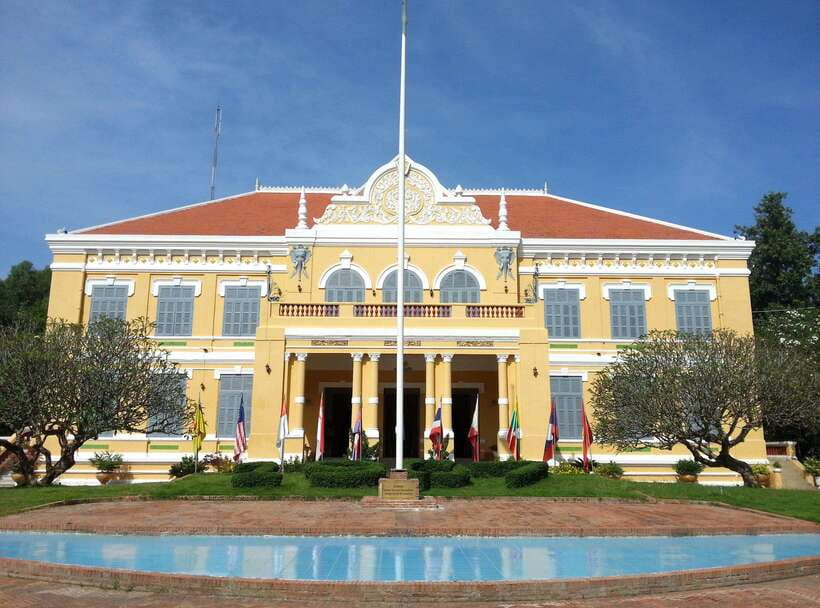
The first portion gives you a quick introduction to Battambang’s public face. You see historical buildings, the central market, the provincial hall, and the statue of Ta Dambong Kranhoung, the city’s symbolic figure.
This is useful for getting your bearings. You learn about local history, religion, farming, culture, and Cambodian folk tales while riding through town. The city section is not designed as a long architectural walk, so do not book it expecting an extended study of colonial buildings or market life.
Instead, think of it as a short opening chapter. The guide helps you understand the place before the tuk-tuk heads into smaller communities. Guides named Samol and David feature in the tour’s recent bookings, and Samol is specifically noted for clear English, humor, safe driving, and taking photos for guests to share later through WhatsApp.
Khmer rice noodles from a local kitchen
The rice noodle stop is one of the most useful parts of the morning because it shows a food many visitors eat without seeing its preparation.
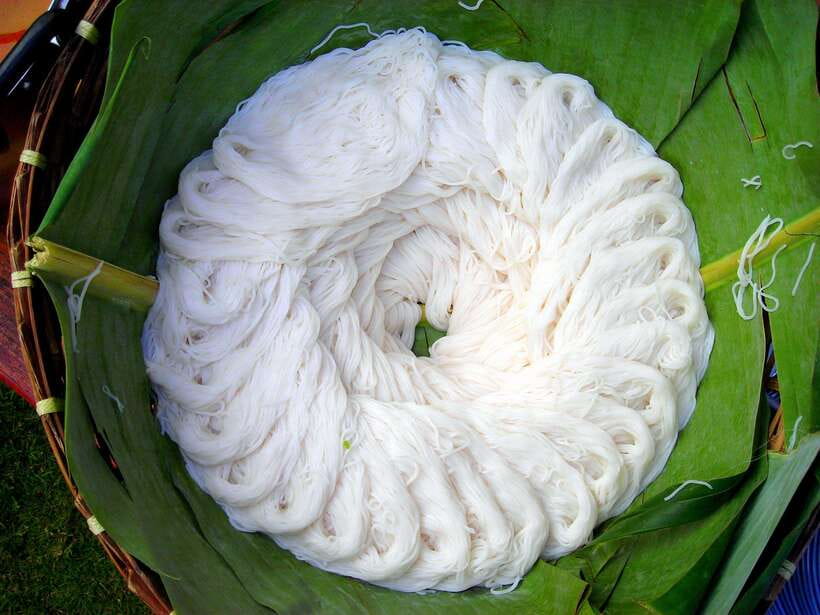
Khmer rice noodles are common at breakfast, lunch, and dinner. At the local factory, you watch the process and hear how the noodles fit into daily Cambodian meals. You also get to try them, which turns a quick demonstration into something more memorable.
I like this stop because it links food to routine. A plate of noodles can seem like a simple dish in a restaurant, but the work behind it is more involved. You see the skill and repetition needed to supply a community.
The word factory may suggest a large industrial plant, but the description points to local production by villagers. Expect a modest working setup rather than a major commercial facility. That is part of the appeal, though it also means the experience may depend on what is happening that morning.
Bamboo sticky rice, a sweet snack in its own container
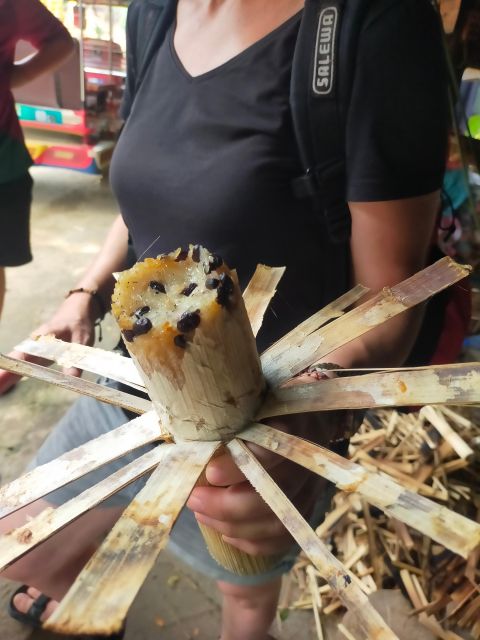
Next, you watch bamboo sticky rice being prepared. This is a sweet snack or dessert, popular with both local people and visitors.
The bamboo is not just packaging. It is part of the cooking method and gives the food its distinct character. Your guide explains how it is prepared, and you get to taste it during the stop.
This is a good place to remember that Cambodian food is not limited to savory noodle dishes. The tour presents rice in several forms, and bamboo sticky rice adds a different texture and flavor to the morning.
If you are sensitive to unfamiliar foods, the tasting is optional in practical terms, but the included snacks are one of the reasons this tour feels like more than a sightseeing drive. You can observe first, then decide what you want to try.
More Temple Tuk Tuk Tours in Battambang:
- Bangkok by Night: Temples, Markets and Food Tuk-Tuk Tour
★ 5.0 · 3,752 reviews - Bangkok: Markets, Temples and Food Night Tour by Tuk Tuk
★ 4.9 · 2,371 reviews - Bangkok: Tuk Tuk Adventure Chinatown Michelin Food & Temples
★ 4.3 · 725 reviews - Bangkok: Evening Tour with Wat Arun, Wat Pho & Tuk Tuk Ride
★ 4.6 · 701 reviews
Wat Samrong Knong, from Buddhist sanctuary to killing field
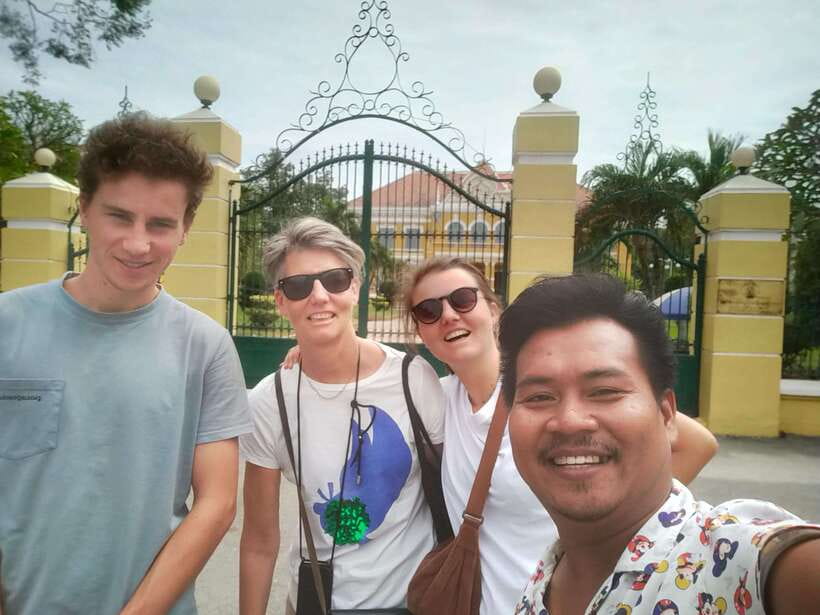
Wat Samrong Knong is the most emotionally difficult stop. The temple is described as Battambang’s oldest Buddhist temple, built in 1707. A brick stupa from 1887 adds another layer of age to the site.
But the visit is not only about old architecture. During the Khmer Rouge period, the pagoda was used to house soldiers and as a detention area for victims. The grounds include a torture house and a killing field where approximately 10,008 people were killed.
You should allow yourself time to take in the contrast. A Buddhist temple is normally associated with prayer, refuge, and calm. Here, the same religious setting also carries evidence of violence and loss. The guide’s explanation helps connect the site to Cambodia’s recent past, but the subject remains difficult.
This is not a light stop to rush through for photographs. Wear respectful clothing and follow the guide’s instructions. A sleeveless shirt is not permitted on the tour, and modest dress is especially appropriate at a religious memorial site.
Some visitors may find this portion too heavy for a food-focused morning. That is a fair concern. Still, it gives the day an important balance. You are not seeing Cambodia only as a pleasant collection of snacks and temples. You are also being shown what communities have endured.
Rice paper made by hand for spring rolls
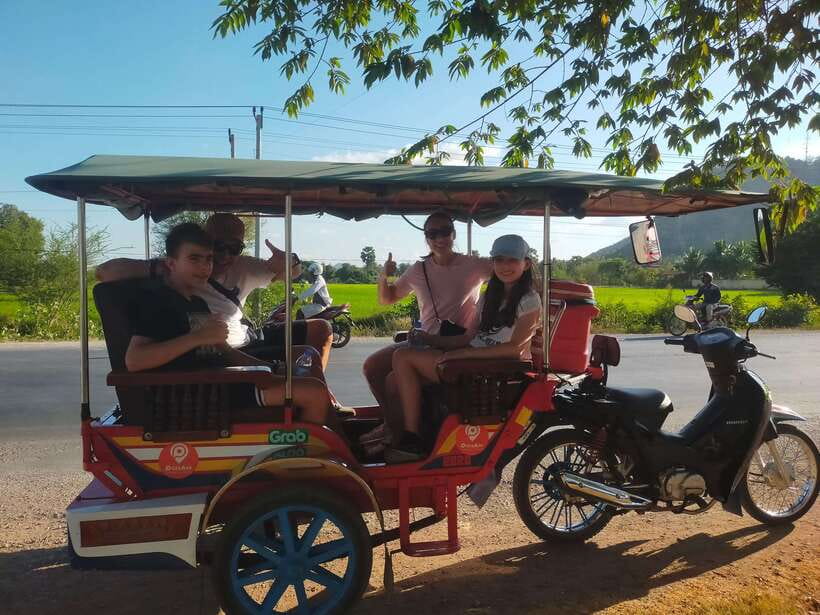
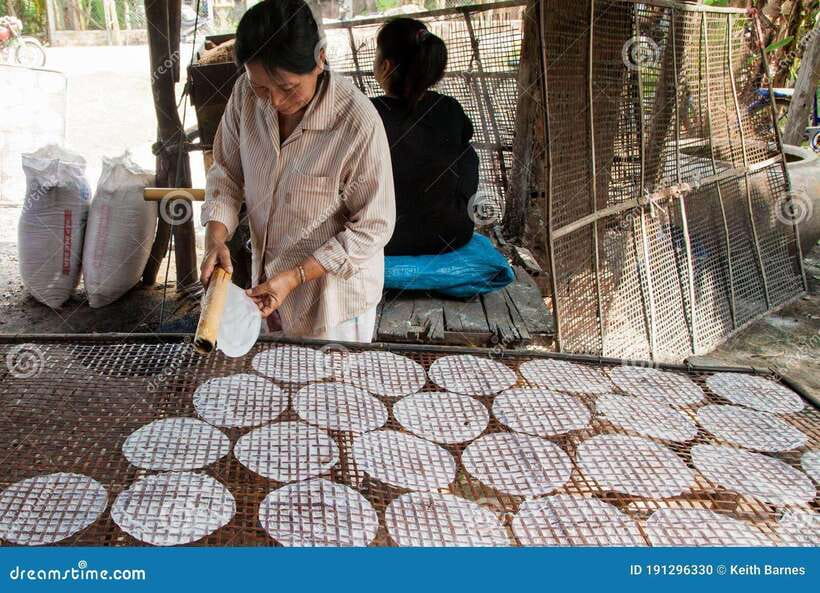
The next workshop brings you back to daily village work. You see rice paper being produced and learn how it is used for spring rolls.
The scale is striking. Villagers can make at least 1,500 sheets per day, which gives you a clearer idea of the labor involved. Each sheet may look simple, but producing that many requires steady movement, timing, and practice.
This is also one of the tastiest stops. Fresh rice paper and spring rolls make the process easy to understand because you can eat the finished product soon after seeing how it begins. One guide-led visit even resulted in a special memory of the freshest spring rolls tasted during the trip.
I find this kind of stop more revealing than a standard souvenir shop. You see a product being made for income, not just displayed for tourists. The village businesses are part of the local economy, and your visit helps direct attention toward that work.
The tour does not promise a full lesson in making spring rolls, so expect a demonstration and tasting rather than a cooking class. Bring curiosity and a willingness to watch repetitive handwork closely.
Rice wine, medicine, and unusual infusions
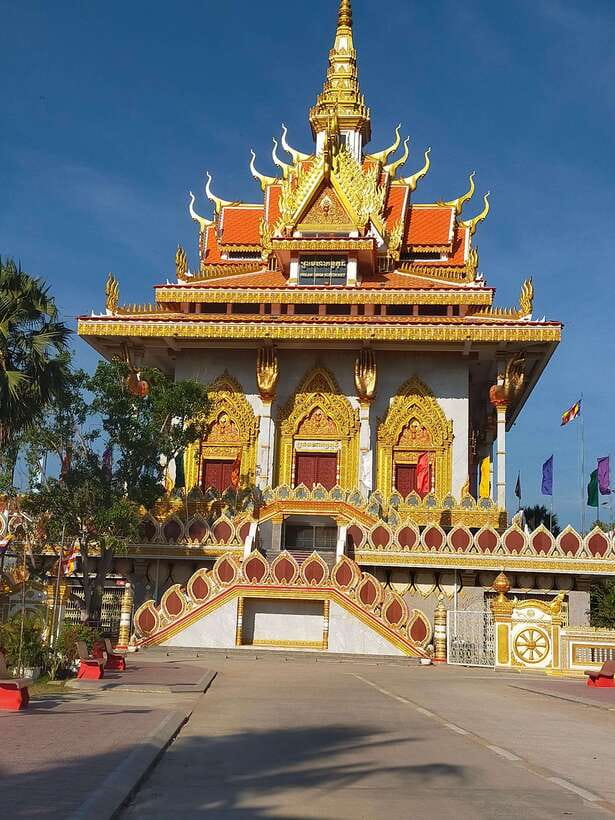
The rice wine workshop has been operating since the 1980s. Here, the guide explains how rice wine is made and offers a sample.
You also hear about older uses of the drink as medicine and as a liquid for soaking plants, fruit, and even poisonous animals such as cobras and tarantulas. That last detail is likely to be the morning’s most memorable conversation starter.
The stop shows another way rice supports village livelihoods. It is not simply a tasting room. You learn about production, local beliefs, and traditional uses that sit somewhere between household remedy and folk practice.
Take the sample seriously. Rice wine can be strong, and the tour does not suggest that you must drink a large amount. If you do not want to taste alcohol, you can still watch the process and listen to the explanation.
The workshops also make this tour a better choice for people who enjoy meeting makers and learning how ordinary products are produced. If you prefer monuments, air-conditioned museums, and long periods at one site, the repeated workshop visits may feel less exciting.
Ek Phnom’s giant Buddha and Angkorian ruins
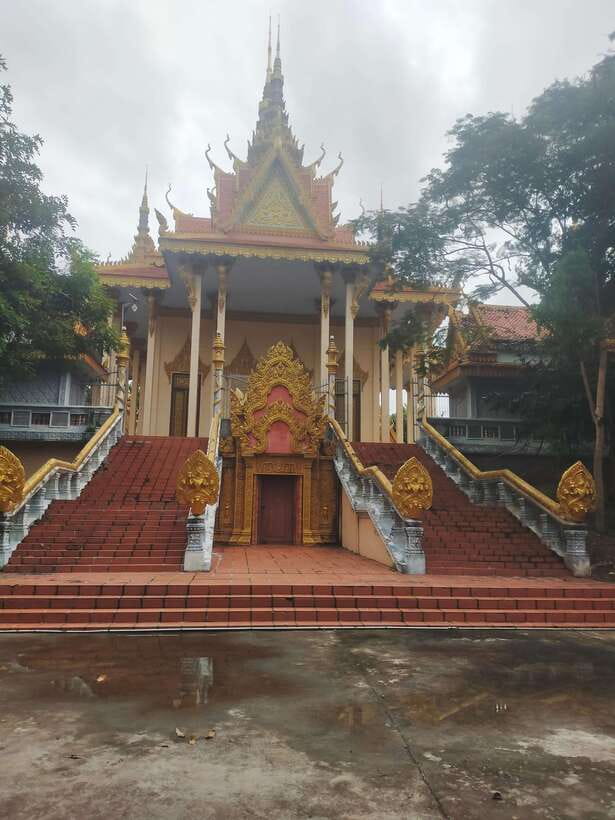
The final major stop is Ek Phnom, where the tour combines modern Buddhist sculpture with an older temple site.
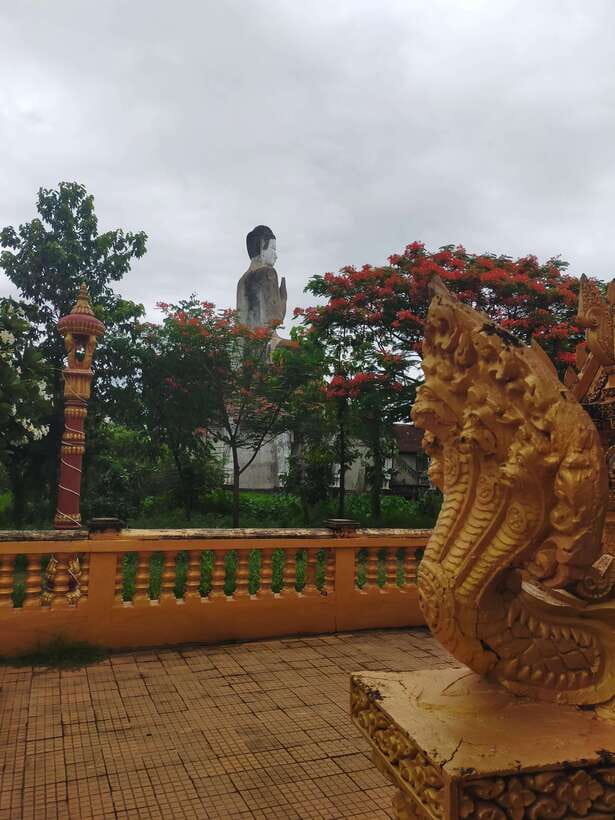
A 25-meter-high Buddha is surrounded by standing Buddha figures. You then walk to a Buddhist temple built in 1991, where paintings on the walls tell the story of Buddha. The contrast between the large modern statue, the recent temple, and the older ruins makes this a useful lesson in how Cambodian religious spaces develop over time.
Nearby are the remains of an 11th-century Angkorian Hindu temple built under King Suryavarman I. The ruins provide a link to the era before Buddhism became the dominant religious tradition in much of Cambodia.
Do not expect Angkor Wat on a smaller scale. The appeal here is the mixture of active religious life and surviving stonework, not a vast monument complex. The stop is also a chance to slow down after the food workshops and difficult history at Wat Samrong Knong.
The route includes villages and paddy fields around Battambang. You see more than the major sites themselves. The ride between stops is part of the experience, giving you views of rural life and agricultural surroundings without turning the morning into a long countryside trek.
What the tuk-tuk ride is really like
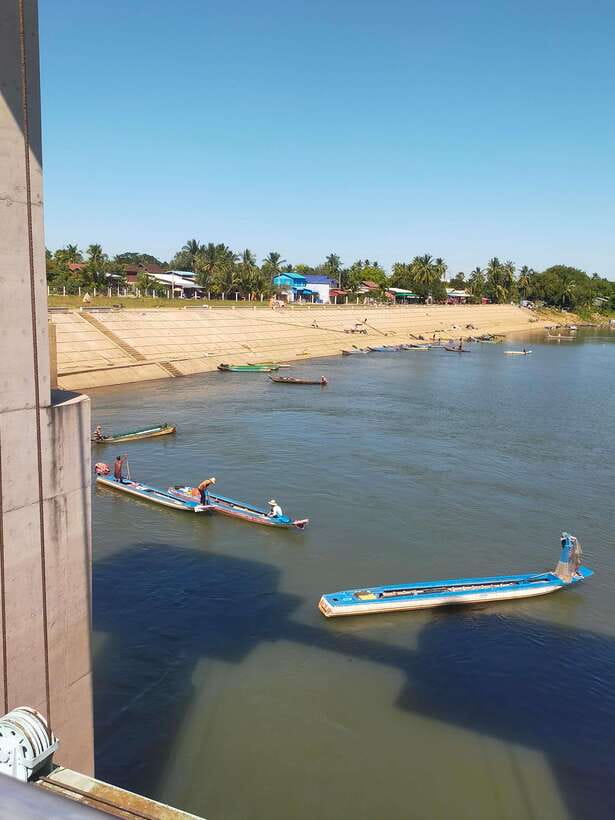
The tuk-tuk is practical for this route because you can move between town, villages, workshops, and temples without arranging separate transport. It also keeps the day connected to the streets and countryside around Battambang.
Pickup and drop-off are included, but the stated service area is within 5 kilometers of Battambang town. If your accommodation is farther away, confirm the meeting point before booking. The tour can also begin from a restaurant, which helps if you are not staying in a central hotel.
The day lasts about five hours and returns to Battambang for lunch or hotel drop-off. That timing works well if you have other plans in the afternoon, such as resting, exploring the town, or arranging another activity.
The early start is worth noting. You should be ready around 7:20 AM, and the tour moves through many locations. Wear comfortable clothes, bring sun protection, and keep your schedule flexible enough to enjoy the stops without constantly checking the clock.
The operator supplies cold bottled water and wet wipes. Those are small inclusions, but they are useful after food tastings and time on the road.
Who will get the most from this $20 outing
I would choose this tour if I wanted a first look at Battambang that included both the town and its surrounding villages. It gives you a broad mix in one morning: public buildings, food production, Buddhist sites, a memorial, agriculture, and Angkorian ruins.
It suits you especially well if you:
- Like seeing how local food is made
- Prefer small working businesses to large attractions
- Want an English-speaking guide to explain culture and history
- Have only a short time in Battambang
- Enjoy sampling unfamiliar snacks
- Want transport arranged between scattered sites
The strongest praise centers on the guides. Samol is described as funny, relaxed, clear, and generous with historical and cultural detail. He is also noted for safe driving and taking useful photos. David is described as friendly and accommodating, with a local point of view on food, history, and everyday life.
The format may be less suitable if you have high blood pressure or are over 70, since the experience is specifically marked as unsuitable for those groups. It is also not designed for baby strollers. A sleeveless shirt is not allowed, so pack a shirt with sleeves.
Practical value, limits, and booking flexibility
At $20 per person, the tour gives you a lot for one morning. Admissions and donations are covered, as are tastings, transport, water, wet wipes, and the guide. You are not paying only for a ride to a temple. The local food workshops are the main reason the price works well.
The limit is depth. You will see many places, but each stop receives only part of the morning. If you want long photography sessions, a detailed temple study, or a full cooking class, you may prefer separate activities.
You can cancel up to 24 hours before the start for a full refund, and the reserve-now, pay-later option keeps your plans flexible. Starting times should still be checked when booking, since the listed pickup time is around 7:20 AM and availability can affect the schedule.
Should you book the Battambang tuk-tuk tour?
Book it if you want food, village life, and history in one compact morning. The local workshops are the strongest reason to go, and the guides add value by explaining how rice connects Cambodian meals, work, religion, and rural income.
Do not book it expecting a leisurely temple day or a hands-on cooking course. The schedule is full, the Killing Field visit is serious, and the tuk-tuk route covers a lot of ground.
For $20, this is a well-priced introduction to Battambang, especially for a first visit. You return in time for lunch with a better sense of how the city relates to the villages around it, and with a few fresh foods to remember the morning by.
FAQ
How long does the Battambang tuk-tuk tour last?
The experience lasts five hours and returns to Battambang for lunch or hotel drop-off.
What time does pickup begin?
Pickup starts at about 7:20 AM from your accommodation or a restaurant. Check the available starting time when booking.
Where does pickup and drop-off take place?
Hotel pickup and drop-off are provided within 5 kilometers of Battambang town.
What language does the guide speak?
The live guide speaks English.
What food products will I see being made?
You will see Khmer rice noodles, bamboo sticky rice, rice paper, and rice wine being produced by local people. Tastings are included.
Is the Killing Field included in the tour?
Yes. At Wat Samrong Knong, you see the torture house and killing field, where approximately 10,008 victims were killed during the Khmer Rouge period.
What is included in the price?
The $20 price includes hotel pickup and drop-off, an English-speaking guide, cold bottled water, wet wipes, photo opportunities, snack tastings, admissions, and donations.
What clothing and mobility restrictions should I know about?
Sleeveless shirts and baby strollers are not allowed. The experience is not suitable for people with high blood pressure or people over 70.
Newly added rides around Battambang
- Private Half-Day Tuk Tuk Tour in Battambang★ 5.0 · 2 reviews
- Tuk Tuk Tour (Full-Day)★ 5.0 · 7 reviews
- Private Full Day Tuk Tuk Tour in Battambang★ 5.0 · 12 reviews
- Morning Tuk Tuk Food Tour: Taste Iconic Dishes of Battambang★ 5.0 · 2 reviews
- Full/Half Day Tuk TuK: Handicrafts Bambootrain Killing&Bat Caves★ 5.0 · 14 reviews
- Full-Day Battambang with a local Tuk Tuk Tours★ 5.0 · 2 reviews
- half day morning tour by Tuk-Tuk★ 5.0 · 20 reviews
- Battambang: Morning Tuk Tuk Food Tour of Our Iconic Dishes★ 5.0 · 2 reviews
Battambang Tuk Tuk Tours: the nearest alternatives
Battambang: Tuk-Tuk, Bamboo Train, Killing/Bat Caves, Sunset
Read our review →
Battambang Tuk Tuk tour: Bambootrain, Killing & Bat Caves,Sunset
Read our review →
Afternoon tour by tuk tuk to bamboo train,bat cave,killing cave,countryside.
Read our review →
Explore Battambang full day tour by Tuk Tuk (start from 9am-6:30pm)
Read our review →
Battambang: Bamboo Train, Bat Cave, Killing Cave by Tuk Tuk
Read our review →
A Day TukTuk Handicrafts Bambootrain Killing&BatCaves,Sunset
Read our review →
A Day TukTuk Bambootrain, Banan, Killing & Bat Caves, Sunset
Read our review →
Full day tour by bicycle & tuk tuk,bamboo train,bat cave,villages
Read our review →Tuk tuk lists that include it