
Review · PHNOM PENH
Phnom Penh Haft Day Tour to Silk Island by Tuk Tuk
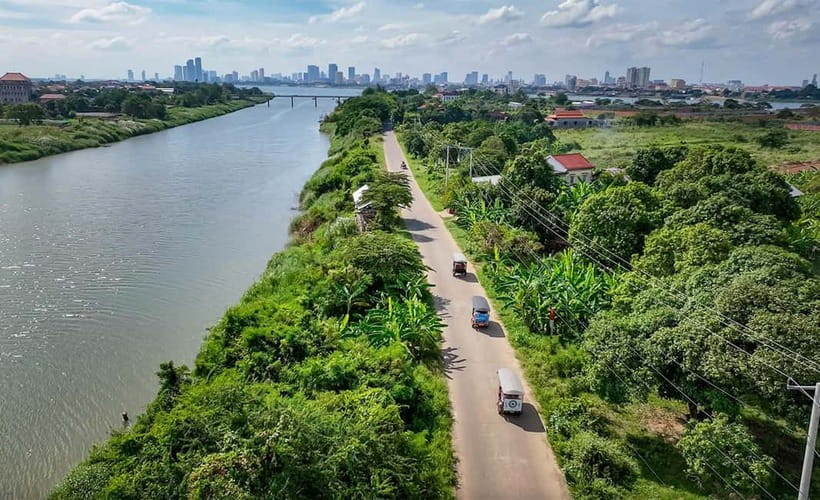
Silk Island gives you a quick change of pace from Phnom Penh. One moment you are in a tuk tuk heading out of the city, and soon you are crossing the Mekong toward farming villages, small workshops, and quiet roads on Koh Dach. The ferry crossing is part of the fun, not just a way to get there.
I like two things here: the tour keeps moving with five different stops, and it puts real daily life ahead of grand sightseeing. Guides including Tin Tin, Sam, and Lee have been praised for explaining Cambodian food, Buddhism, and village life clearly. The main consideration is the early finish and short format. You see a useful slice of Silk Island, not every corner of it.
I also like the practical value. At $29 per person, you get hotel pickup and drop-off, tuk tuk transport, ferry trips, entrance fees, water, snacks, and an English-speaking guide. The tradeoff is that the tour is built around observation and conversation, so it may feel too gentle if you want a packed list of major Phnom Penh sights.
Key points to know before booking
- Koh Dach by tuk tuk and ferry: Leave the city by road, then cross the Mekong on a local ferry to reach Silk Island.
- Five countryside stops: Expect a temple, local market, village scenery, food production, and a traditional silk workshop.
- Guides make the difference: Tin Tin, Sam, and Lee have been singled out for clear English and friendly explanations.
- Local snacks are included: Water, drinks, and Cambodian snacks help make the morning feel less formal.
- A short morning escape: The tour lasts four to five hours and returns to Phnom Penh around 12:30 PM.
- Good value at $29: Transport, ferry, entry fees, hotel transfers, guide, water, and snacks are covered.
Leaving Phnom Penh by tuk tuk
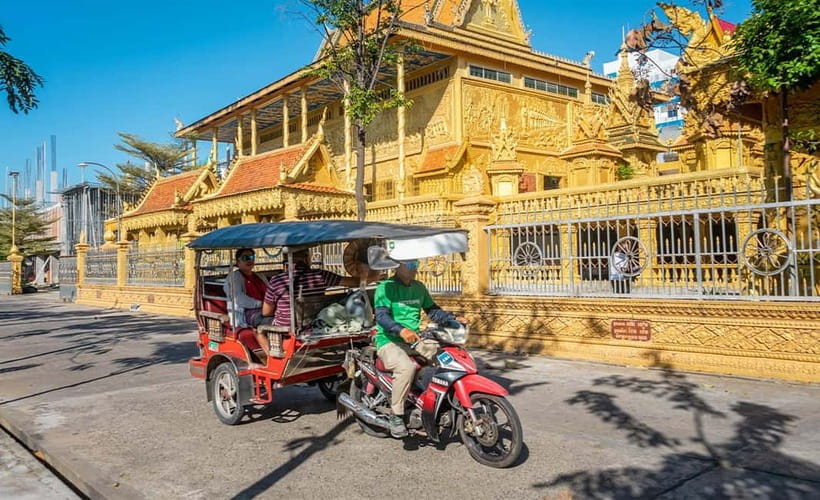
The tour begins with hotel pickup in Phnom Penh, followed by a tuk tuk ride toward the river. This is not a polished coach excursion. You are close to the road, the sounds, and the changing view as the city thins into less built-up areas.
That matters because the transition is part of the story. You do not simply appear on an island. You watch Phnom Penh give way to smaller roads and rural surroundings, then continue by ferry across the Mekong. I like this gradual shift because it helps you understand that Silk Island is close to the capital but operates at a different pace.
The tuk tuk is listed as an experienced vehicle and driver service. It is practical for this route and suits the short distance, though you should expect the ordinary noise and movement that come with open-air transport. If you prefer air-conditioning and a quiet ride, this is not that kind of outing.
Pickup details should be confirmed with the operator one day before departure if you have not yet received confirmation. That small step is worth taking, especially if your hotel is in a busy part of Phnom Penh.
More tuk tuk tours around Phnom Penh:
- Ultimate Phnom Penh Food Tour by Tuk Tuk: 20 Tastings and Drinks
★ 5.0 · 409 reviews - Visiting 9 Places in 3 hours Share Tour by Tuk-Tuk
★ 4.9 · 293 reviews - Phnom Penh to Silk Island By Tuk-Tuk with local Expert
★ 4.7 · 249 reviews
Crossing the Mekong to Koh Dach
The local ferry carries you across the Mekong to Koh Dach, also called Silk Island. The crossing adds a simple but memorable piece of Cambodian transport to the morning. You are not only visiting a craft center arranged for tourists. You are reaching an island community by the same basic route used for local travel.
The ferry is included in the price, and the ride has been described as comfortable. Timing can vary on any river crossing, so keep your schedule open rather than planning a tight appointment immediately after the tour.
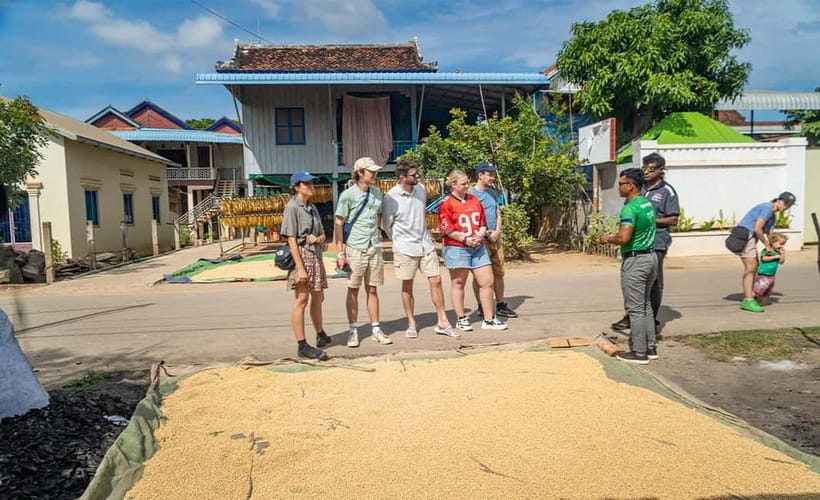
Once on the island, the mood changes. The trip focuses on country roads, farming villages, and local homes rather than formal attractions. You will see how close rural life is to Phnom Penh, yet how different the rhythm can feel.
The tour has five stops, but the exact order may change. That is useful to remember. You should think of the morning as a guided circuit with several points of interest, not a rigid museum-style program.
A temple stop with time for questions
A Buddhist temple is one of the main stops. Here your guide can explain Buddhism and its place in Cambodian life. Lee has been praised for making these subjects clear, including both older traditions and present-day Cambodian culture.
A temple visit is more useful when you have someone to explain what you are seeing. The buildings and symbols may not be obvious at first, and a good guide helps connect them to daily practice rather than leaving you to take photographs and move on.
Dress and behavior should be respectful at the temple. The tour information does not give a specific clothing rule, so use sensible coverage for a religious site and follow the guide’s instructions. This is also a place where a slower pace helps. You are likely to gain more from asking questions than from rushing through.
The temple is not presented as a major architectural monument. Its value is in the setting and the conversation. If you want Cambodia’s grandest religious buildings, you will need a different trip. If you want a window into local Buddhist life near Phnom Penh, this stop fits well.
A market stop that keeps the tour grounded
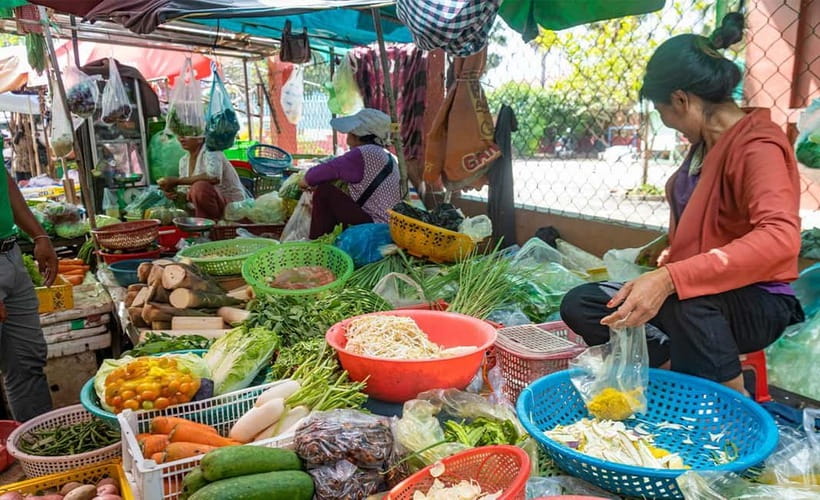
The local market gives the morning a practical center. Instead of looking at a display of Cambodian food in a museum, you can see ingredients and everyday buying and selling in their normal setting.
The market stop is especially useful if you are curious about food but unsure what to order on your own. Your guide can help identify what you are looking at and explain how local products fit into Cambodian cooking. The tour includes local snacks and water, with past trips also including stops for drinks and snacks along the way.
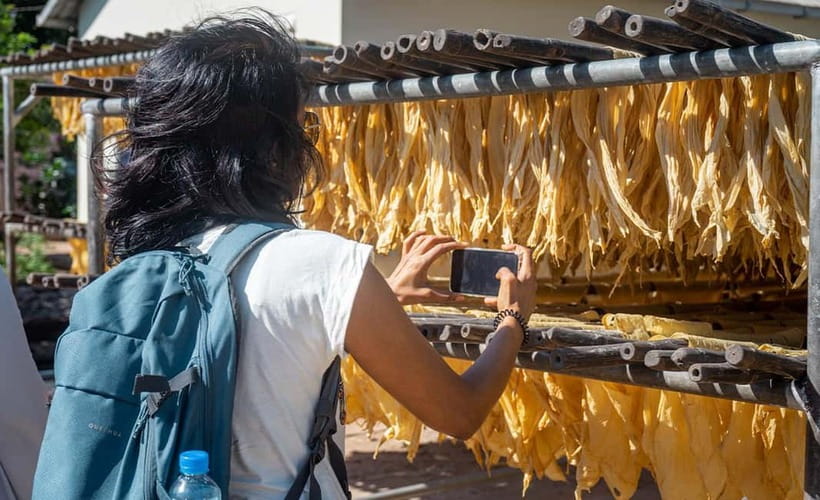
One part of the route may include tofu skin production. This is a memorable detail because it shows a working food process rather than a standard sightseeing stop. Sam has been praised for explaining the market, tofu farm, and silk farm, giving the morning a strong food-and-craft focus.
Do not expect a large shopping market or a long free-shopping session. The stop is there to help you understand local life, and the group will continue to the next part of the route. If you want to buy something, ask your guide about the best opportunity rather than assuming every stop is set up for purchases.
Same streets, seen from a different seat:
- Phnom Penh’s Culinary Underground: Local Food Tour by Tuk-tuk
★ 5.0 · 234 reviews - Phnom Penh: Private City Tour by Tuk-Tuk/Full or Half Day
★ 4.9 · 227 reviews - Phnom Penh: Evening Food Tour with Drinks & Tuk Tuk Included
★ 4.9 · 226 reviews - Phnom Penh’s Ultimate Street Food Tour by Tuk Tuk
★ 4.9 · 225 reviews
Farming villages and the Cambodian countryside
Between stops, the tuk tuk moves through farming villages and open rural areas. This travel time matters. You get to see homes, roads, fields, and the small details that a faster vehicle could blur.
The route is a good match for you if you want to see what Phnom Penh looks like outside the center. AnnaCarin Maria specifically praised the way guide Lee stopped when there was something worth a closer look. That kind of flexibility can make a short trip feel more personal.
The countryside here is not presented as untouched wilderness. It is lived-in, working land, with people going about their routines. That is exactly why the trip can be valuable. You see a Cambodia shaped by farming, religion, food production, and family craft traditions.
You may also pass a local school. One trip included a brief visit to meet children there. Because this is not guaranteed in the stated itinerary, treat it as a possible extra rather than a promised stop. If it happens, follow the guide’s direction and be respectful. A school is a community space, not a photo prop.
Seeing how silk is made
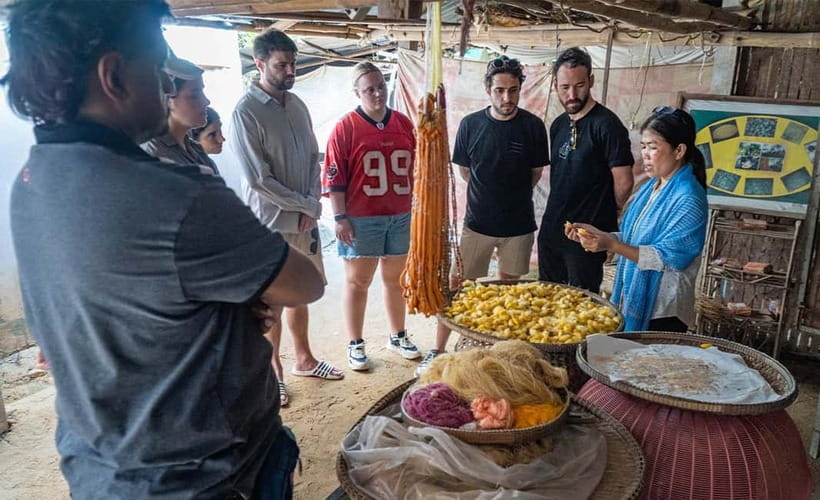
The traditional silk weaving workshop is the tour’s main craft stop. Skilled local makers demonstrate the silk production process and explain how the work has been passed through generations.
This is where the name Silk Island begins to make sense. You are not just hearing that the island has a connection to silk. You are watching a local skill at work and seeing the care required to turn material into fabric.
I like this kind of visit because it connects a finished souvenir with the people and steps behind it. You can ask questions about the process, the tools, and the role of weaving in village life. The guide’s explanation helps keep the stop from becoming a quick look at a loom followed by a gift shop.
The workshop may appeal most to you if you enjoy traditional crafts and want to understand how Cambodian products are made. It may feel less exciting if you prefer active attractions or large historical sites. The experience is about patience, detail, and human skill.
The tour information does not state that purchases are required, so you can approach the workshop as an educational stop. If you are interested in buying silk, ask about prices and payment before committing to anything.
What the guides add to the morning
The guide is central to this tour. Without explanation, the ferry, market, temple, food stop, and weaving workshop would still be pleasant, but they would not connect as well.
Tin Tin has been praised for friendly service, strong English, and clear answers to questions. Sam has been noted for explaining markets, tofu production, and silk-making. Lee has been praised for explaining Buddhism and Cambodian life, while also stopping the tuk tuk when something along the road deserved a closer look.
These names are useful, but guide assignments can change. You should book for the structure of the tour, not for a guaranteed person. The important point is that the experience depends heavily on having an English-speaking guide who can explain what you are seeing.
The driver also plays a practical role. The tour includes an experienced tuk tuk driver, and the reviews describe the drivers as pleasant and helpful. Since the route includes city roads, a ferry, and island roads, having a driver familiar with the area is important.
Snacks, drinks, and the morning pace
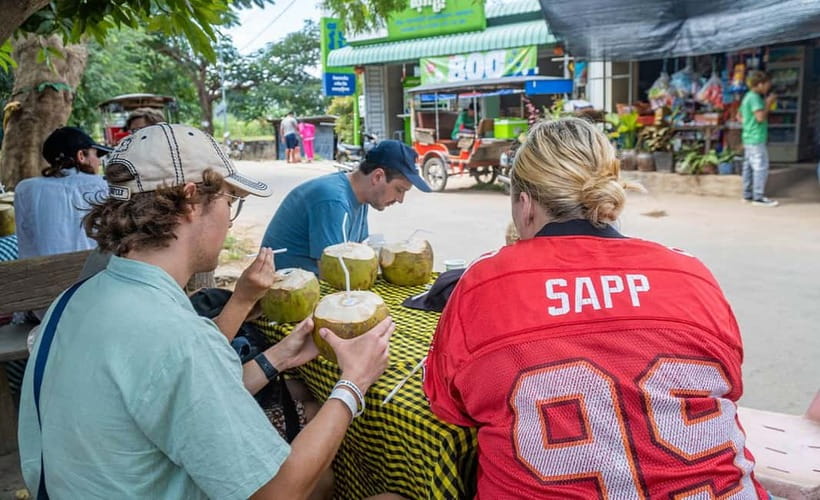
Water and local snacks are included. Additional drink and snack stops have been part of the morning, giving you small breaks between the main visits.
This makes the schedule feel less like a checklist. You can pause, taste something unfamiliar, and ask questions without needing to arrange every drink yourself. The food element also adds context to the market and tofu-making stops.
The tour lasts four to five hours and usually returns to Phnom Penh around 12:30 PM. That timing works well if you have afternoon plans, a later bus, or only one spare morning in the city.
The short schedule does mean you should not expect a long lunch or a full day on the island. The supplied information does not include lunch, so plan your main meal for after returning to Phnom Penh. Snacks are included, but they are not a substitute for lunch.
Is $29 a fair price?
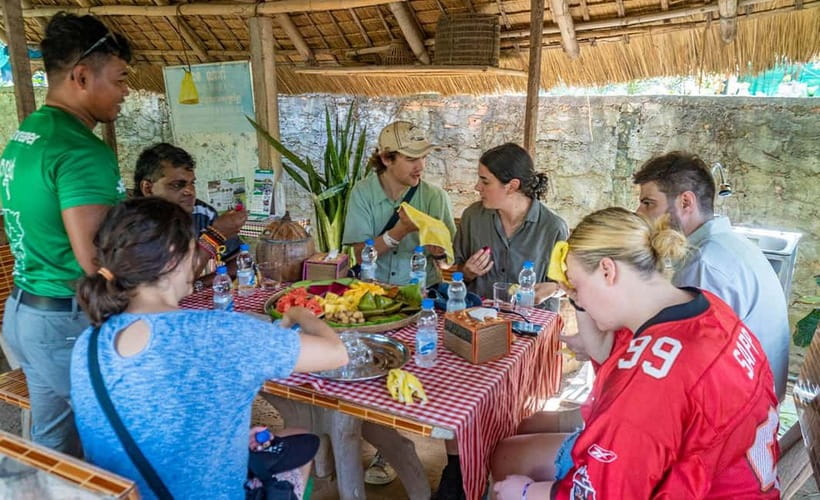
At $29 per person, the price is strong for what is included. You are paying for hotel pickup and drop-off, tuk tuk transport, the ferry in both directions, entrance fees, an English-speaking guide, water, and snacks.
If you arranged each part separately, the transport and ferry alone would require more planning. You would also lose the explanations that connect the temple, market, food production, and silk workshop.
The value is best if you want convenience without giving up local character. This is not the cheapest possible way to reach Koh Dach, but it removes several small decisions and gives the morning a clear shape.
The price may be less appealing if you already have your own transport, speak with local people easily, and prefer to explore without a guide. In that case, the included service may be more than you need. For most first-time visitors who want a simple half-day outing, the package is sensible.
Who should book this Silk Island tour?
I would suggest this trip to you if you want a break from Phnom Penh’s central streets and a look at village life without committing to a full-day journey. It suits couples, solo visitors, and small groups who enjoy moving between several modest but meaningful stops.
It is also a good choice if you want context. The guide can explain Buddhist practice, local food, silk production, and rural customs in one morning. You do not need prior knowledge of Cambodia to get something from it.
Families may appreciate the tuk tuk ride, ferry crossing, food stops, and changing scenery, though the tour information does not specify child pricing or special family arrangements. Ask before booking if those details matter to you.
I would hesitate if you want a major monument, a long shopping session, or a full culinary tour. This is a countryside introduction, not a grand attraction circuit. The charm comes from the combination of ordinary places and useful explanations.
Cancellation is flexible: you can cancel up to 24 hours ahead for a full refund, and you can reserve now and pay later. The tour is offered in English, and you should contact the operation team the day before if pickup has not been confirmed.
Should you book it?
Book this tour if you want to see the everyday side of Cambodia close to Phnom Penh. The ferry, tuk tuk ride, temple, market, tofu-making stop, and silk workshop create a varied morning, while the included snacks and hotel transfers keep the logistics simple.
The strongest reason to go is the guide-led context. Tin Tin, Sam, and Lee have each been praised for clear explanations, friendly service, and a willingness to answer questions. Just keep your expectations realistic: this is a four to five hour introduction to Silk Island, not an exhaustive island tour.
At $29, it is a practical choice for your first or only spare morning in Phnom Penh. If you value local food, craft, rural scenery, and human conversations more than headline monuments, I would book it.
FAQ
How long does the Silk Island tour last?
The tour lasts approximately four to five hours and normally returns to Phnom Penh around 12:30 PM.
How do I reach Silk Island during the tour?
You travel from Phnom Penh by tuk tuk, then take a local ferry across the Mekong River to Koh Dach, also called Silk Island.
What stops are included?
The tour includes five stops, with visits to farming villages, a local market, a Buddhist temple, a traditional silk weaving workshop, and a food production stop such as tofu-making.
Is hotel pickup included?
Yes. Hotel pickup and drop-off are included. If you have not received pickup confirmation, contact the operation team one day before departure.
Is food included?
Water and local snacks are included. The tour information does not include a full lunch.
Can I cancel the booking?
Yes. You can cancel up to 24 hours before departure for a full refund. You can also reserve now and pay later.
Newly added rides around Phnom Penh
- Phnom Penh: Walking Tour, Food Tour & Sunset Cruise★ 4.9 · 10 reviews
- Phnom Penh: Silk Island Sunset by Tuk Tuk with food & drinks★ 5.0 · 12 reviews
- Phnom Penh: Street Art & Food Tour by Tuk-Tuk★ 4.9 · 69 reviews
- Phnom Penh: Private Tuk-Tuk Tour with English-Speaking★ 5.0 · 8 reviews
- Phnom Penh: Street Art and Noodle Tour by Tuk Tuk★ 5.0 · 3 reviews
- Phnom Penh Historical Sites Tour by Tuk Tuk★ 4.3 · 30 reviews
- Phnom Penh: Morning Market & Guided Breakfast Tour by Tuktuk★ 5.0 · 7 reviews
- Phnom Penh: Mekong River Sunset Cruise and Tuk Tuk Ride★ 5.0 · 2 reviews
Phnom Penh Tuk Tuk Tours: the nearest alternatives
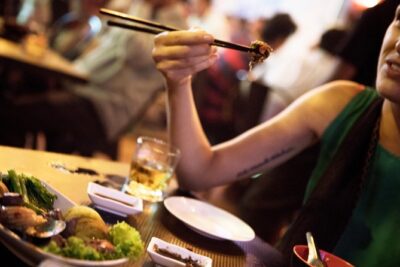
Ultimate Phnom Penh Food Tour by Tuk Tuk: 20 Tastings and Drinks
Read our review →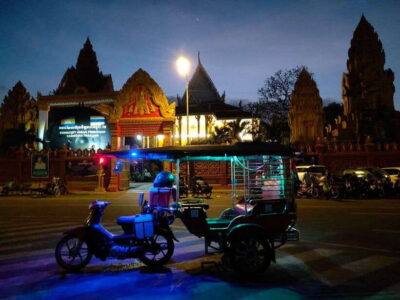
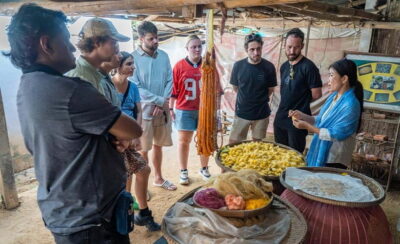
Phnom Penh to Silk Island By Tuk-Tuk with local Expert
Read our review →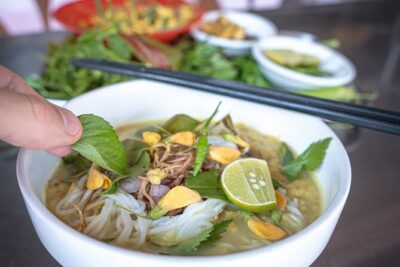
Phnom Penh’s Culinary Underground: Local Food Tour by Tuk-tuk
Read our review →
Phnom Penh: Private City Tour by Tuk-Tuk/Full or Half Day
Read our review →
Phnom Penh: Evening Food Tour with Drinks & Tuk Tuk Included
Read our review →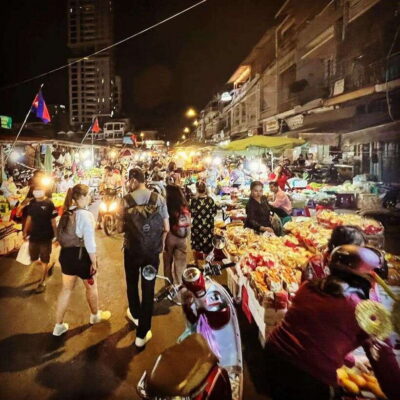
Phnom Penh’s Ultimate Street Food Tour by Tuk Tuk
Read our review →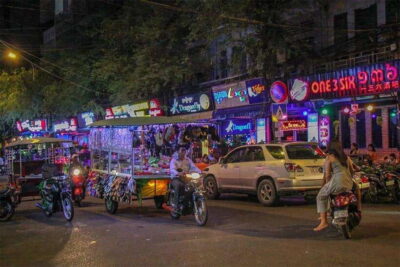
Phnom Penh: 9 Exciting Spots Evening Tuk-Tuk Tour
Read our review →Tuk tuk lists that include it