
Review · BERLIN
Rickshaw for 2 and Driver-Shared Guide (Combo Vehicle Group)
Berlin is easiest to understand when you connect its landmarks in one sweeping route, and this three-and-a-half-hour Mitte tour does exactly that. You move from the TV Tower and Museum Island to the Brandenburg Gate, Nazi-era memorials, Cold War sites, and the Berlin Wall without wearing out your shoes.
I like the choice of vehicle, especially for families and mixed-ability groups. I also like the small group limit of eight, which should make it easier to ask questions and hear the guide. The main drawback is that the route covers a great deal of ground, so most stops are photo stops and short explanations rather than long visits inside attractions.
Key points to know before booking
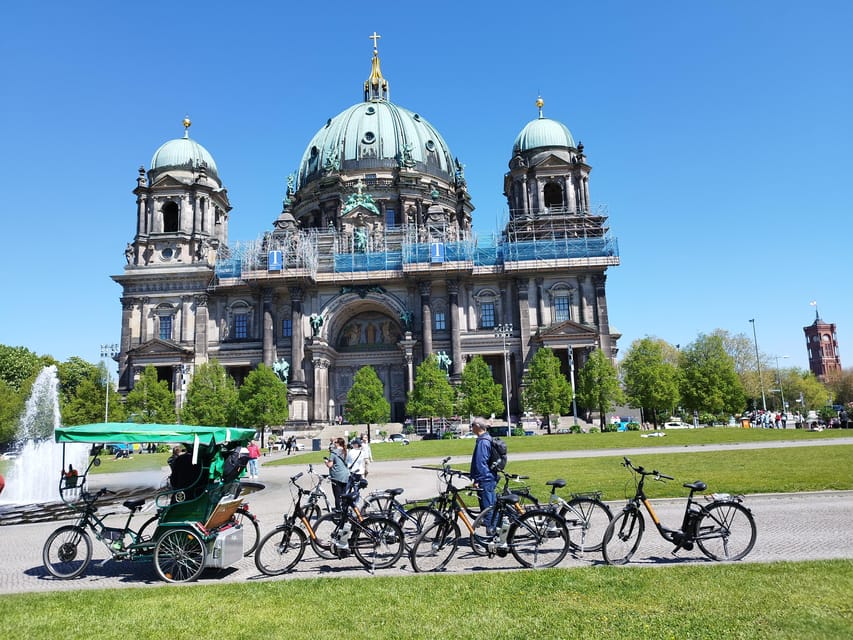
- A traditional rickshaw for two lets one less-mobile guest ride comfortably while others use bikes or scooters.
- The route links nearly every major sight in Berlin Mitte, from Alexanderplatz to Checkpoint Charlie.
- The guide speaks English, German, Dutch, or Turkish and holds certification under DIN EN15565.
- The meeting point is Weinbergsweg 6, near Rosenthaler Platz and the U-Bahn.
- The tour lasts 210 minutes and returns to the same location.
- The price is $235 per group of up to two, making it easier to judge as a private vehicle price within a shared tour setting.
Why this tour works for seeing Berlin in one morning
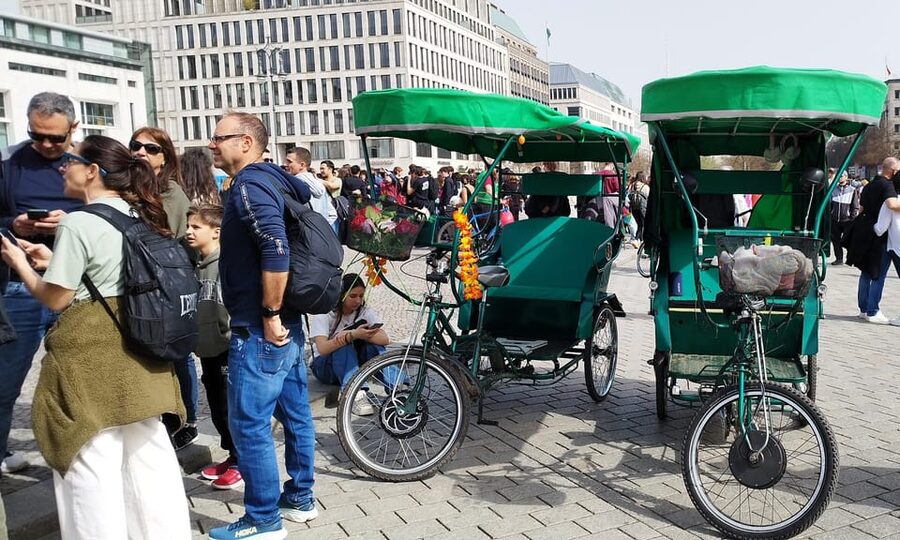
Berlin Mitte is spread across a large central area. You can walk between some sights, but a full route from Alexanderplatz to the Brandenburg Gate, then south toward Checkpoint Charlie and Gendarmenmarkt, takes time and energy.
A car would move you quickly but give you little sense of the city. Public transport would require several changes and would not help much with the short stops between major landmarks. A bike, scooter, or rickshaw offers a useful middle ground. You travel at street level, see the buildings between the famous sights, and avoid spending the whole day on foot.
The tour starts at 10:00 AM, according to the provided schedule, and takes place with a shared guide. You may book the rickshaw for two, use a self-drive e-bike, or ride an e-scooter. The exact vehicle mix can vary because the group may include several types of transport, but everyone follows one route together.
That shared format is important. If one person rides and another prefers to sit, you can still explore as a group instead of splitting up. The rickshaw is especially useful for grandparents, young children, or anyone who cannot comfortably cycle for several hours.
More Rickshaw Tours in Berlin:
- Berlin: Private Guided E-Rickshaw Tour
★ 4.9 · 157 reviews - Individual City Tour – Rickshaw Sightseeing in Berlin
★ 5.0 · 120 reviews - Berlin Express: Private 1-Hour E-Rickshaw Ride
★ 5.0 · 116 reviews
Starting near Rosenthaler Platz
The meeting point is Weinbergsweg 6, close to Rosenthaler Platz in Mitte. The area is easy to reach by U-Bahn and has cafes, bars, shops, and street art nearby. Weinbergsweg leads toward Weinbergspark, a small green space where you can pause before or after the tour.
One detail deserves attention: the general tour information also refers to Torstrasse 85, while the stated meeting point and itinerary use Weinbergsweg 6. I would confirm the exact departure address when booking, especially if you are arriving on a tight schedule.
The tour returns to Weinbergsweg 6 after the circuit. Since the start and finish are in the same neighborhood, you can plan lunch or an afternoon walk around Rosenthaler Platz without arranging another ride across town.
Alexanderplatz and Berlin’s eastern center
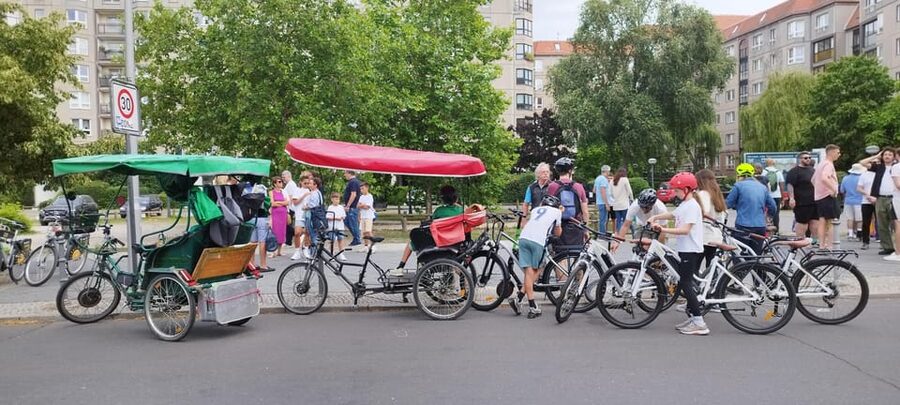
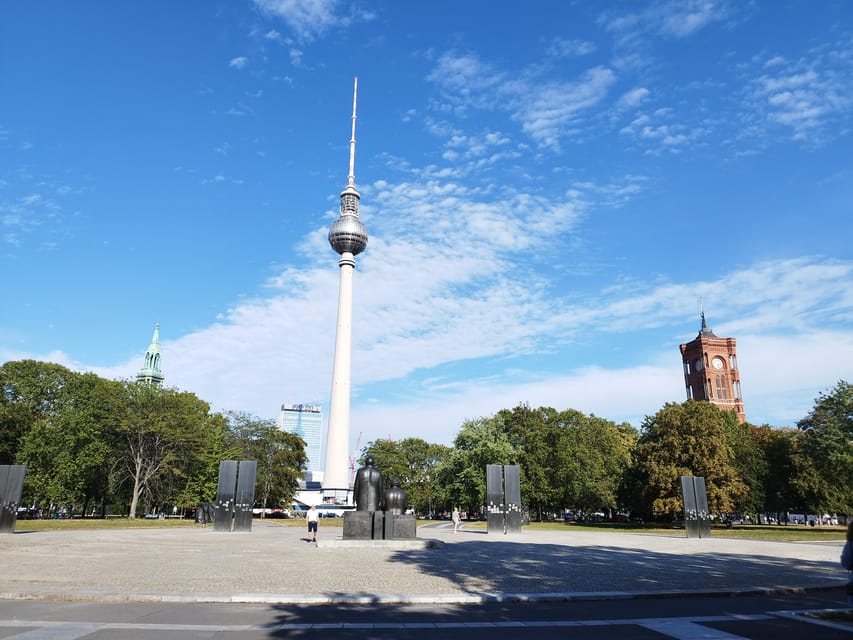
The first major sight is the Berlin TV Tower, or Fernsehturm, rising above Alexanderplatz. The tower is one of the city’s clearest reference points. From here, your guide can place Berlin’s eastern center on the map and explain how the area fits into the wider city.
You should expect a photo stop and a guided explanation rather than a trip up the tower. The tour does not include entrance tickets, and the schedule is built around outdoor sightseeing.
Rotes Rathaus, Berlin’s red-brick town hall, follows nearby. Its name means Red Town Hall, and its distinctive facade makes it easy to recognize. This part of the route gives you a quick look at civic Berlin before the tour moves toward Museum Island.
Museum Island, the cathedral, and Unter den Linden
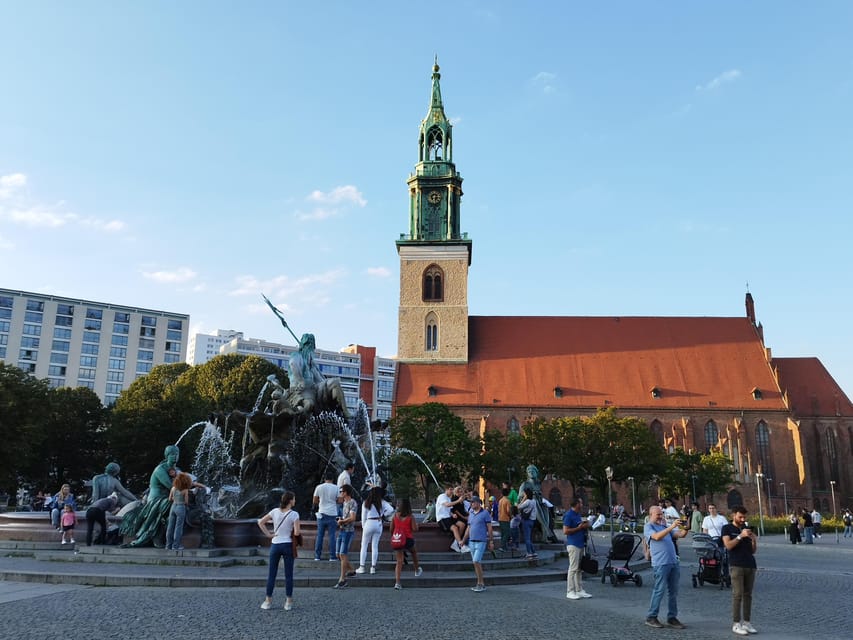
Museum Island brings together several of Berlin’s most important museums on an island in the Spree. You will see the setting from outside as the guide explains the area’s role in Berlin’s art and cultural life.
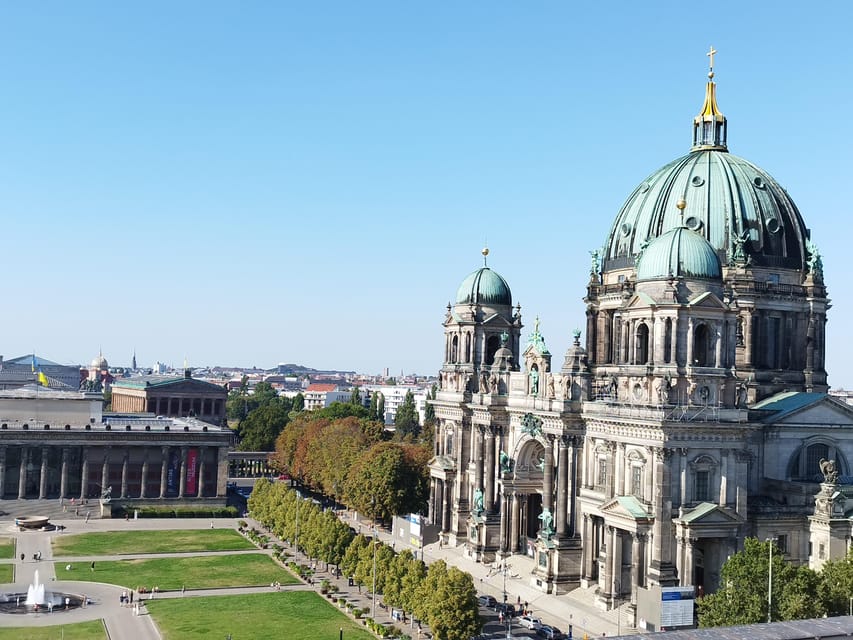
Berlin Cathedral is one of the strongest visual moments on the route. Its large dome and grand facade face the open space around the Lustgarten. The tour includes a photo stop and an explanation, but not an interior visit. If you want to see the cathedral or museums inside, plan a separate visit on another day.
The route then follows Unter den Linden, Berlin’s celebrated boulevard. This is one of the best stretches for seeing how the city joins royal architecture, public monuments, museums, and modern traffic. You are not simply racing between attractions. You are also seeing the connections between them.
The itinerary lists the Opera House, Neue Wache, Schlossbrücke, Schlossplatz, and nearby royal and public buildings as part of this central section. Each stop helps explain Berlin’s changing political identity, from Prussian power to modern Germany.
More Guided Tours around Berlin:
- Private Guide Up to Group 6 – ONE Rickshaw, (E)Bikes, E-Scooters
★ 5.0 · 3 reviews - Promotion Berlin Rickshaw Shared Guide (Combo Vehicle Group)
★ 4.0 · 3 reviews - Porto: Guided Tour by Tuk-Tuk & Optional Douro River Cruise
★ 4.5 · 5,980 reviews - Lisbon: Private Guided Tuk-Tuk Tour with Hotel Pickup
★ 4.9 · 4,552 reviews
Brandenburg Gate and the Reichstag
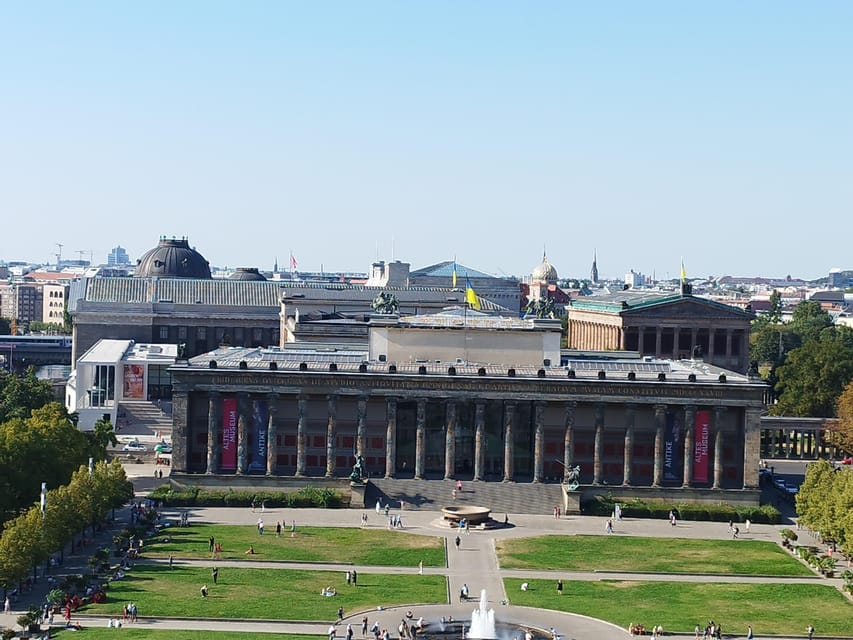
Brandenburg Gate is the classic Berlin sight, and the tour gives you time for photographs and a guide-led explanation. The gate once marked a city entrance. Today it is linked with German reunification and the image of Berlin around the world.
The nearby Reichstag, home of the Bundestag, brings the story into present-day politics. You will view the building from outside and hear about its role in Germany’s government. The tour does not include entry to the Reichstag or its dome, so arrange that separately if it is high on your list.
The American and French embassies are also included in this diplomatic quarter. These are not long attraction stops, but they add useful context to the area around the Brandenburg Gate. The guide can show you how government, diplomacy, memorials, and public space sit close together in central Berlin.
The Holocaust Memorial and Hitler’s bunker site
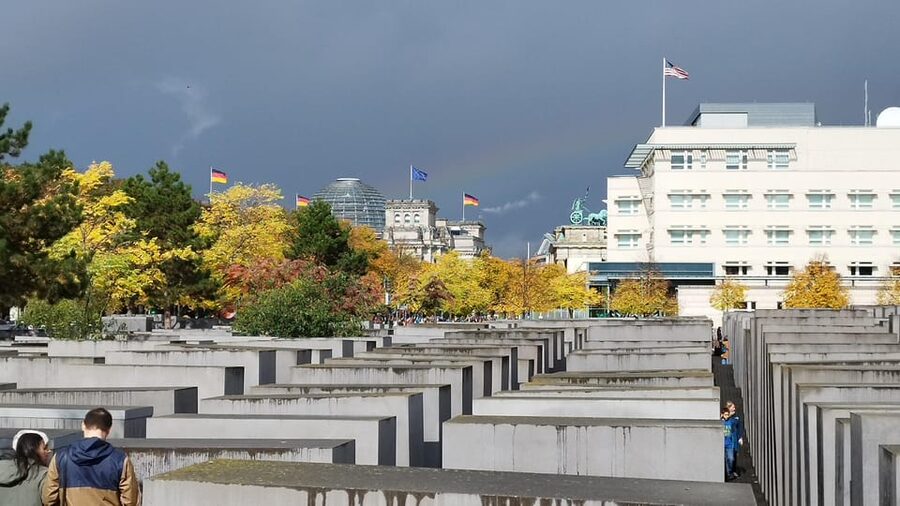
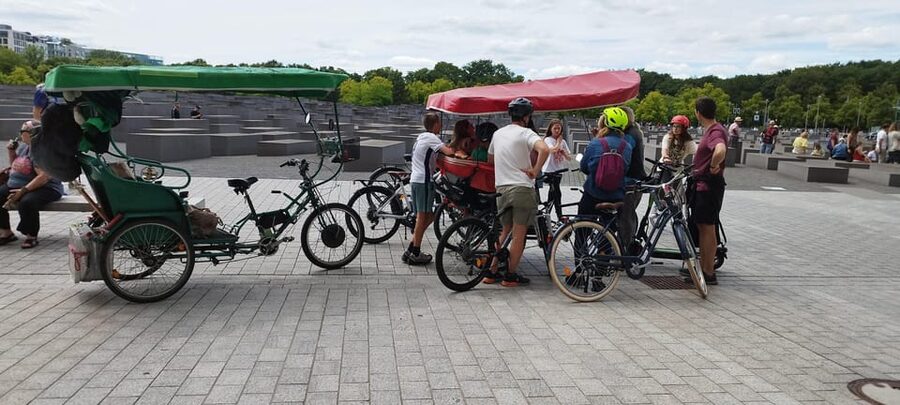
The Memorial to the Murdered Jews of Europe is a serious stop. Its field of concrete slabs creates an unsettled, changing space in the center of the city. The guide’s explanation is valuable here because the memorial is open to interpretation, but its historical purpose is clear.
You will also stop near the former site of Hitler’s bunker. There is no grand building to tour. The value is in understanding what happened at this ordinary-looking location and why the site is marked with information rather than turned into a monument.
These stops require a respectful pace. They are not simply points for quick photographs. You may want to listen carefully and allow yourself a quiet moment before continuing.
Potsdamer Platz and the Topography of Terror
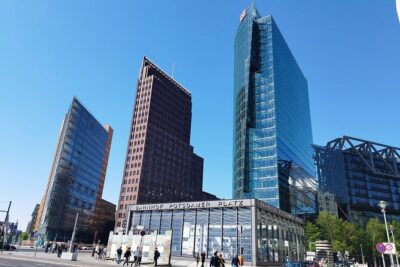
Potsdamer Platz shows a very different Berlin. Once divided by the Berlin Wall, it became a symbol of rebuilding and modern architecture after reunification. The route gives you a chance to compare the contemporary city with the historic center seen earlier.
The Topography of Terror focuses on the Nazi regime and the institutions responsible for persecution and terror. The outdoor and museum area contains serious historical material. This tour provides an introduction from the guide, but it does not replace time inside the exhibition.
That distinction matters. The route gives you a strong first orientation, but you cannot fully understand every site in a few minutes. If Nazi-era history is your main reason for visiting Berlin, I would return to the Topography of Terror later and allow extra time.
The Berlin Wall and Checkpoint Charlie
The Berlin Wall section brings the tour into the Cold War period. You will see remaining wall material and hear how Berlin was divided. The guide’s job here is to connect physical traces with the human and political story behind them.
Checkpoint Charlie is one of the city’s best-known Cold War locations. The former crossing point now receives plenty of attention from visitors, but its importance comes from the years when movement between East and West Berlin was tightly controlled.
The tour should help you separate the real history from the modern commercial activity around the site. Expect a stop, photographs, and an explanation. Do not expect a long museum visit or an untouched historic setting.
Gendarmenmarkt, Bebelplatz, and the book-burning memorial
Gendarmenmarkt is often considered one of Berlin’s finest squares. The surrounding architecture gives the stop a more elegant feel after the stark memorials and Cold War sites earlier in the route.
Bebelplatz brings the mood back to Nazi history. A memorial beneath the square recalls the book burning of May 10, 1933. It is easy to miss without a guide, which is one reason this route has value. The stop is small, but the story is powerful.
The Opera House and the buildings along Unter den Linden also appear in this section. A guide can help you notice details that might blur together when you see Berlin independently, especially if this is your first day in the city.
What the vehicle choice means for your day
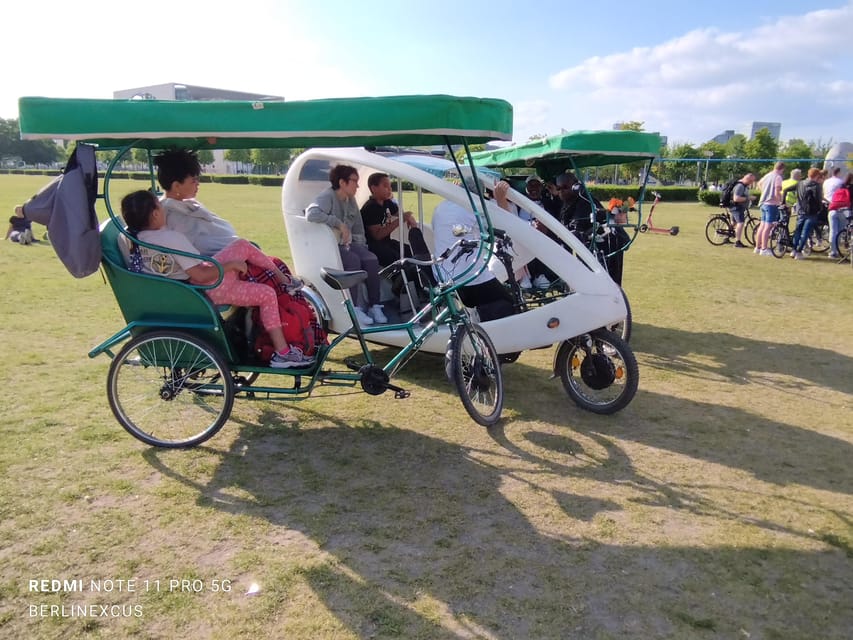
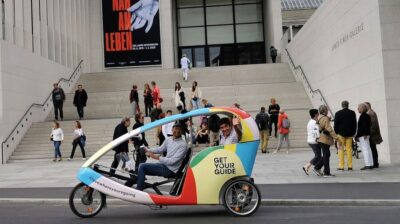
The rickshaw is the most relaxed option. You sit while the driver handles the route, making it a good fit for two people who want to see a lot without cycling. It also solves a common family problem: one person may want a bike while another needs a comfortable seat.
E-bikes and e-scooters give you more independence, but you must be comfortable controlling the vehicle in a city setting. The tour is guided, not a free-roaming rental. You follow the group and stop with the guide.
The mixed format is practical, but it may feel less uniform than a tour where everyone uses the same vehicle. A rickshaw moves differently from an e-bike or scooter, so ask about the arrangement if your group has specific mobility needs.
Water and soft drinks are provided. Riders may not drink alcohol during the tour for safety reasons. People sitting in the rickshaw may have a beer or sparkling wine during the ride, while cyclists and scooter riders can wait until after the tour.
Guide quality and group size
The guide is described as local, friendly, experienced, and certified under DIN EN15565. The available languages are English, German, Dutch, and Turkish.
One French-speaking participant, Julien, praised the guide for being interesting, spontaneous, and full of anecdotes. That is a useful clue about the style to expect: not just dates and names, but stories that help bring each place to life. No guide name is provided, so you should not book expecting a particular person.
The group is limited to eight participants. That is small enough for a more personal experience than a large coach tour, while still allowing the shared format to keep the cost practical. If you want a fully private guide and vehicle, confirm the arrangement before booking, since the advertised experience is a shared guided tour.
Is $235 good value for two people?
The listed price is $235 for a group of up to two. That is not a low-cost sightseeing ride, but the price includes a 210-minute guided route, a traditional rickshaw option, drinks, and access to a broad circuit of central Berlin.
The value improves if one person would struggle with walking or cycling. You are paying for transport between distant sights as well as the guide’s commentary. It can also be useful during a short Berlin stay when you want a clear first look at the city before choosing which museums and memorials deserve more time.
The price is harder to justify if you are happy to walk, use public transport, and research the sights yourself. Most stops are exterior visits, and admission to museums or the Reichstag is not part of the experience. Think of it as a guided orientation with comfortable transport, not as a series of full attraction visits.
Free cancellation up to 24 hours before the tour and the option to reserve without paying immediately add useful flexibility. Still, confirm the start address and vehicle type before finalizing your plans.
Who should book this Berlin tour?
I would recommend it most strongly to:
- Couples who want a comfortable overview without a long day on foot
- Grandparents traveling with children or younger family members
- Families with mixed ages and different energy levels
- First-time visitors who want Berlin’s main sights explained in one route
- People with limited mobility who can sit comfortably in a rickshaw
- Visitors with only a short stay who need help getting oriented
I would be more cautious if you want long museum visits, detailed time at every memorial, or a fully private experience. The route is broad by design. You see a lot, but you will need to return to the places that catch your interest.
Final verdict: a smart first look at Berlin Mitte
Book this tour if you value comfort, efficient sightseeing, and a guide who adds stories to the city’s most important places. The rickshaw option makes it unusually practical for mixed-ability groups, and the route covers an impressive range of Berlin history in 210 minutes.
Skip it if your priority is spending hours inside museums or exploring at your own pace. For most first visits, though, this is a useful way to connect Alexanderplatz, Museum Island, the Brandenburg Gate, Nazi memorials, the Wall, Checkpoint Charlie, and Gendarmenmarkt before deciding where to spend the rest of your time.
FAQ
Where does the Berlin rickshaw tour meet?
The stated meeting point is Weinbergsweg 6 near Rosenthaler Platz in Berlin Mitte, close to the U-Bahn. The general information also mentions Torstrasse 85, so confirm the exact address before departure.
How long does the tour last?
The experience lasts 210 minutes, or three and a half hours.
What languages does the guide speak?
The tour is available in English, German, Dutch, and Turkish.
How many people are in the group?
The shared group is limited to eight participants.
Can I choose a rickshaw instead of a bike or scooter?
Yes. The experience offers a traditional rickshaw for two, along with self-drive e-bikes and e-scooters. The rickshaw is intended for people who prefer to sit or have limited mobility.
Can I cancel for a full refund?
Yes. You can cancel up to 24 hours in advance for a full refund. The booking option also allows you to reserve now and pay later.
Newly added rides around Berlin
- Romantic Berlin Rickshaw City and Photo Tour – incl. pick-up★ 4.0 · 9 reviews
- Rickshaw Sightseeing Tours Berlin – Highlights Berlin – Rickshaw city tour★ 3.5 · 3 reviews
- One Up to 3 Rickshaws(6 GUESTS)-Taylor Made Rickshaw Berlin Tour★ 5.0 · 20 reviews
- Rickshaw Tour-Cruise Ship guests arrive 9.30 upto 11.30 am Berlin★ 5.0 · 7 reviews
- Daily First Rickshaw promotion in Combi Vehicle public Group 90€★ 5.0 · 11 reviews
- Private Guide Up to Group 6 – ONE Rickshaw, (E)Bikes, E-Scooters★ 5.0 · 3 reviews
- Rickshaw Sightseeing City Tours Berlin – Rikscha Tours★ 4.0 · 55 reviews
- Private Up to 12 Guests-ONE RICKSHAW, E-Bikes, E-Scooters★ 5.0 · 2 reviews
Berlin Tuk Tuk Tours: the nearest alternatives
Individual City Tour – Rickshaw Sightseeing in Berlin
Read our review →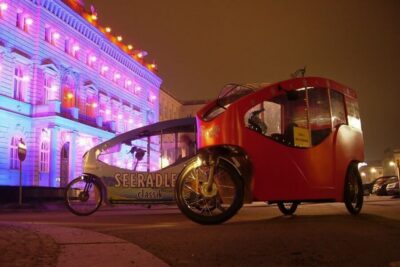

Rickshaw Tours Berlin – Groups of up to 16 people with several rickshaws
Read our review →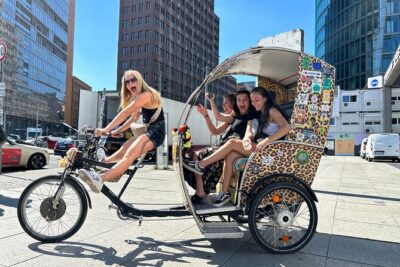
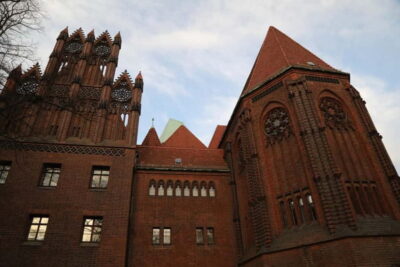
One Up to 3 Rickshaws(6 GUESTS)-Taylor Made Rickshaw Berlin Tour
Read our review →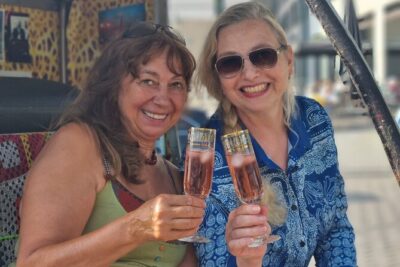
Berlin Rickshaw Tours Historical & Photo City Tour 120min – Sightseeing
Read our review →Tuk tuk lists that include it