
Review · JAPAN
Nara: Cultural Heritage Tour by Rickshaw
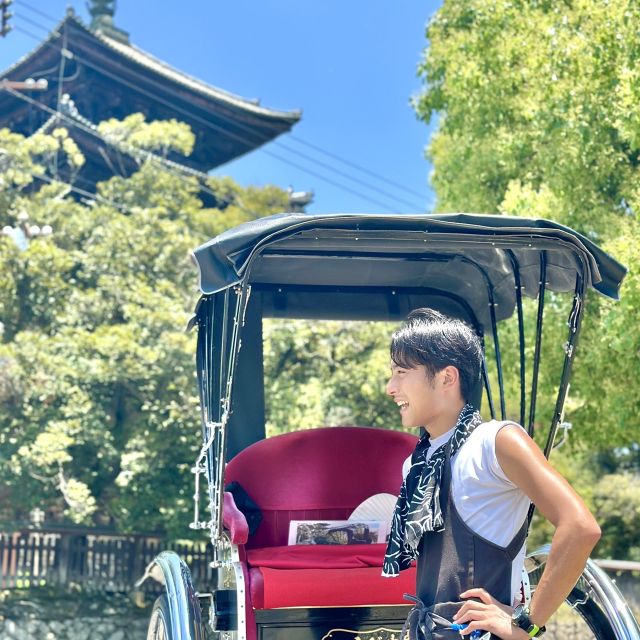
Nara’s famous sights take on a different feel from a low, open rickshaw seat. Your guide handles the route while you watch Todaiji’s gates, old streets, green Mt. Wakakusa, and Nara’s gentle deer pass at walking speed. The private format is the big draw: you can ask questions, pause for photos, and shape the outing around temples, statues, deer, or sake.
I especially like the chance to feed deer with biscuits supplied for the ride, and the choice of three very different routes. The main caution is the size of the rickshaw. Two adults can fit, but the 74-centimeter width may feel close, and some couples may prefer one rickshaw per person.
Key points to know before booking
- Mt. Wakakusa route: A 70-minute ride combines open views, grass-covered hills, and deer feeding.
- Buddhist statue route: The 130-minute option visits major halls at Kofukuji and Todaiji.
- World Heritage and sake route: The longest itinerary includes Todaiji, Kasuga Taisha, Naramachi, and sake tasting.
- Private guide: Japanese and English are available, with photo stops built into the ride.
- Small seating area: Each rickshaw holds up to two adults, with a maximum of two young children riding on an adult’s lap.
- Check the duration carefully: The details describe both a 190-minute option and a 3-hour-10-minute tour, while the headline duration lists 70 to 130 minutes.
A quiet start beside Todaiji Temple
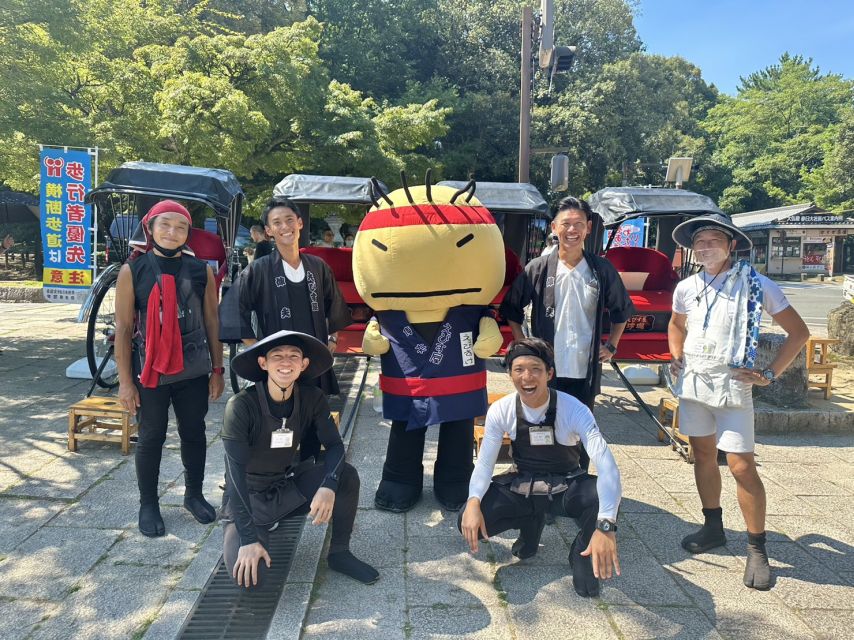
The meeting point is just outside the intersection near Todaiji Temple, though it can change with the option you book. That matters in Nara, where several major sights sit close together but the park roads and temple entrances can make a short walk feel less simple than it looks on a map.
Your ride begins near Todaiji, home of the huge bronze Vairocana Buddha, known locally as Daibutsu. The rickshaw itself gives you a raised seat and an unhurried view. You are not simply being driven from one attraction to another. The route is designed around stops, short explanations, and photographs.
The tour is private, so I would use the first few minutes to tell your guide what matters most. Ask for more temple detail if you care about architecture. Ask for deer time if you are traveling with children. If you want a photo-heavy ride, say so early.
Photo stops at attractive points are included. Admission to the temples is not, so you should budget separately if your selected route enters paid halls.
More Rickshaw Tours in Japan:
- Tokyo Asakusa Rickshaw Tour
★ 5.0 · 1,375 reviews - Kyoto: Arashiyama Customized Rickshaw Tour & Bamboo Forest
★ 5.0 · 432 reviews - Kyoto Arashiyama Rickshaw Tour with Bamboo Forest
★ 5.0 · 354 reviews
Choose the 70-minute Mt. Wakakusa and deer ride
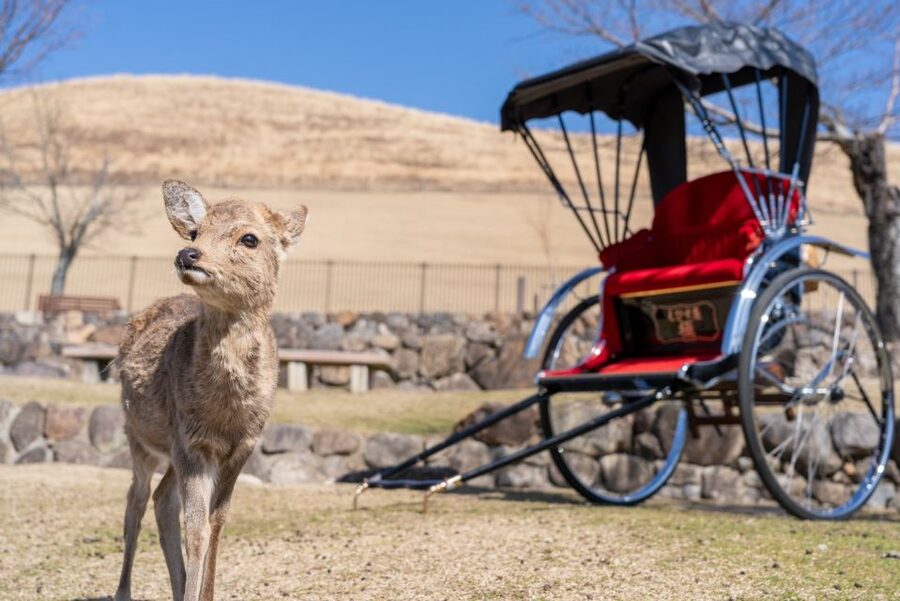
The shortest option is the clearest choice for a first taste of Nara. It leaves the main temple area and heads toward Mt. Wakakusa, a hill covered in grass. On clear days, you can see across the Nara city skyline.
This route gives you a useful change of pace. Todaiji and the deer-packed paths can feel busy, while Mt. Wakakusa offers a more open setting. You still get the classic Nara encounter, but the hill provides breathing room and a different view of the city.
The deer biscuits are supplied by the company. Feeding them is part of the route, not an extra activity you have to arrange. The information for this tour describes the Mt. Wakakusa deer as gentle and warns that deer near Todaiji can be more forceful when food is present. Follow your guide’s instructions and keep the biscuits under control until you are ready to feed them.
At 70 minutes, this option works well for a tight sightseeing day. It is also the most sensible choice if you want the rickshaw ride itself rather than a long temple study. You will not have time for the full Buddhist statue route or the sake brewery visit, so choose it for scenery, deer, and a compact outing.
Follow Unkei’s Buddhist sculpture trail for 130 minutes
The middle option is aimed at people who care about Japanese Buddhist sculpture. It visits works connected with Unkei, one of Japan’s most talented Buddhist sculptors, and includes several important halls.
The route includes Kofukuji Temple’s National Treasure Hall, Tokondo Hall, and Chukondo Hall, followed by Todaiji’s Nandaimon Gate. These stops give the tour a clear theme. Instead of seeing one temple after another and letting the details blur together, you can focus on the statues, their style, and the people who made them.
A guide can add real value here. Buddhist figures often look similar at first glance, especially when you are moving quickly through a large temple complex. A private explanation lets you stop and ask why one statue matters, what to look for in its expression or posture, and how the individual halls fit into the visit.
Keep the admission issue in mind. Temple entry fees are not included, so the final cost will be higher than the advertised $77 per person if your route uses paid areas. The listing gives this choice as 130 minutes, while another description calls it 2 hours and 10 minutes. Those figures do not match exactly, so confirm the selected duration when you book.
If you have already seen Todaiji’s Great Buddha and want more substance, I would choose this route over the short deer ride. It is less about collecting sights and more about understanding what you are looking at.
Add Naramachi and sake to the longest route
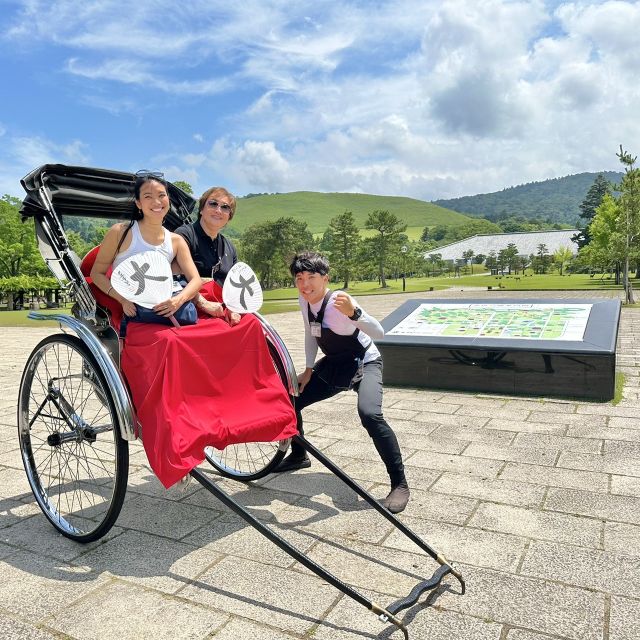
The full World Heritage route is described as 190 minutes, or 3 hours and 10 minutes in the general tour choices. It includes Todaiji Temple, Kasuga Taisha Shrine, the old townscape of Naramachi, and a traditional sake brewery.
This is the most varied itinerary. You get major religious sites, an old neighborhood, a long rickshaw ride, and a taste of local drink. It is also the route that asks the most from your schedule. Set aside a good part of the day, and check the exact duration before paying because the published timing is not fully consistent.
Kasuga Taisha gives the outing a different character from Todaiji. Todaiji is known for its enormous bronze Buddha and grand gate. Kasuga Taisha adds another major heritage stop, while Naramachi lets you ride through an area where the older town pattern remains.
The brewery visit includes sake samples. You can also buy a bottle to take home. Snacks and drinks are otherwise not included, so do not assume the tasting replaces a meal. If you want the sake stop, check how it fits with your own plans and any restrictions that apply to your group.
This route makes the most sense when you want Nara beyond the headline Buddha and deer. It also offers the best variety for a private tour, though the extra time and any temple admission fees make it the option to examine most closely for value.
More history rides around Japan:
- [30 minutes] Rickshaw tour around Asakusa [History, sightseeing, Tokyo Skytree]
★ 5.0 · 38 reviews - Kamakura Heritage Bike or Walk Tour with ex-Rickshaw guide
★ 5.0 · 11 reviews - Kamakura: Private History and Heritage Tour by Rickshaw
★ 4.9 · 7 reviews - Rickshaw Tour of Kagoshima’s Historical and Cultural Sites
★ 5.0 · 4 reviews
What a private rickshaw changes
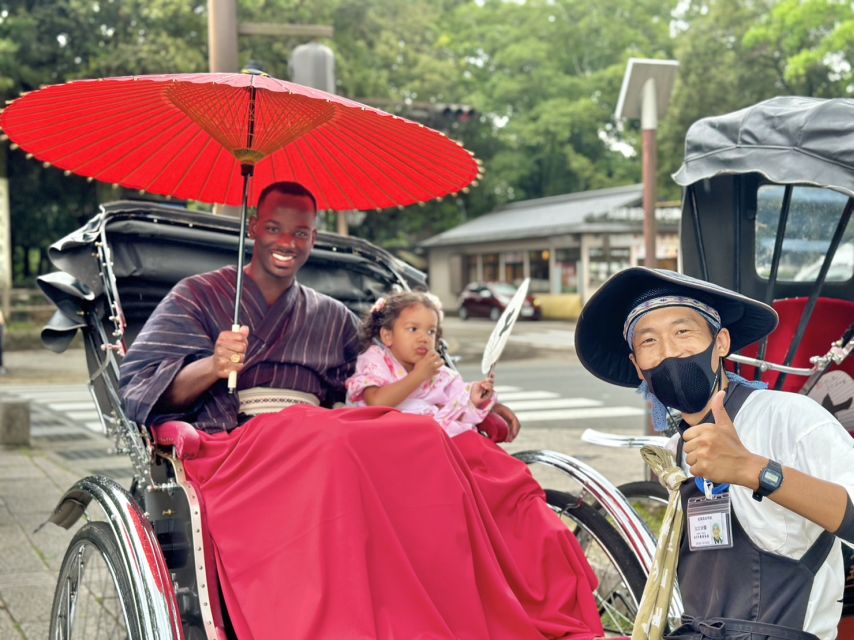
A private rickshaw is not the same as joining a large walking group. You can ask for more explanation at one stop and less at another. You can request photo pauses, and the finishing point can generally be customized by speaking with the guide.
That flexibility is especially useful in Nara. Your interests may not match those of another group. One person may want Buddhist art, another may want deer photos, and a third may care most about sake. A private booking lets the guide adjust the emphasis instead of delivering one fixed talk to everyone.
The tradeoff is capacity. A rickshaw holds a maximum of two adults, and its width is listed as 74 centimeters. That is about 21.1 inches, so two adults will sit close together. If you dislike narrow seating or want more personal space, booking separate rickshaws may be more comfortable.
Up to two children aged five or younger can ride with two adults, but they must sit on an adult’s lap. A five-year-old using one of the two actual seats must be booked as an adult and pay the full fare. Children aged six and over are charged at the adult rate.
Is $77 per person good value?
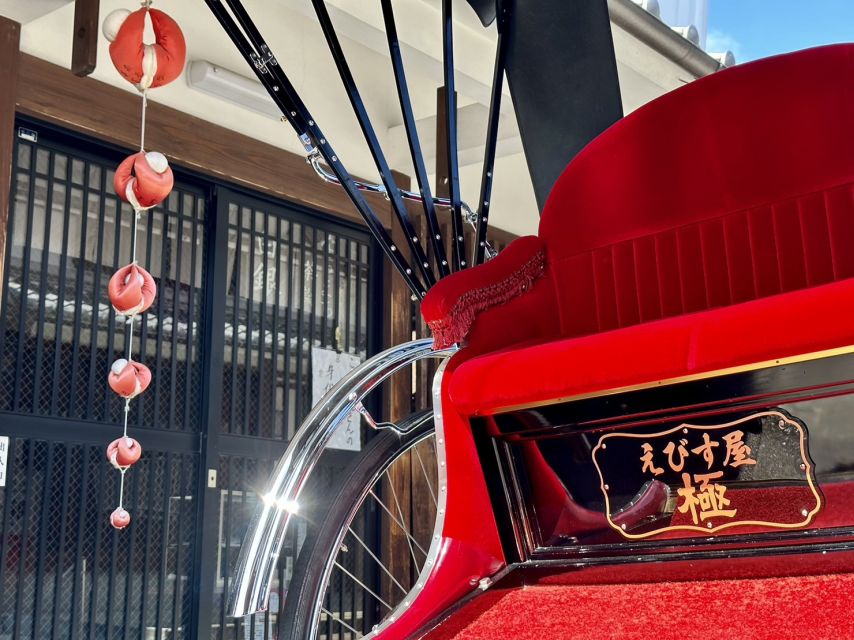
At $77 per person, you are paying for a private ride, a local guide, deer biscuits, and planned photo stops. You are not paying for a simple point-to-point taxi. The value comes from combining transportation, guiding, and a tailored route in one compact activity.
The short route is easier to judge. If you have only a few hours in Nara, the Mt. Wakakusa ride can be a practical way to add deer, views, and a rickshaw experience without giving up the rest of your day.
The longer routes need more thought. Temple admission is extra, and the sake route may include a purchase if you decide to take home a bottle. Still, a private guide for a small group can make sense if you want detailed explanations and do not want to organize several stops yourself.
I would not book this mainly as a cheap way to move around. A rickshaw is a special sightseeing activity, and the narrow seating may not suit everyone. I would book it for the personal guiding, the slow views, and the chance to connect several Nara highlights in one organized outing.
Practical fit for families and mobility needs
The tour is listed as wheelchair and stroller-friendly, which makes it more workable for some families than a long walking route. You should still confirm the exact meeting point and route details for your own equipment, since the tour moves through historic areas and includes temple visits.
Pregnant people are advised not to take the tour, and it is not suitable for people with back problems. The information also says it is not recommended during the first 16 weeks of pregnancy. The rickshaw seating and road movement are the key concerns here.
Selfie sticks are not allowed. Bring a normal camera or phone instead, and use the photo stops rather than trying to take pictures while the rickshaw is moving.
The guide can speak Japanese or English. Ricky is one guide associated with this experience. If having an English-speaking guide is important, select the appropriate language when booking and confirm the meeting instructions, since the starting point may vary by route.
What the short ratings tell you
The experience has a perfect 5 rating from five submitted ratings. Two written comments are especially brief: one calls the outing very good, and another specifically says Ricky was awesome.
That is positive, but the sample is small and does not answer every practical question. You should not treat it as proof that every route feels the same. The deer ride, statue tour, and sake itinerary have different aims, lengths, and possible extra costs.
The useful takeaway is that the guide can be a major part of the experience. A good rickshaw guide makes the ride feel personal rather than mechanical. Since this is a private group, you have a better chance to get the kind of explanation you want than you would on a fixed large-group tour.
How I would choose among the three routes
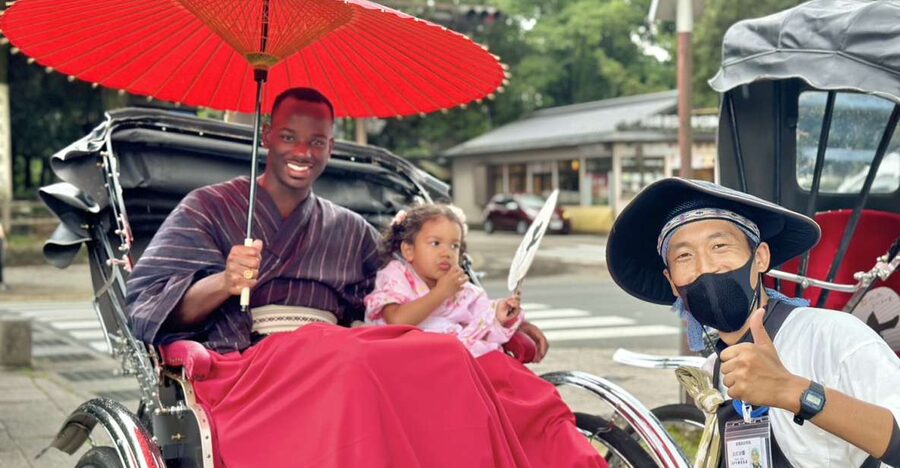
Choose the 70-minute Mt. Wakakusa option if you want deer, greenery, city views, and the lightest time commitment. It is the best fit for families with a packed sightseeing plan.
Choose the 130-minute Buddhist statue option if you want art and temple detail. This is the most focused route, and it should suit you if you would rather understand a few important works than rush through many sights.
Choose the 190-minute World Heritage and sake option if you want the broadest day out, including Naramachi and a brewery. Confirm the duration, meeting place, temple fees, and exact finishing point before booking.
All three routes can be customized to some degree. Tell the guide what you want before the rickshaw sets off, rather than waiting until the final stop.
Should you book the Nara rickshaw tour?
Book this if you want a private, guided introduction to Nara and like the idea of seeing the city from a rickshaw rather than only on foot. The deer biscuits, Mt. Wakakusa views, and flexible photo stops give the short tour plenty of appeal, while the longer options add serious temple content and sake.
Skip it if you need a low-cost way to visit temples, dislike close seating, have back concerns, or want to spend the day entirely on your own schedule. Before booking, confirm which of the three durations you are choosing, since the published times vary. For most first-time visitors, I would pick the 70-minute ride for a quick overview or the Buddhist statue route for the most focused cultural value.
FAQ
Where does the Nara rickshaw tour start?
The guide and rickshaw meet just outside the intersection by Todaiji Temple. The exact meeting point may vary depending on the option booked.
How long is the tour?
The listed choices include 70 minutes, 130 minutes, and a longer option described as 190 minutes or 3 hours and 10 minutes. Check the exact duration for your selected route before booking.
What languages does the guide speak?
Guides are available in Japanese and English.
How many people can ride in one rickshaw?
A rickshaw can hold up to two adults. It is 74 centimeters wide, or about 21.1 inches, so two adults may sit closely.
Can young children ride in the rickshaw?
Up to two children aged five and under can ride with two adults, but they must sit on an adult’s lap. A five-year-old using one of the two seats must be booked as an adult and pay the full fare.
Are temple admission fees included?
No. Admission fees to the temples are not included in the tour price.
Can the tour finish somewhere other than the starting point?
The tour generally finishes at its starting point, but the end location can be customized by discussing it directly with the guide.
Is the tour suitable for pregnant people or those with back problems?
The tour is not suitable for pregnant people or those with back problems. It is also not recommended during the first 16 weeks of pregnancy.
Newly added rides around Japan
- Kamakura Rickshaw Tour★ 5.0 · 53 reviews
- Rickshaw Tour of Kagoshima’s Historical and Cultural Sites★ 5.0 · 4 reviews
- Kamakura Heritage Bike or Walk Tour with ex-Rickshaw guide★ 5.0 · 11 reviews
- Hakodate Rickshaw Tour★ 5.0 · 18 reviews
- [60 minutes] Rickshaw tour around Asakusa [Complete Asakusa tour/power spots]★ 5.0 · 38 reviews
- [30 minutes] Rickshaw tour around Asakusa [History, sightseeing, Tokyo Skytree]★ 5.0 · 38 reviews
- Tokyo: Asakusa tour by rickshaw★ 4.9 · 11 reviews
- Tokyo Vegan Tour : Miso Making, Tea Ceremony, Rickshaw Ride★ 5.0 · 2 reviews
Japan Tuk Tuk Tours: the nearest alternatives
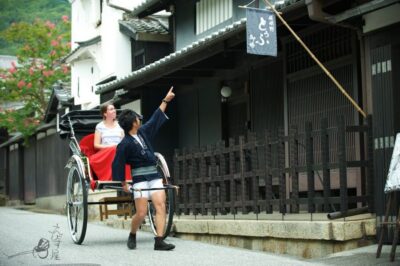
Kyoto: Arashiyama Customized Rickshaw Tour & Bamboo Forest
Read our review →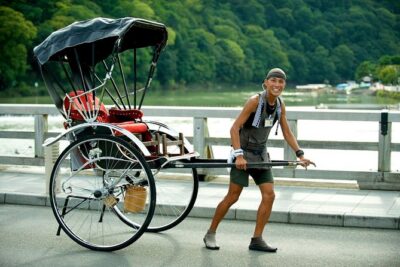
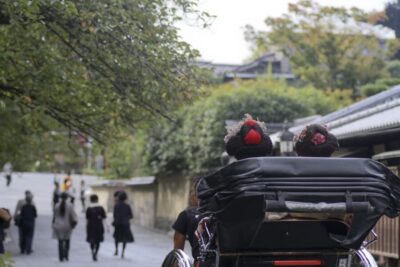
Kyoto: Private Rickshaw Tour of Gion and Higashiyama Area
Read our review →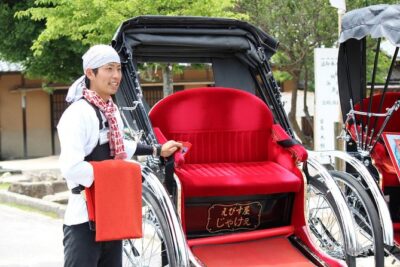
Asakusa, Tokyo: Rickshaw Experience and Highlights Walking tour
Read our review →
Miyajima: Private Rickshaw Tour to Itsukushima Shrine
Read our review →
[30 minutes] Rickshaw tour around Asakusa [History, sightseeing, Tokyo Skytree]
Read our review →Tuk tuk lists that include it