
Review · JAPAN
Rickshaw Tour of Kagoshima’s Historical and Cultural Sites
A short rickshaw ride gives you a quick, entertaining introduction to Kagoshima’s historic center. Your guide takes you past Reimeikan, Tsurumaru Castle’s stone remains, Terukuni Shrine, and Saigo Takamori’s statue, adding stories and jokes along the way. I like the easy photo stops, and I like that the ride is private for your own group. The only real catch is the price: at $71.53 per person, 30 minutes is a brisk slice of sightseeing.
I also like the personal touch. Guides including Kyoichi and Yui have entertained guests with stories, music talk, and local history, and one guide even returned a passenger to the art museum without charging extra. You should arrive 10 minutes early, though, since missing the departure means no refund.
Key points at a glance
- Four central Kagoshima sights in 30 minutes: See Reimeikan, Tsurumaru Castle ruins, Terukuni Shrine, and Saigo Takamori’s statue.
- A private ride for one or two people: You are not sharing the activity with a larger tour group.
- Guides bring humor to the history: Kyoichi and Yui are associated with lively commentary, friendly conversation, and helpful photo-taking.
- No attraction admissions are needed: The tour passes the sights, but entrance fees are not included if you choose to visit a museum or other paid site afterward.
- Good for a first look at Kagoshima: The compact route helps you get your bearings before exploring on foot.
- Weather matters: Poor conditions can lead to a new date or a full refund.
A quick ride through Kagoshima’s old center
Kagoshima is a city where modern streets meet the story of the Satsuma domain, the Meiji Restoration, and the Satsuma Rebellion. This tour gives you that setting without asking you to commit to a long museum visit or a full-day city tour.
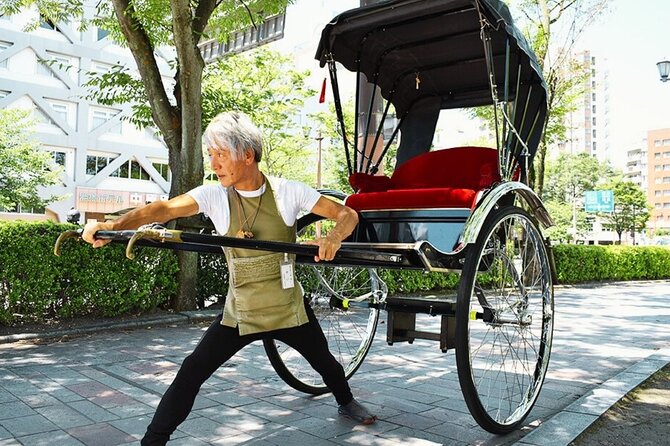
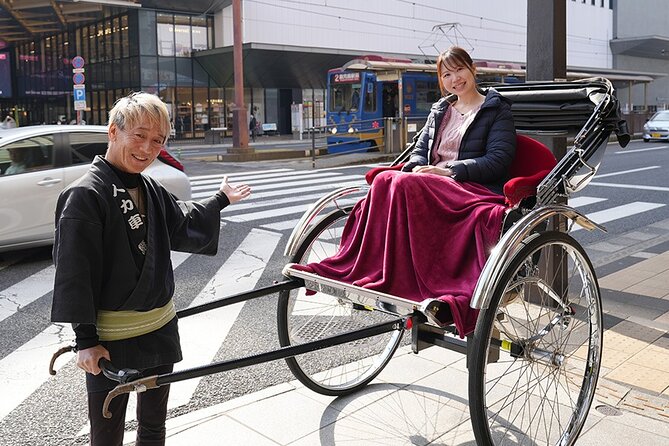
You sit back in a traditional Japanese rickshaw while your driver-guide handles the route and explains what you are seeing. The ride is designed for one or two people, making it a personal experience rather than a standard group outing. You can suggest places of interest in advance, so it is worth contacting the provider before the ride if one particular site matters to you.
The 30-minute length is both the tour’s strength and its limit. It fits neatly into a morning, afternoon, or stop between other plans. At the same time, you should expect brief stops, not lengthy visits inside museums or a detailed examination of every monument.
The route focuses on sights close to the meeting point at Hotel & Residence Nanshukan, at 19-17 Higashisengokucho. The ride returns there at the end. Since luggage can be left at the hotel pickup point during the tour, this can be useful if you are staying there or arranging the ride around your hotel plans.
More Rickshaw Tours in Japan:
- Tokyo Asakusa Rickshaw Tour
★ 5.0 · 1,375 reviews - Kyoto: Arashiyama Customized Rickshaw Tour & Bamboo Forest
★ 5.0 · 432 reviews - Kyoto Arashiyama Rickshaw Tour with Bamboo Forest
★ 5.0 · 354 reviews
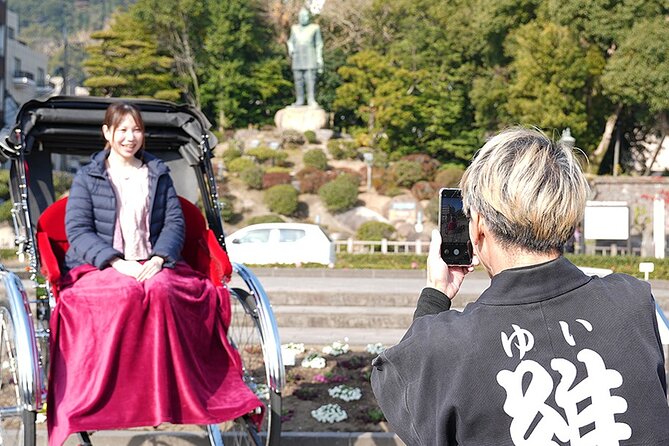
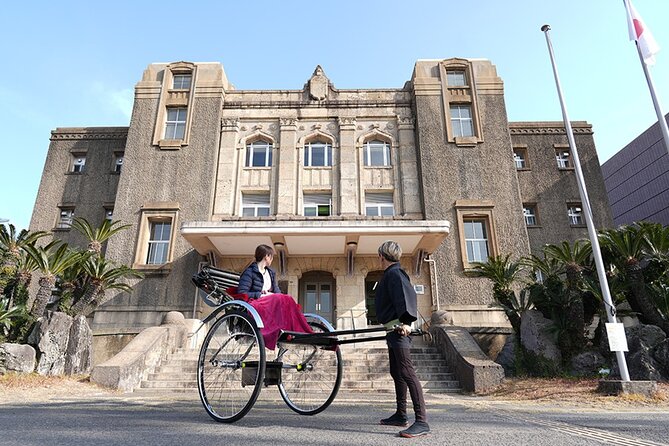
Reimeikan: a useful starting point for Kagoshima’s story
The first stop is Reimeikan, Kagoshima History Museum and Fine Arts Center. It is more than a museum name on the route. The building and its exhibits connect Kagoshima with the Satsuma domain, Japan’s move toward modernization, the Meiji Restoration, and the Satsuma Rebellion.
You have about five minutes here, so think of this as an introduction rather than a museum visit. Your guide can point out why the site matters, then you can decide if you want to return later for a longer look. Admission is not included, but it is also not required for the rickshaw activity.
I like this stop because it gives the ride a clear historical frame. Without some context, a quick pass by a statue or old wall can feel like a series of disconnected sights. Reimeikan helps tie the rest of the route to the political and social changes that shaped Kagoshima.
If you want to tour the museum itself, plan separate time. Trying to fit an indoor visit into this 30-minute ride would work against the easy pace that makes the rickshaw appealing.
Tsurumaru Castle ruins and the Goromon gate
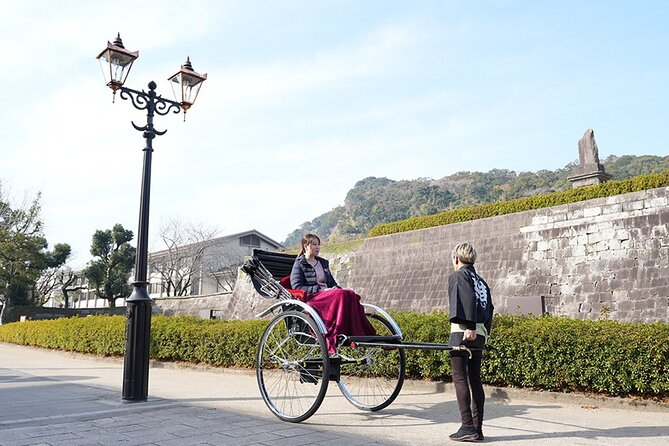
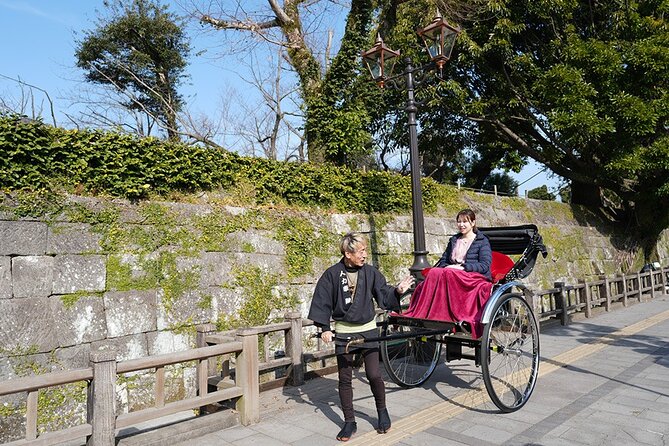
Next comes Kagoshima Castle, also known as Tsurumaru Castle. The castle was built between 1602 and 1606, and the remaining stone walls and moat give you a sense of its former footprint.
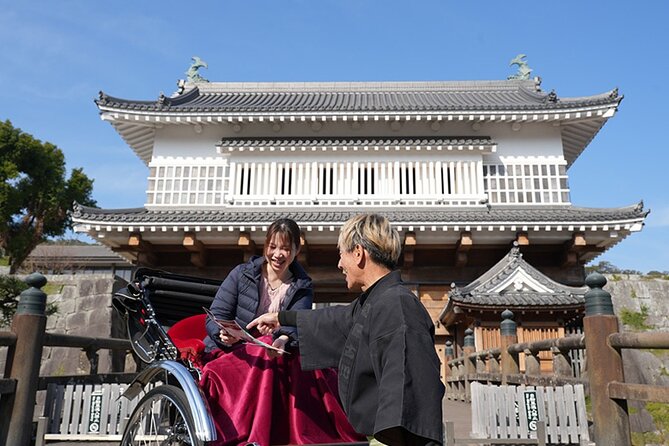
The ruins are paired with the Goromon area, and the old masonry provides a strong contrast to the city streets. Shiroyama Hill rises behind the site, adding a wooded backdrop to the stonework. Your five-minute stop is enough for a quick explanation and photographs, but not a full exploration of the grounds.
This is one of the places where the rickshaw helps. You get a guided look at an important site without first having to work out how the castle area fits into your day. If you are interested in Japanese castle architecture, you will probably want to come back on foot, since the brief stop cannot cover the whole story.
The castle is also a good photo stop. Ask your guide where to stand if you want the walls, gate area, and hill behind you in the same picture. The guides are accustomed to taking photos for passengers, which is useful when you are traveling alone or as a couple.
Terukuni Shrine and the Shimazu connection
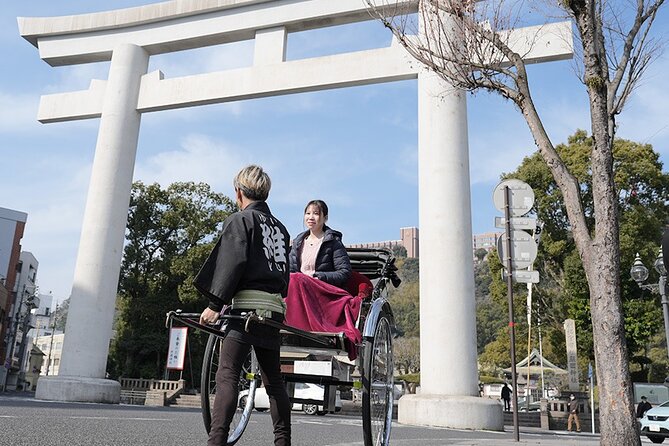
Terukuni Shrine is dedicated to Shimazu Nariakira, the 28th feudal lord of the Satsuma domain. He played an important part in Japan’s modernization during the late Edo period, so this stop adds a different angle to the political story introduced at Reimeikan and the castle ruins.
Again, the planned visit is around five minutes. You will get a quick look and an explanation, not a formal shrine visit with time to wander at length. The short format works well if you want an overview, but you should save extra time if you hope to study the shrine grounds more carefully.
I find this stop valuable because it connects a religious site with the local ruling family and the changes taking place before the Meiji period. It reminds you that Kagoshima’s story is not only about battles and famous rebels. It also involves local leadership, reform, and the gradual shift away from the old feudal order.
Keep your expectations practical. The rickshaw is passing through a set of central sights, so the guide’s explanation is the main benefit here. You are not booking a dedicated shrine tour.
More history rides around Japan:
- [30 minutes] Rickshaw tour around Asakusa [History, sightseeing, Tokyo Skytree]
★ 5.0 · 38 reviews - Kamakura Heritage Bike or Walk Tour with ex-Rickshaw guide
★ 5.0 · 11 reviews - Kamakura: Private History and Heritage Tour by Rickshaw
★ 4.9 · 7 reviews - Nara: Cultural Heritage Tour by Rickshaw
★ 5.0 · 5 reviews
Saigo Takamori’s statue and the human side of history
The final listed stop is the bronze statue of Saigo Takamori in Central Park. Saigo was a major figure in the Meiji Restoration and later led a rebellion against the Meiji government. In Kagoshima, his image carries strong local meaning.
The statue gives your guide a chance to explain a complicated chapter in Japanese history. Saigo was involved in the creation of the new Meiji government, yet later opposed it. That tension makes the statue more interesting than a simple memorial to a national hero.
You have about five minutes here, enough for commentary and photos. If you know little about Saigo before the ride, the guide’s short explanation can help you understand why he remains such a well-known figure in Kagoshima.
The statue also makes a natural ending point for the historical portion of the route. From here, the ride returns to the meeting point, leaving you with a basic map of the central sights and several places you can revisit at your own pace.
The guide can make or break a 30-minute tour
A short ride depends heavily on the person guiding it. There is not enough time for a flat, mechanical delivery. The guide has to keep the route moving while making each stop feel worthwhile.
Kyoichi has been described as funny, personable, and good at keeping the conversation going while explaining local history. Another guide, also referred to as Koichi in tour correspondence, provided running commentary throughout the route. Yui has also guided passengers and handled the experience with humor and warmth.
The personal stories connected with these guides are part of the appeal. One guide shared an interest in heavy metal music with a passenger, even recognizing an obscure song. That kind of exchange shows how the ride can become more than a list of dates and names when the conversation clicks.
You may also get help with photographs. One guide took photos in attractive spots, and another returned a passenger to the art museum without an added charge. I would not treat an extra drop-off as guaranteed, but the examples suggest that the guide may try to be helpful when the timing and route allow.
The exact guide is not guaranteed in the information provided, so book this for the format and route rather than one specific personality. Still, the named guides give you a useful sense of the tone: friendly, conversational, and willing to mix local history with light humor.
What $71.53 means for value
At $71.53 per person, this is not the cheapest way to see four central sights. The ride lasts about 30 minutes, and the group discount may improve the price for eligible bookings. Children under six are free, which makes the cost easier to manage for families with very young children.
The value comes from the private format, the unusual vehicle, the guide’s commentary, and the time saved getting between the sights. You are paying for a compact introduction with a local person, not for museum admission or a long guided tour.
For a couple, the price may feel reasonable if you want a memorable first look at Kagoshima and enjoy having someone handle the route and photographs. For a solo passenger, the per-person price is harder to justify unless the rickshaw itself is a priority.
I would compare it with your own plans. If you already intend to visit Reimeikan, the castle ruins, Terukuni Shrine, and Saigo’s statue on foot, the ride may duplicate some of your sightseeing. If you have limited time or want a quick orientation before walking around independently, the price buys convenience and a distinctive experience.
Timing, meeting point, and practical details
The activity operates daily from 10 a.m. to 6 p.m., with dates currently listed from January 20, 2025, through December 9, 2026. Confirmation is sent within 48 hours of booking, subject to availability.
You meet at Hotel & Residence Nanshukan and return there at the end. The meeting point is near public transportation, but the supplied details do not specify particular train or tram connections, so check your route before setting out.
Arrive 10 minutes before your pickup time. This matters because the tour has a tight schedule, and there is no refund if you fail to show up. You can leave luggage at the hotel pickup point during the ride, which may help if you are making the tour part of a transfer between plans.
Most people can participate, and the activity is private for your own group. It is suitable for all ages, and bookings are intended for one or two people. Group discounts are available, though the exact discount is not stated.
The tour needs good weather. If rain or other poor conditions force cancellation, you will be offered another date or a full refund. For your own cancellation, you can receive a full refund if you cancel at least 24 hours before the start time. Changes or cancellations inside that window are not accepted and are not refunded.
Who should book this rickshaw ride?
I would recommend it to first-time visitors who want a quick introduction to central Kagoshima. It also suits couples who want a private activity with photos, families looking for something easy for all ages, and anyone who likes local stories delivered with conversation rather than a formal lecture.
It is particularly useful early in a visit. The route can show you which places deserve more of your time later. Reimeikan, the castle ruins, Terukuni Shrine, and Saigo’s statue are close enough in the city center to form a sensible orientation loop.
You should think twice if you want long visits inside museums, extensive shrine time, or detailed castle history. Five minutes at each stop is enough to see and hear the basics, but not enough to explore fully.
You should also weigh the cost if you are traveling alone. The private format is pleasant, but the per-person price is high for half an hour. Couples split the experience across two people, and families with children under six benefit from free admission for the youngest children.
Should you book it?
Book this tour if you want a short, private, characterful introduction to Kagoshima and like the idea of seeing the city from a traditional rickshaw. The guides bring humor, local history, and useful photo help, and the route covers several important central sights without demanding much walking.
Skip it if you prefer to explore slowly, enter museums, or keep your sightseeing budget tight. At $71.53 per person, the experience is best viewed as a special orientation ride, not a complete tour of Kagoshima.
For most people, the smart plan is to schedule it near the beginning of your stay, arrive early, and treat the four stops as a preview. Then return on foot to the places that catch your interest.
FAQ
How long does the rickshaw tour last?
The tour lasts approximately 30 minutes.
Where does the tour start and end?
It starts at Hotel & Residence Nanshukan, 19-17 Higashisengokucho, Kagoshima, and ends back at the same meeting point.
Which sights are included?
The route includes Reimeikan, Kagoshima History Museum and Fine Arts Center, Tsurumaru Castle ruins and the Goromon area, Terukuni Shrine, and Saigo Takamori’s statue.
Is this a private tour?
Yes. Only your own group participates in the activity.
How many people can book?
The activity is suitable for bookings of one or two people. Group discounts are available.
Are children allowed, and do young children pay?
The tour is suitable for all ages. Children under six are free.
Are admission tickets included?
Admission fees are not included, but they are not required for the rickshaw activity itself.
What happens if the weather is poor?
The experience requires good weather. If it is canceled because of poor conditions, you can choose a different date or receive a full refund.
Newly added rides around Japan
- Kamakura Rickshaw Tour★ 5.0 · 53 reviews
- Kamakura Heritage Bike or Walk Tour with ex-Rickshaw guide★ 5.0 · 11 reviews
- Hakodate Rickshaw Tour★ 5.0 · 18 reviews
- [60 minutes] Rickshaw tour around Asakusa [Complete Asakusa tour/power spots]★ 5.0 · 38 reviews
- [30 minutes] Rickshaw tour around Asakusa [History, sightseeing, Tokyo Skytree]★ 5.0 · 38 reviews
- Tokyo: Asakusa tour by rickshaw★ 4.9 · 11 reviews
- Tokyo Vegan Tour : Miso Making, Tea Ceremony, Rickshaw Ride★ 5.0 · 2 reviews
- Tokyo: Asakusa Highlights Walking (OP : Rickshaw Experience)★ 3.5 · 4 reviews
Japan Tuk Tuk Tours: the nearest alternatives
Kyoto: Arashiyama Customized Rickshaw Tour & Bamboo Forest
Read our review →
Kyoto: Private Rickshaw Tour of Gion and Higashiyama Area
Read our review →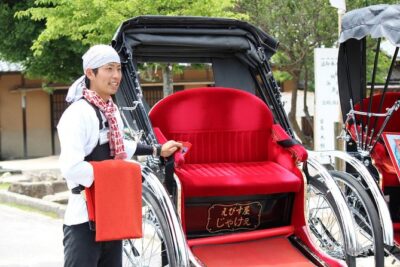
Asakusa, Tokyo: Rickshaw Experience and Highlights Walking tour
Read our review →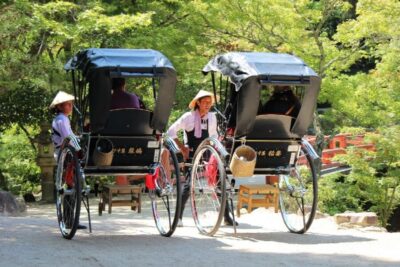
Miyajima: Private Rickshaw Tour to Itsukushima Shrine
Read our review →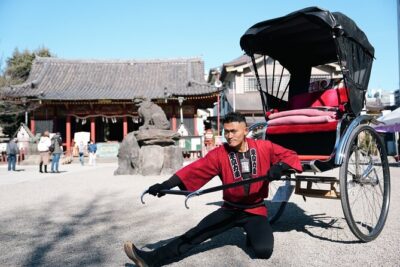
[30 minutes] Rickshaw tour around Asakusa [History, sightseeing, Tokyo Skytree]
Read our review →Tuk tuk lists that include it