
Review · TOKYO
Tokyo: Asakusa Highlights Walking (OP : Rickshaw Experience)
A rickshaw ride gives you a fine first look at Asakusa. You sit above the street while a driver carries you past Kaminarimon, Senso-ji, Sumida Park, and views toward Tokyo Skytree. The ride lasts 20 minutes, so it is a taste of old-style Tokyo rather than a full afternoon in the carriage.
I like the small group of up to eight, which should make it easier to ask questions, and I like the route through Kaminarimon, Nakamise, Asakusa Shrine, and Senso-ji. The main caution is important: the rickshaw is described as an option, and one person expected a combined ride-and-walk tour, then cancelled when the arrangement was not clear. Confirm exactly what you are booking.
Key points to know
- The rickshaw ride lasts 20 minutes: It adds a memorable view of Asakusa, but it is only one part of the three-hour outing.
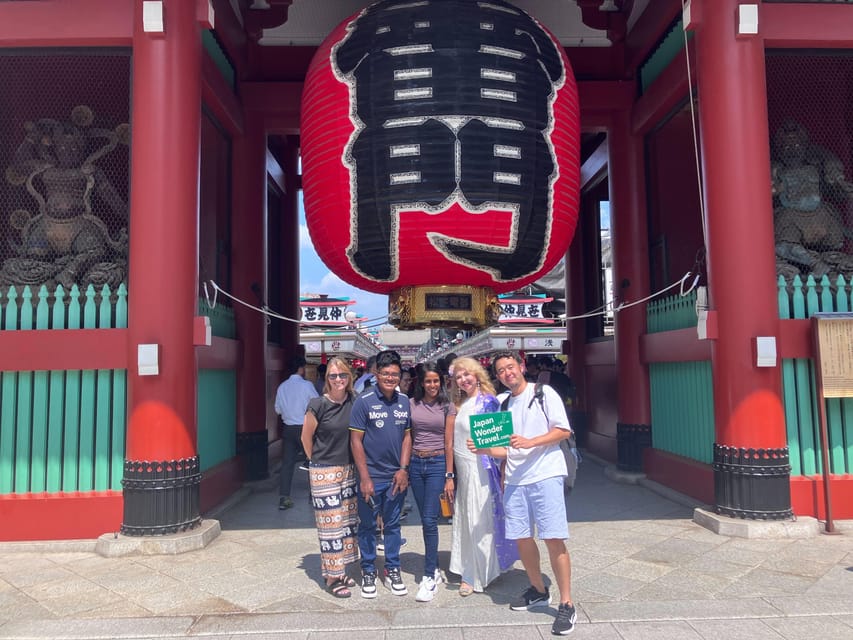
- Kaminarimon is the meeting-area landmark: Start in front of the Asakusa Culture Tourist Information Center, then walk toward the famous gate.
- Senso-ji and Asakusa Shrine are central stops: You get both a major Buddhist temple and a nearby Shinto shrine.
- The tour is conducted in English: A live guide explains local culture, objects, and the area’s past.
- The group is limited to eight people: This is a useful size for a walking route through crowded streets.
- You walk in all weather: Wear sturdy, comfortable shoes and bring a camera.
Why a rickshaw is a good way to begin in Asakusa
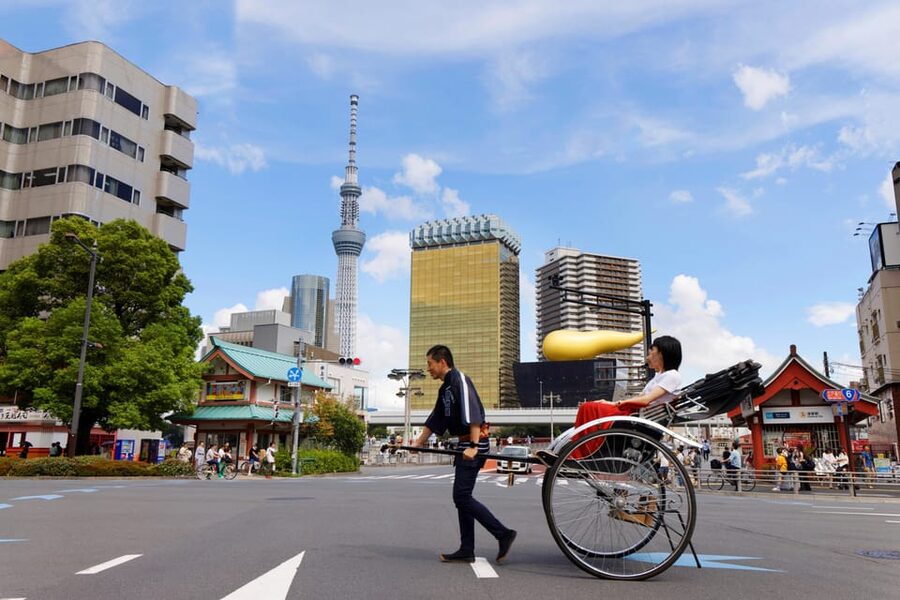
Asakusa is one of the few parts of Tokyo where a traditional rickshaw feels at home rather than staged. The broad streets near Kaminarimon, the temple approach, old shopping lanes, and glimpses of the Sumida River give the ride a clear sense of place.
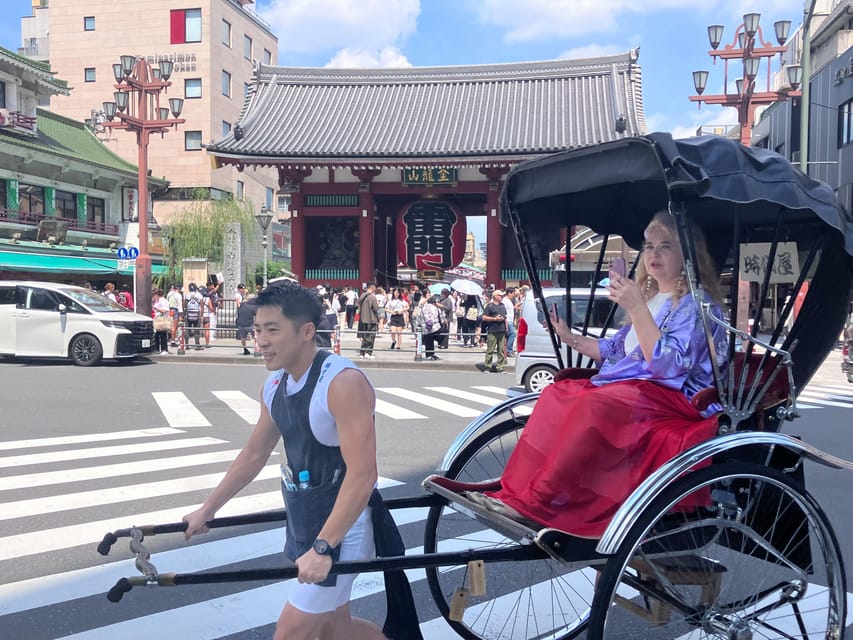
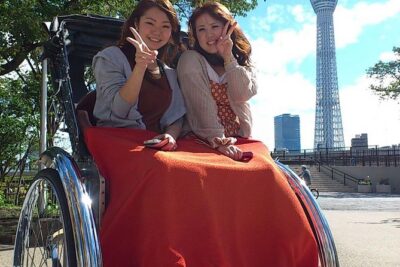
The carriage also changes your point of view. You are not moving through the district at street level, squeezed between shops and other people. You sit slightly above the road, with a driver who can point out sights and help with photographs. The ride includes photo opportunities around Kaminarimon, Senso-ji, Tokyo Skytree, and Sumida Park.
Still, keep your expectations in check. A 20-minute ride passes quickly. If the rickshaw is the main reason you are booking, check that the option is included in your chosen booking before you pay. The walking portion is the larger part of the experience.
More Rickshaw Tours in Japan:
- Tokyo Asakusa Rickshaw Tour
★ 5.0 · 1,375 reviews - Kyoto: Arashiyama Customized Rickshaw Tour & Bamboo Forest
★ 5.0 · 432 reviews - Kyoto Arashiyama Rickshaw Tour with Bamboo Forest
★ 5.0 · 354 reviews
Meeting at the Asakusa Culture Tourist Information Center
The tour begins in front of the Asakusa Culture Tourist Information Center. This is a practical place to meet because it sits near the main Asakusa sights and gives you a clear starting point for the route.
You should arrive with enough time to find the guide. The area around Kaminarimon can become very crowded, especially on a Saturday during cherry blossom season. One review described difficulty locating the guide in the crowd because there was no raised sign. That is useful advice: look carefully for your guide, keep your phone available, and contact the operator if the meeting point becomes hard to identify.
The meeting point is also the ending point. You do not need to arrange a hotel transfer, and none is provided. That makes this easier to fit into a day of sightseeing, especially if you plan to continue around Asakusa afterward.
The 20-minute rickshaw ride through Asakusa
The rickshaw portion is the most distinctive part of the activity. You will be carried through Asakusa’s streets while the driver takes you toward well-known sights and photo stops. The route can include Kaminarimon, Senso-ji, Sumida Park, and views of Tokyo Skytree.
A reserved rickshaw can save you from waiting in line, which matters in a popular district. The reservation is listed as optional, so do not assume every booking includes it. The wording can be easy to misunderstand, and that confusion has already caused at least one cancellation. Ask before booking if your price includes the ride, how long it lasts, and whether the walking tour continues afterward.
The rickshaw is not a substitute for exploring Senso-ji on foot. It gives you a short moving introduction, while the walking stops let you examine the gates, shops, temple grounds, and shrine area at a slower pace. I would treat the carriage as a memorable add-on, not the whole tour.
Kaminarimon, Asakusa’s famous red gate
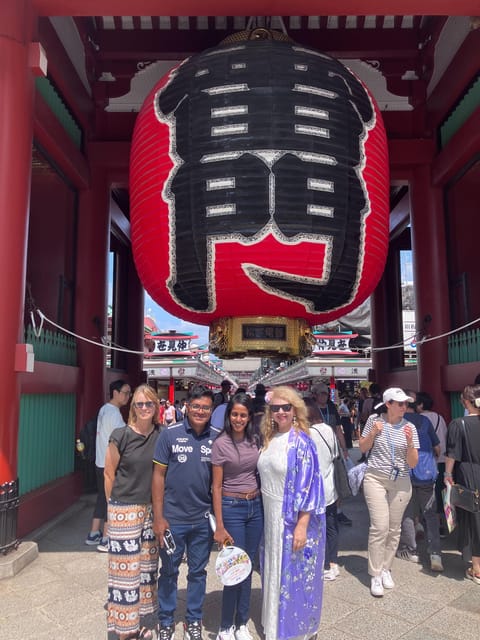
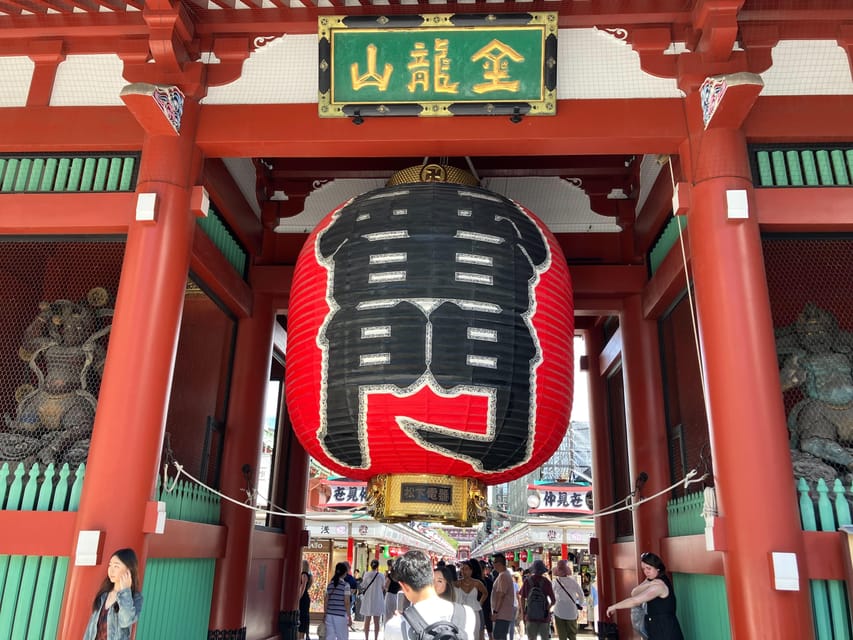
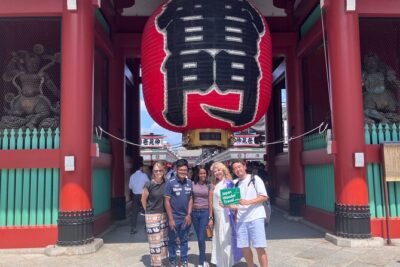
Kaminarimon is one of Tokyo’s instantly recognizable sights. Its large lantern and imposing gate mark the approach to Senso-ji, and the tour includes time for sightseeing, photographs, and a guided explanation.
This is also where the practical side of the tour matters most. Kaminarimon is a major meeting and photo spot, so the pavement can be crowded. You may need to pause at the edge of the flow of people while the guide speaks. If hearing clearly in a crowd is important to you, stay close to the guide and ask questions when the group moves to a quieter place.
The route returns to Kaminarimon later, so you may see the gate at more than one point in the tour. That can be useful for orientation, but it also means this is not a nonstop march through new sights.
More Tuk Tuk City Tours in Japan:
- Tokyo: Asakusa Sightseeing Tour by Rickshaw
★ 4.9 · 195 reviews - Asakusa, Tokyo: Rickshaw Experience and Highlights Walking tour
★ 5.0 · 47 reviews - [30 minutes] Rickshaw tour around Asakusa [History, sightseeing, Tokyo Skytree]
★ 5.0 · 38 reviews - Otaru: Private Otaru Sightseeing Tour by Rickshaw
★ 5.0 · 4 reviews
Nakamise Shopping Street and the approach to Senso-ji
From Kaminarimon, the route continues along Nakamise Shopping Street. This is the traditional shopping approach to Senso-ji, lined with shops selling souvenirs, snacks, and Japanese goods. The tour includes a guided walk and photo time here.
Nakamise is valuable because it connects the everyday shopping side of Asakusa with its major religious site. You can learn about local items and Japanese culture while seeing how the approach to the temple functions as both a shopping street and a ceremonial path.
The drawback is crowding. This is not a quiet lane, and you should not expect a relaxed browsing session during the tour. If a particular snack or souvenir catches your eye, note it and return after the guided portion. The activity does not include food or drinks, so any purchases are your responsibility.
Senso-ji and the atmosphere of old Tokyo
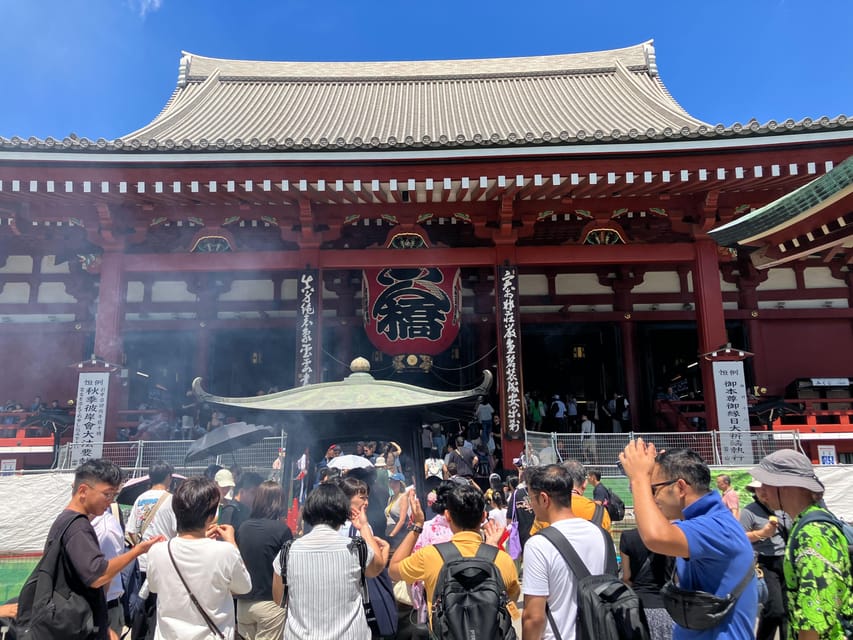
Senso-ji is the heart of the route. The temple retains an atmosphere linked to the Samurai period, and the guide explains the history of Asakusa and the customs connected with the site.
You will see the temple as part of a wider district rather than as an isolated monument. Kaminarimon leads to Nakamise, Nakamise leads toward Senso-ji, and nearby streets show how religious, commercial, and neighborhood life sit side by side in Asakusa.
The tour is especially useful if you are visiting Japan for the first time and want help reading the setting. A guide can explain why certain objects matter, how the temple area developed, and how Japanese culture appears in daily details. The supplied information does not name the individual guide, so you should not expect to request a particular person.
Give yourself extra time around Senso-ji after the tour if you want photographs or a slower look. The scheduled visit is part of a three-hour route, not an open-ended temple visit.
Asakusa Shrine, Nishi Sando, and Hoppy Street
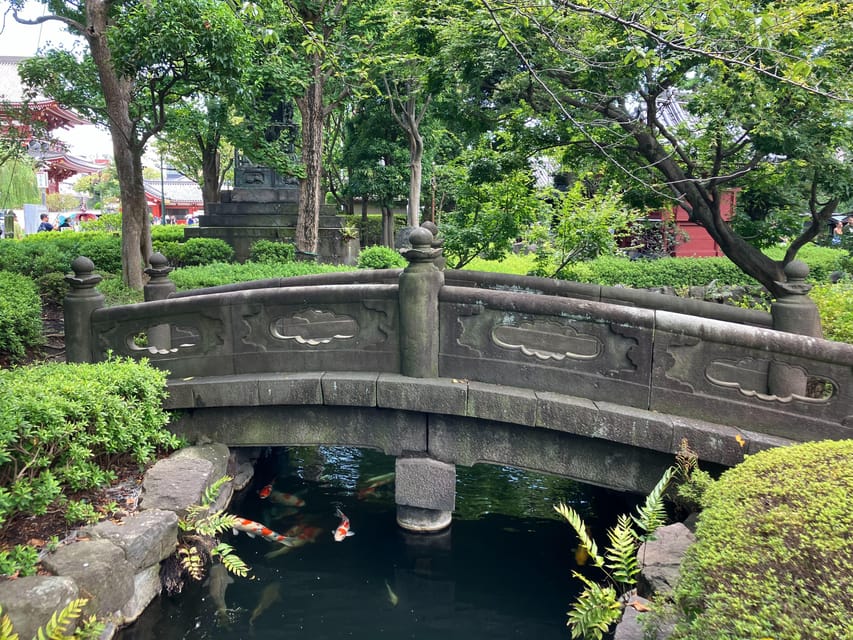
The itinerary includes Asakusa Shrine, with a guided visit lasting about 10 minutes. Seeing the shrine alongside Senso-ji gives you a useful contrast between Buddhist and Shinto traditions. The tour is not simply a procession from one photo stop to another. It introduces the different cultural roles of the places you pass.
The wider route also highlights Nishi Sando Shopping Street and Hoppy Street. These areas help you see a less formal side of Asakusa, away from the grand temple entrance. Hoppy Street is known in the itinerary as one of the local highlights, while Nishi Sando adds another shopping-street view.
The stop at each place is brief. You will get an overview and an explanation, but not a long private lesson at every site. That suits you if you want orientation before exploring alone. It may feel rushed if you prefer to study architecture or browse shops in detail.
Tokyo Skytree and Sumida Park photo opportunities
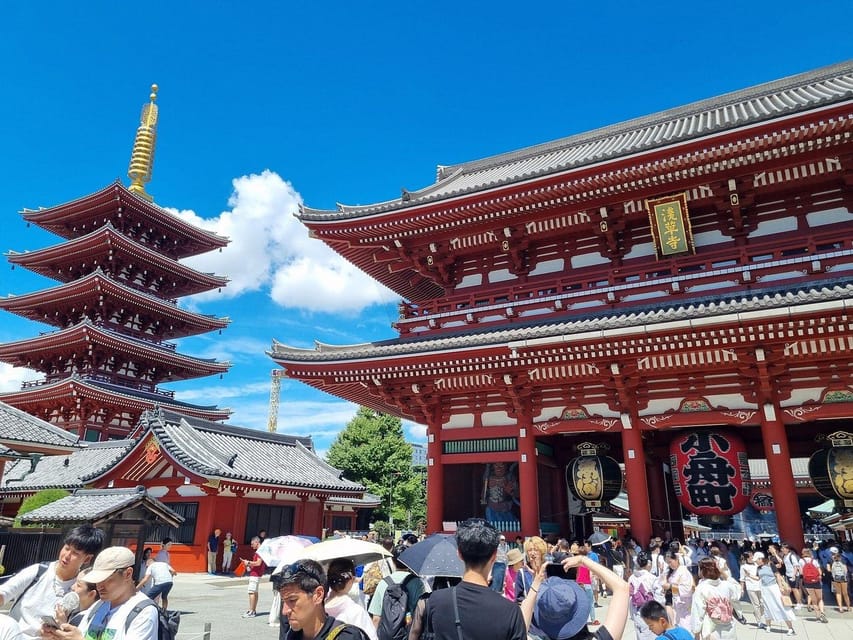
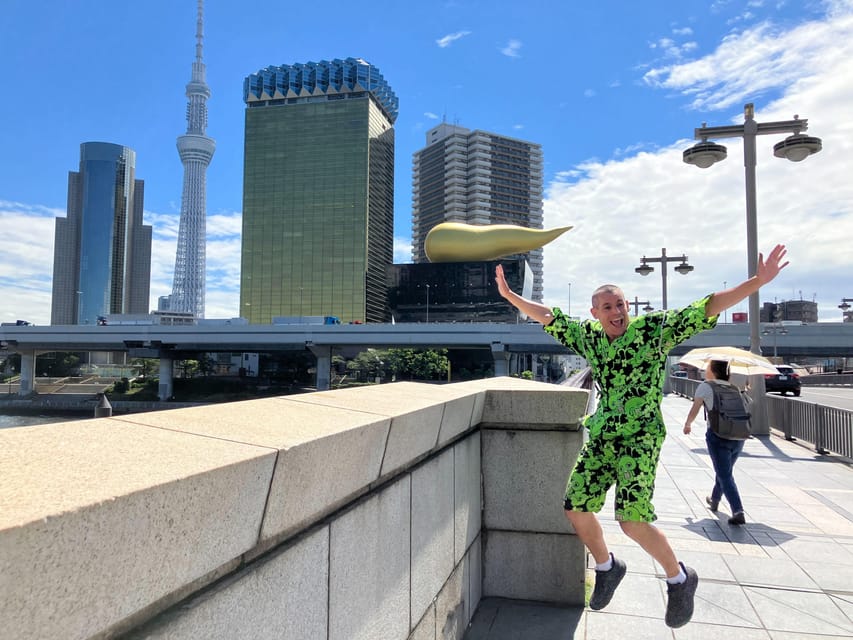
The rickshaw ride includes views of Tokyo Skytree and beautiful Sumida Park. These sights give the route a change of scale. Senso-ji and the shopping streets feel close and traditional, while Skytree reminds you that modern Tokyo is only a short distance away.
The exact quality of the view will depend on the route, weather, and traffic. The activity promises photo opportunities rather than a visit inside Tokyo Skytree, and it does not include admission to an observation deck. You should bring your camera, but do not plan the tour as a Skytree ticket or river cruise.
Sumida Park is another useful visual break from the temple streets. The tour information does not promise a long park walk, so think of it as part of the rickshaw sightseeing route rather than a separate park excursion.
How the three-hour schedule feels
The full activity lasts three hours, with starting times shown when you check availability. The listed stops include roughly 15 minutes at the Asakusa Culture Tourist Information Center, 10 minutes at Kaminarimon, 10 minutes at Nakamise, and 10 minutes at Asakusa Shrine, plus walking, explanations, and the optional 20-minute rickshaw ride.
Those time blocks tell you what kind of tour this is. You receive a broad introduction to several landmarks rather than a detailed visit to one site. The pace should suit you if you want to get your bearings early in your Tokyo stay.
You should wear comfortable walking shoes. The route includes streets, shopping areas, and stairs, and the activity is not suitable for wheelchair users or people who have difficulty going up and down stairs. Children must be accompanied by an adult, and the tour is not suitable for people over 95 years old.
The tour operates rain or shine. Bring weather protection and be ready for a walking day even if the rickshaw ride is your main interest. Smoking is not allowed.
English guidance and group size
The live tour is conducted in English, and the group is limited to eight people. That size is a strong point on a route where the guide may need to explain things beside a busy street and then move the group through a crowded shopping lane.
Still, a small group does not guarantee perfect hearing. One person had trouble understanding and hearing the guide, even with only four people on the tour. I would stay near the guide, speak up if the pace or volume makes things difficult, and avoid drifting to the back of the group.
The guide’s role is to explain Asakusa’s history, Japanese culture, and local items as you move. The information provided does not identify the guide by name. If personal storytelling and detailed explanations matter most to you, ask the operator about the guide and the expected route before confirming.
Is $93 a fair price?
At $93 per person, this is not a cheap way to see Kaminarimon and Senso-ji. You can visit the main public sights on your own without paying an admission fee for this walking route. The price makes more sense if you value a live English explanation, a small group, and the reserved 20-minute rickshaw ride.
The value is strongest for a first visit to Asakusa. You get orientation, cultural context, photographs, and a short carriage ride without having to plan the route yourself. The price is harder to justify if you already know the district, want long temple visits, or are booking mainly for the rickshaw and discover that the ride is not included.
Food, drinks, hotel pickup, and hotel drop-off are not included. You also pay separately for anything you buy along Nakamise or elsewhere. Compare the final price with your priorities, then confirm the rickshaw option in writing if necessary.
Who should book this Asakusa walk?
I would recommend this for a first-time Tokyo visitor who wants a clear introduction to Asakusa and prefers a guide to explain what they are seeing. It also suits you if a short rickshaw ride sounds fun, you want photos at the district’s major sights, and you are comfortable walking for three hours.
It is less suitable if you use a wheelchair, have difficulty with stairs, or want a fully flexible day. It is also a poor match if you expect a long rickshaw journey or a quiet, in-depth temple tour.
The best booking decision comes down to one question: do you want the walking tour as well as the ride? If yes, and if you confirm the optional carriage is included, the experience offers a pleasant mix of old Tokyo streets, major landmarks, and local explanation. If you want only a rickshaw, look for a shorter ride with clearer carriage details.
FAQ
Where does the tour start?
It starts in front of the Asakusa Culture Tourist Information Center.
Where does the tour end?
The activity ends back at the meeting point.
How long does the tour last?
The tour lasts three hours.
How long is the rickshaw ride?
The rickshaw ride lasts 20 minutes.
Is the rickshaw ride included?
The rickshaw ride is listed as an option. Confirm that it is included in your selected booking, since the activity description can be read as either a walking tour with an optional ride or a booking that includes the reserved carriage.
What language is the tour conducted in?
The live tour guide speaks English.
What landmarks does the tour visit?
The route includes the Asakusa Culture Tourist Information Center, Kaminarimon, Nakamise Shopping Street, Senso-ji, Asakusa Shrine, Nishi Sando Shopping Street, and Hoppy Street. The rickshaw route can also include Tokyo Skytree and Sumida Park views.
Is hotel pickup provided?
No. Hotel pickup and drop-off are not included.
What should I bring?
Bring comfortable walking shoes and a camera.
Is the tour suitable for wheelchair users?
No. The activity is not suitable for wheelchair users or people with mobility impairments, including those who have difficulty going up and down stairs.
Newly added rides around Japan
- Kamakura Rickshaw Tour★ 5.0 · 53 reviews
- Rickshaw Tour of Kagoshima’s Historical and Cultural Sites★ 5.0 · 4 reviews
- Kamakura Heritage Bike or Walk Tour with ex-Rickshaw guide★ 5.0 · 11 reviews
- Hakodate Rickshaw Tour★ 5.0 · 18 reviews
- [60 minutes] Rickshaw tour around Asakusa [Complete Asakusa tour/power spots]★ 5.0 · 38 reviews
- [30 minutes] Rickshaw tour around Asakusa [History, sightseeing, Tokyo Skytree]★ 5.0 · 38 reviews
- Tokyo: Asakusa tour by rickshaw★ 4.9 · 11 reviews
- Tokyo Vegan Tour : Miso Making, Tea Ceremony, Rickshaw Ride★ 5.0 · 2 reviews
Tokyo Tuk Tuk Tours: the nearest alternatives
Asakusa, Tokyo: Rickshaw Experience and Highlights Walking tour
Read our review →
Ride a rickshaw wearing a kimono in Asakusa! Enjoy authentic traditional culture!
Read our review →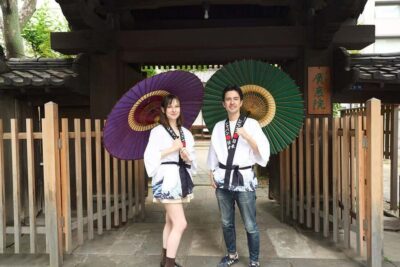
Tokyo Vegan Tour : Miso Making, Tea Ceremony, Rickshaw Ride
Read our review →Tuk tuk lists that include it