
Review · TOKYO
Tokyo: Asakusa Sightseeing Tour by Rickshaw
Asakusa is one of the best parts of Tokyo for seeing old and new Japan in the same outing. From a rickshaw, you roll past temple gates, narrow shopping streets, gardens, shrines, and the Sumida River while your guide points out details you could easily miss on foot. Masa, Kazu, Taku, and Shima are among the guides praised for clear English, humor, and excellent photos.
I like the personal scale of the ride, with a private rickshaw and a route that can be adjusted to your interests. I also like that the tour reaches quieter corners beyond Senso-ji, including small temples and older streets in Rokku and Nishi Shitamachi. The main consideration is comfort: each rickshaw is only 74 centimeters wide, and the ride is not recommended during the first 16 weeks of pregnancy.
Key points at a glance
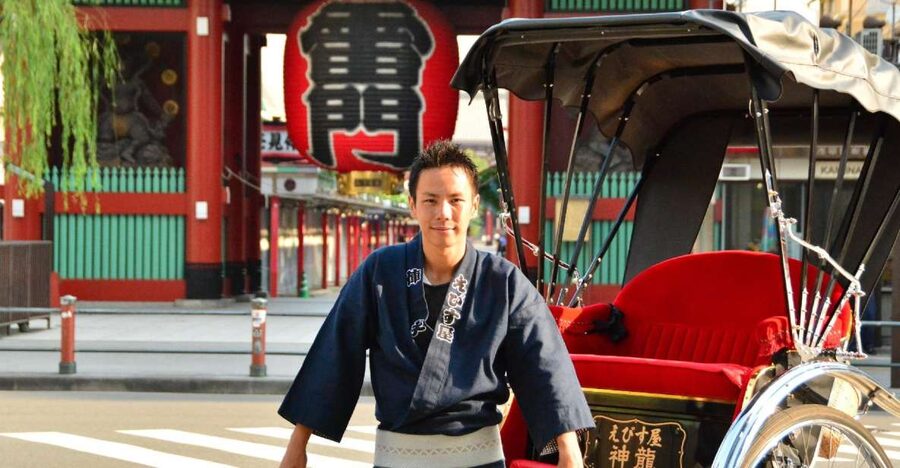
- A private view of Asakusa: You ride with your own guide rather than in a large group.
- More than Senso-ji: The route can include Asakusa Shrine, Bentendo Hall, Sumida Park, Hanayashiki, Rokku, and Denpoin Street.
- Choose your pace: Options range from 30 minutes to roughly three hours, with longer rides offering more freedom to customize.
- Excellent photo help: Guides regularly stop and take pictures with your phone or camera.
- Good family option: Children five and under can ride free on an adult’s lap, within the stated seating limits.
- A little old Tokyo by rickshaw: The ride links temples, river views, shopping streets, and postwar neighborhoods in one easy outing.
Why a rickshaw works so well in Asakusa
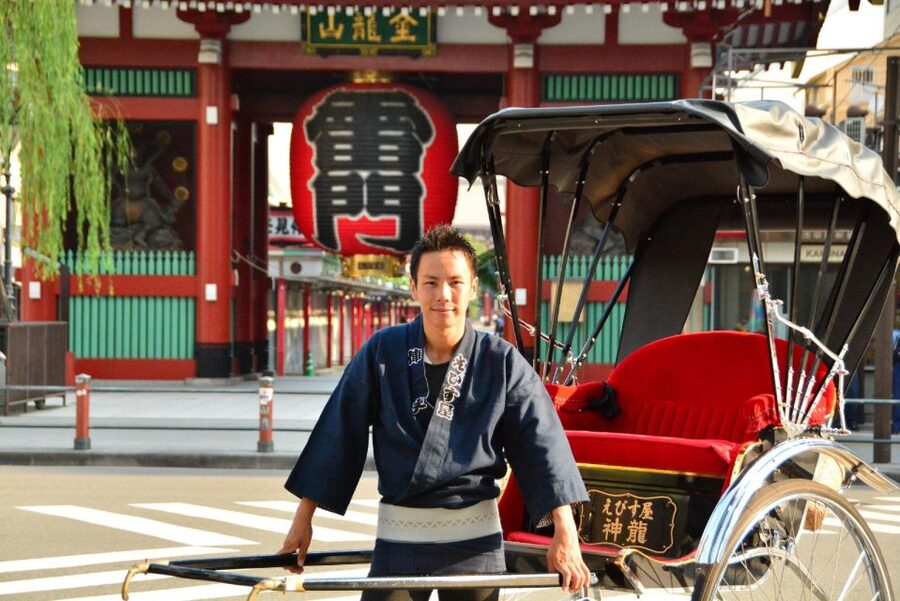
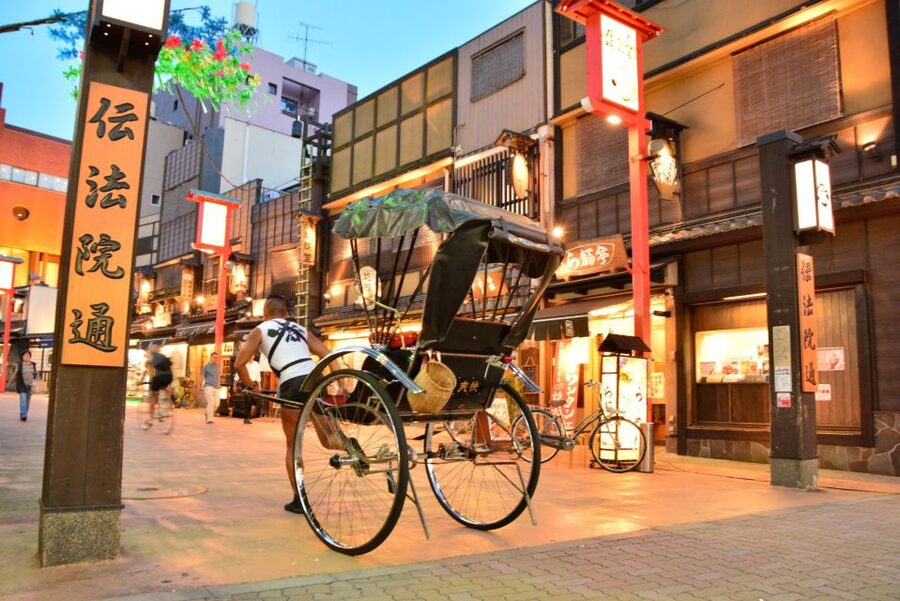
Asakusa is easy to walk, but it is also easy to skim past without understanding what you are seeing. The rickshaw solves that problem. You sit high enough to look over street crowds, move at a calm pace, and have a local guide explaining the temples, customs, and everyday scenes around you.
This is not a silent carriage ride. The guides pull the rickshaw through city streets while talking with you, answering questions, and stopping at useful photo spots. Several guides are especially good at making the ride feel personal. Kazu is praised for his area knowledge and warm manner, while Masa is known for being funny, informative, and a strong photographer. Taku, Shima, Yusuke, Yuki, and Koko have also received praise for English, cultural explanations, and good humor.
The private format matters. You can ask about food, shrines, shopping, anime-related places, or the best way to spend the rest of your day in Tokyo. One guide even added anime references for a teenager, while another sang pop songs with a young passenger. Those small touches make the ride work for families and couples, not just for people focused on temple architecture.
More Rickshaw Tours in Japan:
- Tokyo Asakusa Rickshaw Tour
★ 5.0 · 1,375 reviews - Kyoto: Arashiyama Customized Rickshaw Tour & Bamboo Forest
★ 5.0 · 432 reviews - Kyoto Arashiyama Rickshaw Tour with Bamboo Forest
★ 5.0 · 354 reviews
Starting near Asakusa Station
The meeting point is the rickshaw stand just outside exit 1 of Asakusa Station on the Tokyo Metro Ginza Line. This detail matters because Asakusa has several stations with the same name on different subway lines, and the exits are not close together.
You still need to walk a few meters from the map location to the rickshaw stand. Allow extra time if you are arriving by train, especially with luggage or children. One family arrived at the wrong exit and was helped by the staff, but it is much easier to head for the correct Ginza Line exit from the start.
The rickshaws are private, but a maximum of two adults can ride in one. The narrow 74-centimeter width may feel snug, especially for two larger adults. You can book separate rickshaws if you want more room or a clearer view for each person.
Senso-ji, Asakusa Shrine, and the rituals you should notice
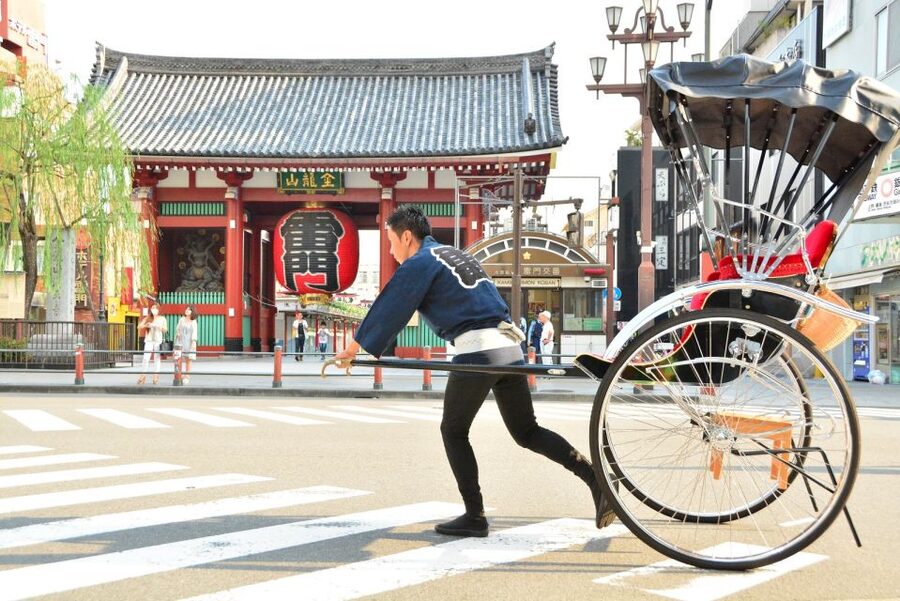
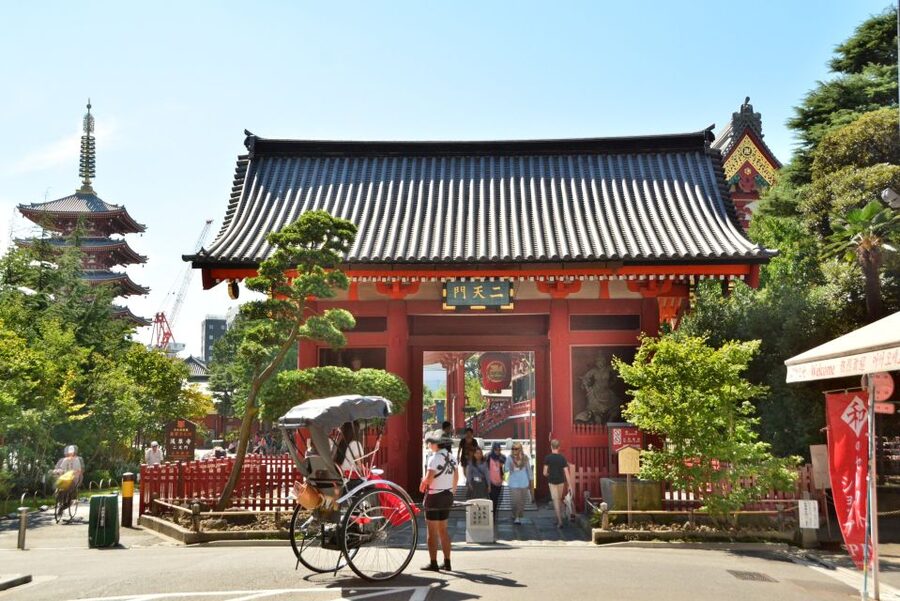
The main temple district gives the ride its essential Asakusa setting. You pass the city’s oldest temple area and the nearby Asakusa Shrine, a Shinto site beside the Buddhist temple grounds. Seeing both together offers a quick lesson in the way Buddhist and Shinto traditions share space in Japan.
A good guide does more than point at a gate. You may learn how to wash your hands and mouth before approaching a shrine, why incense is burned, and why people wave the smoke toward their bodies. These explanations turn familiar-looking actions into something you can understand and respect.
Bentendo Hall is another stop mentioned on the route. Its religious setting and surrounding views provide a quieter contrast to the busiest temple approaches. The exact sequence can vary, since longer rides may be adjusted around your interests and the guide’s route.
I would pay attention here rather than treating the temple area as a quick photo stop. The guide’s explanation is one of the main reasons to book the rickshaw instead of simply walking through the grounds alone.
Hanakawado and Sumida Park by the river
The ride continues toward Hanakawado, known for shoe shopping and local street life. This section gives you a look at Asakusa beyond its famous temple entrance. You see ordinary shops and neighborhood streets while the guide explains what makes the area useful to local residents.
Sumida Park is especially attractive in spring, when thousands of cherry trees bloom. The park also gives the route a welcome change of pace, with open space, trees, gardens, and the Sumida River. If you are visiting during cherry blossom season, a longer option gives you more time to enjoy this part of the route without rushing.
The river area can also be pleasant in warmer months. One summer rider appreciated the breeze created by the moving rickshaw, though hot and humid weather still deserves proper clothing and water. Since drinks are not included, bring your own bottle.
More Tuk Tuk City Tours in Japan:
- Asakusa, Tokyo: Rickshaw Experience and Highlights Walking tour
★ 5.0 · 47 reviews - [30 minutes] Rickshaw tour around Asakusa [History, sightseeing, Tokyo Skytree]
★ 5.0 · 38 reviews - Tokyo: Asakusa Highlights Walking (OP : Rickshaw Experience)
★ 3.5 · 4 reviews - Otaru: Private Otaru Sightseeing Tour by Rickshaw
★ 5.0 · 4 reviews
Rokku, Tanuki-doori, and old entertainment streets
Rokku offers a different side of Asakusa. This historic entertainment district includes adult theaters and a more eccentric atmosphere than the temple grounds. The area is useful for understanding Asakusa as a place of leisure, performance, nightlife, and popular culture, not only religion and traditional craft.
Nearby Tanuki-doori adds another quirky stop. The route may also include Hanayashiki, Japan’s oldest amusement park, where you can pause for souvenir photographs. You are not booking an amusement park ticket here, so think of this as a sight from the street rather than a full theme park visit.
This mix is one of the tour’s strengths. You move from incense and temple etiquette to old entertainment streets and amusement history within the same district. It gives you a fuller picture of Asakusa than a temple-only walk.
Denpoin Street and Nishi Shitamachi
Denpoin Street is one of the most atmospheric parts of the ride. The street is described as retaining much of its old character from before and after World War II, giving you a sense of Tokyo that feels removed from the city’s high-rise image.
The Nishi Shitamachi area adds more everyday neighborhood texture. Here, you are not just ticking off major sights. You are watching the guide navigate local streets, seeing small shops, and noticing how quickly Tokyo changes from grand tourist landmarks to modest residential corners.
Longer rides are the best choice if these side streets appeal to you. A 30-minute tour can give you a pleasant introduction and a few photo stops, but it cannot cover the full range of temples, parks, entertainment streets, and river views.
Which duration gives you the best value?
The listed price starts at $35 per person, while the available ride length ranges from 30 to 190 minutes. Since the price and duration depend on the selected option, check the exact combination before booking.
The 30-minute ride is a good choice if you have a short layover, young children, or limited energy. It gives you the basic rickshaw experience, a few sights, and time to ask your guide for local suggestions. One rider booked only 30 minutes and still found the ride fun and useful.
The 70-minute option is a sensible middle ground. It gives you enough time for a broader look at Asakusa without taking up half a day. You can expect more explanation, more street variety, and several photo opportunities.
A 90-minute or two-hour ride suits first-time visitors who want Asakusa explained rather than merely photographed. One two-hour route reached a quieter Buddhist shrine away from the main crowds. Another 90-minute ride included back streets, a small garden, and an unexpected sighting of a geisha.
The longest option, listed at up to 190 minutes, is for people who want a fuller neighborhood tour and more control over the route. The three-hour choice also includes a memorial gift, such as a special Hello Kitty doll or an original T-shirt. That extra is a nice bonus, but I would choose the long ride for the added time and customization, not only for the gift.
Guides, language, and the personal touch
Guides speak English and Japanese, though speaking ability can vary. The strongest feedback centers on guides who combine solid English with humor, cultural detail, and a genuine interest in their passengers.
Shima is praised for explaining Asakusa clearly while handling busy streets with skill. Taku is described as both funny and informative. Yusuke, Yuki, Koko, Kazu, Masa, and others have been praised for taking thoughtful photos and making the ride easy for families.
The guide may also recommend places to eat or things to try. This is useful early in your Tokyo visit, since you can use the ride to shape the rest of your Asakusa day. If you have a special interest, ask about it at the start. The tour can be customized according to your interests.
The service is not perfectly uniform. One passenger felt the guide could have used stronger English and explained more of Asakusa’s history. That is a fair reminder that your experience will depend partly on the individual guide and the language match. Still, the overall rating is 4.9 from 195 reviews, and the repeated praise for friendliness, energy, and photo help is hard to miss.
Weather, comfort, and family details
The rickshaws are wheelchair and stroller friendly, which makes this easier for families and some visitors with limited mobility. You should still confirm your specific needs when booking, since the narrow seating area may affect comfort.
Children five and under can ride free when seated on an adult’s lap, with one child per adult. A child who needs a separate seat must book as a full-fare adult. Children aged six and over are charged adult pricing.
Cold-weather arrangements have received positive attention. Blankets and heated seat pads were provided during a rainy and snowy ride, helping keep passengers comfortable. Summer brings a welcome breeze, but the guide is doing physical work in the heat, and you should carry water.
Selfie sticks are not allowed. Pregnant people are advised not to take the tour, and it is specifically not recommended during the first 16 weeks of pregnancy. The raised seat and moving streets may not suit everyone, so use your judgment rather than forcing the experience.
Photo stops and what to bring
Bring a phone or camera, but let the guide help with the pictures. Guides often take photos with the rickshaw and the sights behind you, which is much better than trying to manage a selfie from the seat.
Wear shoes that are easy to manage if you plan to continue exploring temples afterward. Bring water and perhaps a small snack, since food and drinks are not included. A light layer is useful in spring and autumn, while a hat and water matter in summer.
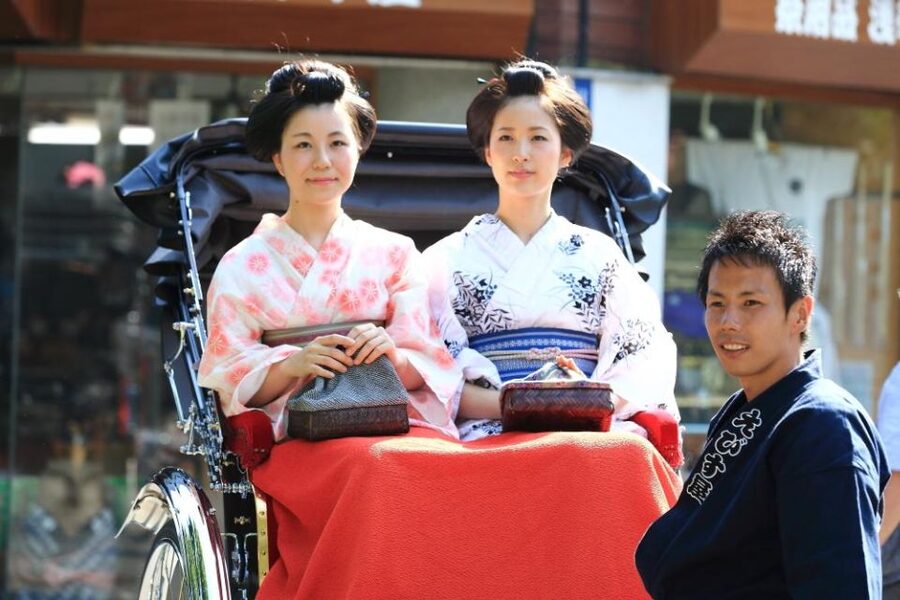
If you plan to rent a kimono, the rickshaw makes a natural addition. The raised seat, temple gates, old streets, and garden views create a setting where traditional clothing fits the surroundings without feeling forced.
Who should book this Asakusa ride?
I recommend it most strongly for first-time Tokyo visitors, families, couples, solo visitors, and anyone who wants an easy introduction before exploring on foot. It also works well during a short stay because you see several different parts of Asakusa without navigating every street yourself.
Solo visitors should not hesitate. The private format still works for one person, and the guide can focus the conversation and take your photos. Families may especially appreciate the short duration choices, heated seats in cold weather, and the ability to customize the route.
You may want to skip it if you dislike open-air rides, tight seating, or the idea of being pulled through city streets. Independent walkers who already know Asakusa may find the price less appealing, although the local explanations and access to quieter corners can still add value.
Should you book it?
Book this tour if you want more than a quick look at Senso-ji. The best part is the combination of local storytelling, old neighborhoods, temples, river scenery, and easy photo stops in a private setting.
Choose 30 minutes for a taste, 70 to 90 minutes for the best balance, and two to three hours for a fuller Asakusa portrait. Confirm the correct station exit, consider separate rickshaws if you want more space, and tell the guide what interests you. For a reasonable starting price and a highly praised personal guide experience, this is a strong way to get your bearings in eastern Tokyo.
FAQ
Where does the rickshaw tour meet?
The meeting point is the rickshaw stand just outside exit 1 of Asakusa Station on the Tokyo Metro Ginza Line. You need to walk a few meters from the map location to the stand.
How long is the ride?
Available options range from 30 minutes to 190 minutes. Starting times and exact options depend on availability.
How many adults can ride in one rickshaw?
A maximum of two adults can ride in one rickshaw. Each rickshaw is 74 centimeters wide, so separate rickshaws may be more comfortable for some passengers.
Can young children ride for free?
Children five and under can ride free when seated on an adult’s lap, with one child per adult. A child who needs a separate seat must book as a full-fare adult.
Is the tour available in English?
Yes. The tour is offered in English and Japanese, with a live guide.
Is the activity wheelchair and stroller friendly?
Yes, the activity is wheelchair and stroller friendly. The tour is not recommended for pregnant people, particularly during the first 16 weeks.
Newly added rides around Japan
- Kamakura Rickshaw Tour★ 5.0 · 53 reviews
- Rickshaw Tour of Kagoshima’s Historical and Cultural Sites★ 5.0 · 4 reviews
- Kamakura Heritage Bike or Walk Tour with ex-Rickshaw guide★ 5.0 · 11 reviews
- Hakodate Rickshaw Tour★ 5.0 · 18 reviews
- [60 minutes] Rickshaw tour around Asakusa [Complete Asakusa tour/power spots]★ 5.0 · 38 reviews
- [30 minutes] Rickshaw tour around Asakusa [History, sightseeing, Tokyo Skytree]★ 5.0 · 38 reviews
- Tokyo: Asakusa tour by rickshaw★ 4.9 · 11 reviews
- Tokyo Vegan Tour : Miso Making, Tea Ceremony, Rickshaw Ride★ 5.0 · 2 reviews
Tokyo Tuk Tuk Tours: the nearest alternatives
Asakusa, Tokyo: Rickshaw Experience and Highlights Walking tour
Read our review →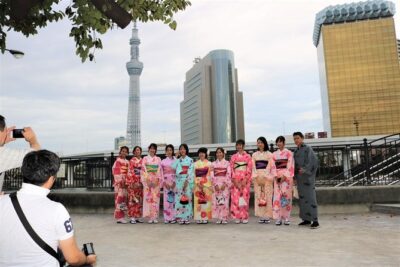
Ride a rickshaw wearing a kimono in Asakusa! Enjoy authentic traditional culture!
Read our review →
Tokyo Vegan Tour : Miso Making, Tea Ceremony, Rickshaw Ride
Read our review →Tuk tuk lists that include it