
Review · JAPAN
Kamakura Heritage Bike or Walk Tour with ex-Rickshaw guide
Kamakura is at its best when you can move beyond its main station and connect its temples, shrines, coast, and samurai-era landmarks in one smooth outing. This private tour does that by bike or on foot, led by Ichi, who spent five years guiding rickshaw rides through the city. I like the flexibility to choose bikes or walking, and I like that the route includes both major sights and quieter stops such as the grave of Minamoto no Sanetomo.
The tour also includes entrance fees to the Great Buddha and Hokokuji Temple, plus photos taken by your guide. The main caution is pace: six stops in about four hours can feel brisk, especially if you walk rather than ride or want long visits inside each temple.
- Choose your pace: Explore by bike, with e-bikes noted as an option, or take the route on foot.
- Meet Ichi at Kamakura Station: The tour begins and ends at the station, making it easy to connect with trains.
- See Kamakura’s best-known icons: Visit the Great Buddha, Tsurugaoka Hachimangu Shrine, Hokokuji, and Hasedera.
- Add quieter history: Stop at the grave of Minamoto no Sanetomo and Egara Tenjin Shrine.
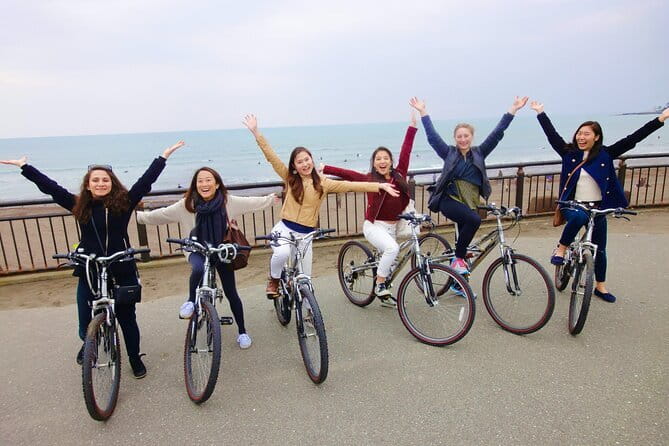
- Ride beside the sea: The route includes Yuigahama Beach and its coastal road.
- Private attention: Only your group participates, so the route can reflect your interests and energy.
Why a Private Bike Tour Works So Well in Kamakura
Kamakura is compact on a map, but its sights are spread across several areas. The Great Buddha and Hasedera are west of the station. Tsurugaoka Hachimangu and Egara Tenjin are farther inland. Hokokuji sits to the east, while Yuigahama Beach opens toward the coast.
You can walk between some of these places, but doing the full route on foot takes time and energy. A bike gives you a wider view of the city and lets you cover more ground without spending the entire morning on crowded streets. If you prefer a slower outing, the walking option lets you focus on temple details, stories, and photographs rather than transport.
I especially like the private format here. You are not trying to keep up with a large group or wait for people who want different things. If your group wants more time at a shrine, fewer photographs, or a slower pace through the bamboo grove, you can discuss that with Ichi within the four-hour window.
The tour has been offered privately to people living in Tokyo and their friends, and it is now available to a wider audience. That background helps explain its local feel. This is not simply a list of famous Kamakura sights. The guide’s experience as a rickshaw driver means he has spent years explaining the city street by street.
Starting at Kamakura Station with Ichi
You meet at Kamakura Station, at 1-chōme-1-15 Onarimachi. The tour ends at the same meeting point, which is useful if you are making a day trip from Tokyo and want a clear finish near public transport.
Ichi is the guide named throughout the tour information, and his experience is one of the main reasons to book this outing. He speaks English and explains Japanese customs, local traditions, and the history connected with Kamakura’s temples and shrines. His approach is described as friendly and funny, but also careful when explaining complex subjects such as the Kamakura shogunate and the role of the bakufu.
That balance matters. Kamakura’s story involves samurai government, religious institutions, political struggle, and several important figures. A short visit can easily become a blur of names. A good guide gives you enough context to understand why each place matters without turning the morning into a lecture.
The tour is private, but the exact bike arrangement is not fully detailed in the information provided. Recent tour details specifically note e-bikes as a bonus, so you should confirm the current bike type when booking. Children under 13 who cannot ride an adult-sized bike are not recommended for the bike option.
More Rickshaw Tours in Japan:
- Tokyo Asakusa Rickshaw Tour
★ 5.0 · 1,375 reviews - Kyoto: Arashiyama Customized Rickshaw Tour & Bamboo Forest
★ 5.0 · 432 reviews - Kyoto Arashiyama Rickshaw Tour with Bamboo Forest
★ 5.0 · 354 reviews
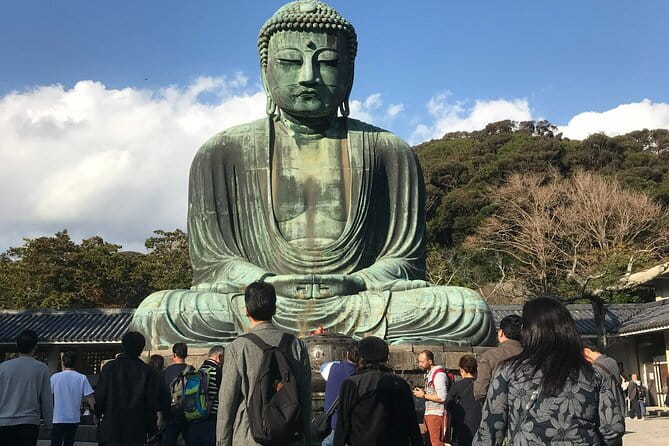
The Great Buddha at Kotoku-in
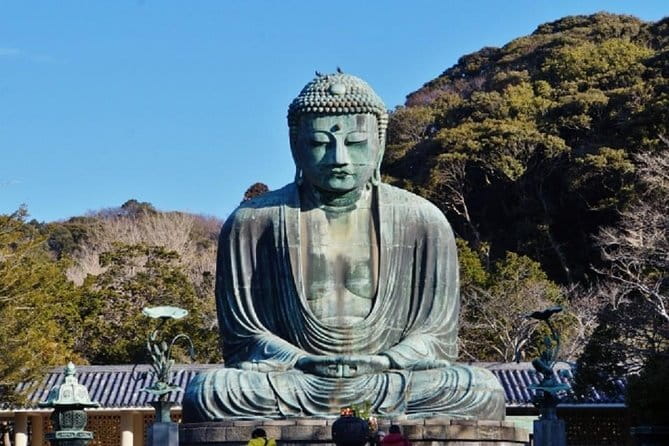
The first listed stop is Kotoku-in, home of the Great Buddha of Kamakura. You have about 30 minutes here, with admission included.
The statue is one of Kamakura’s essential sights, but its meaning becomes clearer when you understand its place in the city’s religious and political past. Ichi can connect the statue to the wider story of Kamakura, rather than leaving you with only a quick photograph and a famous name.
Thirty minutes is enough for the main statue, the temple grounds, and a short explanation. It is not a long, reflective temple visit. If you want extended time for close photographs or a quiet sit, tell your guide early so you understand what can fit into the schedule.
The included admission is a small but useful value point. You do not need to handle the entrance fee yourself, and the guide can focus on the visit.
Tsurugaoka Hachimangu and the Samurai City
Next comes Tsurugaoka Hachimangu Shrine, Kamakura’s major Shinto center. The planned visit lasts about 30 minutes, and there is no separate admission fee.
This is where Kamakura’s samurai identity comes into clear view. The shrine is dedicated to Hachiman, a deity linked with warriors, and it has long been tied to the city’s ruling families. The broad approach and formal shrine grounds give you a sense of how religious life and military power were connected in medieval Japan.
I would pay attention to the transition from the busy approach into the shrine grounds. Even when the area is full, the layout helps you understand the importance of the site. Ichi’s explanations about the bakufu and the beginning of the Kamakura shogunate are particularly useful here.
A half-hour visit means you will see the main areas rather than every corner. That is sensible on a four-hour tour, though visitors who want detailed shrine architecture may wish for more time.
A Brief Stop at Minamoto no Sanetomo’s Grave
The grave of Minamoto no Sanetomo is given about 10 minutes. This is a short stop, but it adds political drama to the day.
Sanetomo was the third shogun of the Kamakura shogunate. His life and death reflect the unstable power struggles of the period, and the grave gives you a direct connection to one of the figures behind the city’s early government.
Do not expect a large monument complex or a long temple visit. This is a compact historical pause. Its value comes from the story Ichi tells and from seeing a site that many people would pass without understanding.
For me, this is the kind of stop that makes a guided tour worthwhile. You are not only checking off major attractions. You are also pausing at a place with political meaning.
More history rides around Japan:
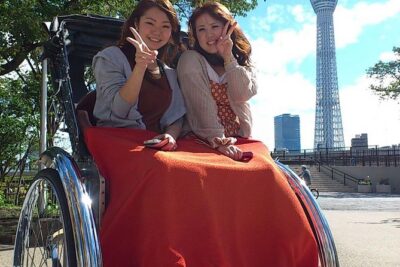
- [30 minutes] Rickshaw tour around Asakusa [History, sightseeing, Tokyo Skytree]
★ 5.0 · 38 reviews - Kamakura: Private History and Heritage Tour by Rickshaw
★ 4.9 · 7 reviews - Nara: Cultural Heritage Tour by Rickshaw
★ 5.0 · 5 reviews - Rickshaw Tour of Kagoshima’s Historical and Cultural Sites
★ 5.0 · 4 reviews
Hokokuji’s Bamboo Grove and Matcha
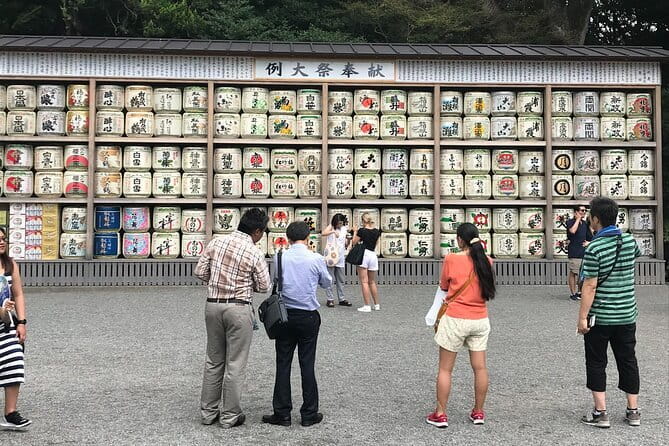
Hokokuji Temple is one of the most appealing stops on the route. You have about 30 minutes, and admission is included.
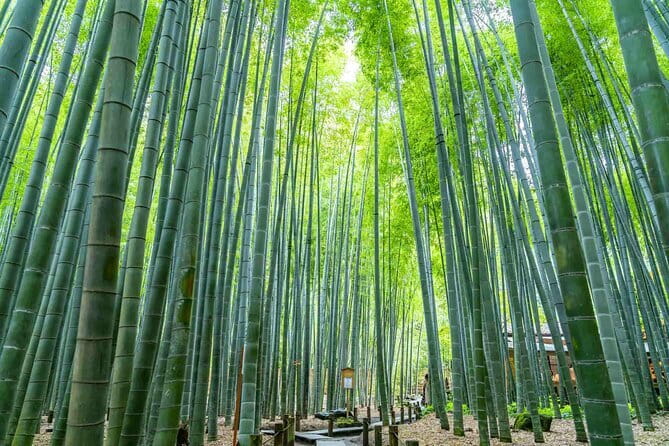
The temple is known for its bamboo grove, a calm pocket where tall green stalks frame narrow paths and soften the noise of the city. It is a small area, so the visit does not need hours, but the atmosphere changes the pace of the tour.
You can also order matcha at the temple café for 500 yen, or about 3 dollars. It is optional and not included in the tour price. If you choose it, the drink gives you a simple pause before continuing to the next part of the route.
This stop works especially well for photographs. The guide takes photos throughout the experience, and one participant specifically noted receiving more than 20 good pictures during the walking tour. That is useful if you are traveling with friends and want photographs of the whole group rather than only quick phone snapshots.
The main limitation is time. Thirty minutes may cover the grove, tea, and a short explanation, but not a slow tea break and a detailed look at every temple feature.
Yuigahama Beach and the Coastal Road
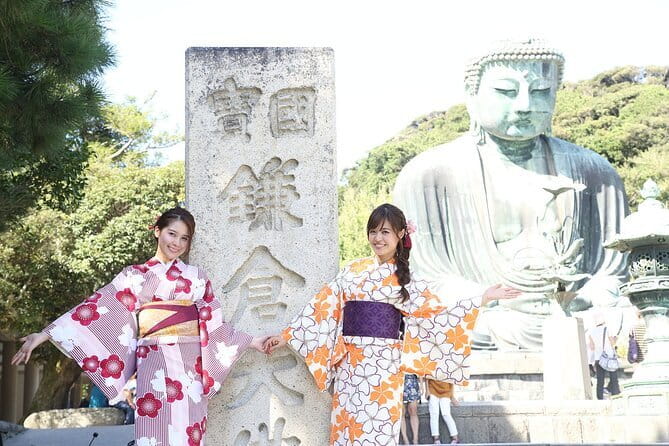
The route then reaches Yuigahama Beach. The time listed for this part is less exact, which gives the guide some room to fit the coastal stretch into the day.
This is a welcome change from temple grounds. You ride or walk along the seaside road, with the Pacific beside you and Kamakura’s urban streets behind you. The coastal section helps you see that Kamakura is not only a historical center. It is also a seaside town.
Summer is the busiest season at the beach, so do not expect the same quiet mood all year. The tour description presents the beach as a relaxing stop, but the atmosphere will depend on the date, weather, and number of people out along the shore.
This section is one reason the bike option is appealing. You can cover the coast without turning the day into a long walk between distant areas. In poor weather, however, the experience becomes less comfortable, and the tour requires good weather. If rain affects the outing, you are offered another date or a full refund.
Hasedera and the Kannon Statue
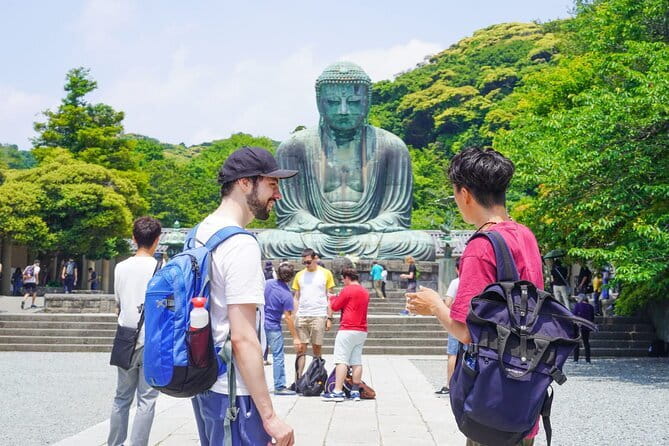
Hasedera Temple is scheduled for about 20 minutes. The temple is known for gardens, coastal views, and a 9.18-meter wooden statue of Kannon, the Goddess of Mercy.
This stop adds a different kind of beauty to the route. Instead of focusing only on political history, Hasedera brings together religious art, gardens, and views toward the coast. The tall Kannon statue is the main interior sight, while the grounds offer a chance to slow down after the bike ride or coastal walk.
Twenty minutes is a quick visit. You can see the main features, but you will need to keep moving if you want to stay on schedule. Admission is listed as free for this tour, which is unusual enough that I would confirm the current arrangement when booking, especially since temple admission policies can change.
If Hasedera is a personal priority, mention it at the start. A private tour gives you a better chance of adjusting the balance between this temple and another stop.
Egara Tenjin Shrine and a Quieter Finish
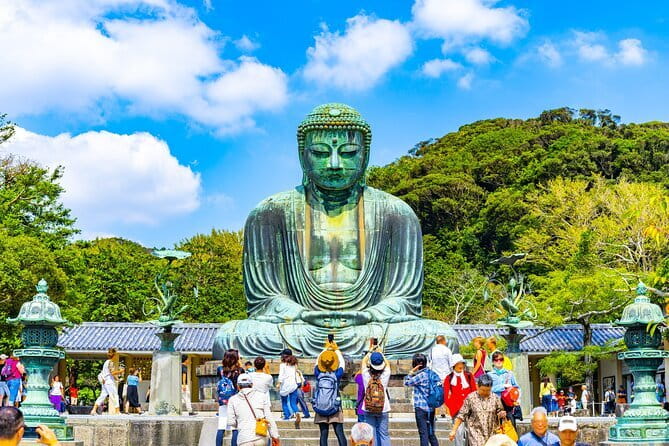
Egara Tenjin Shrine receives about 10 minutes. It is dedicated to Sugawara no Michizane, a deity associated with scholarship and learning.
This is another short stop, but it rounds out the religious picture of Kamakura. You have already seen a major Shinto shrine, Buddhist temples, a famous statue, a samurai grave, and a beach. Egara Tenjin adds a shrine where people come with hopes connected to study and academic success.
Ten minutes is enough for a quick visit and explanation, not a long exploration. The inclusion makes sense for a private route because the guide can show you a smaller site between the headline attractions.
What the $150.24 Price Gets You
The price is $150.24 per person. That is not a budget walk, but it is easier to justify for a private group that wants transportation between scattered sights, an English-speaking guide, included admission to the Great Buddha and Hokokuji, and help with photographs.
The value is strongest when two or more people share the experience and want more than a simple self-guided visit. You are paying for the guide’s local knowledge, route planning, and ability to explain the connections between places. You are also paying to avoid spending time figuring out how to link the central, eastern, western, and coastal areas on your own.
Lunch is not included, and neither is the optional matcha at Hokokuji. You should also understand that personal damage caused by a customer is not covered. These are ordinary exclusions, but they matter when comparing the total cost.
A four-hour private outing will not give you a full day at every temple. The price makes the most sense if your priority is a well-organized overview with local interpretation, rather than long independent visits at two or three sites.
Who Will Enjoy This Tour Most
I would choose this for adults, couples, friends, and families with older teenagers who can manage an adult-sized bike. It also suits first-time visitors who want Kamakura’s main sights explained in plain English.
The walking option makes the tour accessible to people who do not want to cycle, though the same number of stops may feel more demanding on foot. The bike option is better if you want to connect the beach and temples without using up your energy on roads between them.
This is not the best fit if you want a slow temple retreat, a long beach visit, or a full meal during the tour. It is also less suitable for young children who cannot ride an adult-sized bike.
The tour is booked, on average, 44 days ahead. That suggests you should plan early if your Kamakura date is fixed. Confirmation arrives within 48 hours, subject to availability.
Should You Book This Kamakura Tour?
Book it if you want a private, active introduction to Kamakura and like the idea of seeing the Great Buddha, major shrines, bamboo, coast, and samurai-era sites in one morning or afternoon. I particularly like the mix of famous landmarks and shorter stops that are easy to miss without a guide.
Choose the bike option if covering ground matters to you, and ask about the current e-bike setup before you go. Choose walking if you care more about a calm pace and close attention to the temple grounds.
Skip it if you want to spend a full hour at each major temple or prefer to explore alone. For everyone else, Ichi’s five years of rickshaw guiding, strong English, storytelling, and photo help make this a practical way to understand Kamakura without wasting time between its sights.
FAQ
How long is the Kamakura bike or walking tour?
The tour lasts approximately four hours.
Where does the tour begin?
You meet at Kamakura Station, at 1-chōme-1-15 Onarimachi, Kamakura, Kanagawa 248-0012, Japan.
Where does the tour end?
The activity ends back at the meeting point near Kamakura Station.
Can I choose between biking and walking?
Yes. You can choose a bike ride or a walking tour. The schedule can also be adjusted within the tour time to suit your pace and interests.
Is this a private tour?
Yes. Only your group participates in the activity.
Are entrance fees included?
Admission to the Great Buddha at Kotoku-in and Hokokuji Temple is included.
Is matcha at Hokokuji included?
No. Matcha is optional and costs 500 yen, or about 3 dollars.
What happens if the weather is poor?
The tour requires good weather. If it is canceled because of poor weather, you can choose another date or receive a full refund. Free cancellation is available up to 24 hours before the scheduled start time.
Newly added rides around Japan
- Kamakura Rickshaw Tour★ 5.0 · 53 reviews
- Rickshaw Tour of Kagoshima’s Historical and Cultural Sites★ 5.0 · 4 reviews
- Hakodate Rickshaw Tour★ 5.0 · 18 reviews
- [60 minutes] Rickshaw tour around Asakusa [Complete Asakusa tour/power spots]★ 5.0 · 38 reviews
- [30 minutes] Rickshaw tour around Asakusa [History, sightseeing, Tokyo Skytree]★ 5.0 · 38 reviews
- Tokyo Vegan Tour : Miso Making, Tea Ceremony, Rickshaw Ride★ 5.0 · 2 reviews
- Tokyo: Asakusa tour by rickshaw★ 4.9 · 11 reviews
- Tokyo: Asakusa Highlights Walking (OP : Rickshaw Experience)★ 3.5 · 4 reviews
Japan Tuk Tuk Tours: the nearest alternatives
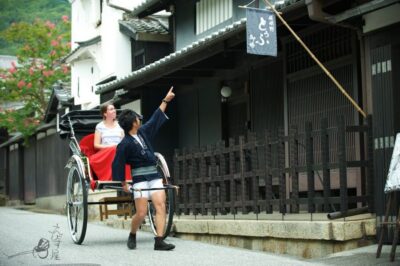
Kyoto: Arashiyama Customized Rickshaw Tour & Bamboo Forest
Read our review →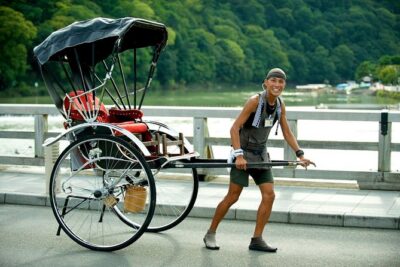
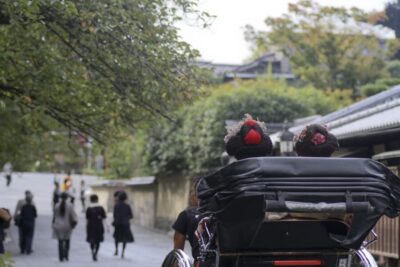
Kyoto: Private Rickshaw Tour of Gion and Higashiyama Area
Read our review →
Asakusa, Tokyo: Rickshaw Experience and Highlights Walking tour
Read our review →
Miyajima: Private Rickshaw Tour to Itsukushima Shrine
Read our review →
[30 minutes] Rickshaw tour around Asakusa [History, sightseeing, Tokyo Skytree]
Read our review →Tuk tuk lists that include it